Rare diseases often remain invisible to the wider public until a personal story brings attention to them. For one woman living with a condition that causes thousands of tumors to develop across the body, daily life has long been defined by pain, medical procedures, and the emotional impact of living with a visible illness.
But after years of struggling with the disorder, she recently revealed a remarkable improvement following medical treatment — a moment that has inspired many people who follow stories about rare diseases and long-term health challenges.
Her experience sheds light not only on her personal journey, but also on a little-known condition that affects thousands of people around the world.
Understanding the Rare Condition
The woman lives with neurofibromatosis type 1 (NF1), a genetic disorder that causes tumors to grow along nerve tissue in different parts of the body. These growths are typically non-cancerous but can cause pain, discomfort, and other complications depending on where they appear.
NF1 occurs when a mutation affects a gene responsible for producing a protein called neurofibromin, which normally helps regulate cell growth. When this gene does not function correctly, tumors known as neurofibromas can develop along nerves in the skin, spine, brain, and other parts of the body.
The condition is rare but not unheard of. Medical experts estimate that about one in every 3,000 children is born with neurofibromatosis type 1.
Symptoms can vary greatly. Some people experience only mild skin changes, while others develop hundreds or even thousands of tumors over time.
A Lifetime of Medical Challenges
For individuals living with NF1, symptoms often begin early in life.
In many cases, the disorder is diagnosed in childhood after doctors notice distinctive skin markings or the first small tumors appearing beneath the skin. As the person grows older, more growths can develop.
Some patients report that the tumors can appear suddenly and sometimes cause severe discomfort or stabbing pain.
Tumors may develop along the spine, head, and other sensitive areas, which can lead to complications affecting vision, mobility, or nerve function depending on where they grow.
Because of these risks, patients with NF1 often require ongoing monitoring from doctors and specialists throughout their lives.
Emotional and Social Impact
Beyond the medical challenges, people living with visible tumors often face emotional struggles as well.
Visible symptoms can attract unwanted attention or misunderstanding from others. Many patients say they have experienced bullying, social isolation, or hurtful comments because of their appearance.
Stories shared by patients highlight how difficult it can be to navigate everyday life with a condition that others may not understand.
Despite these challenges, many individuals living with NF1 have become advocates, raising awareness about rare diseases and encouraging greater compassion toward those with visible health conditions.
Treatment Options Continue to Improve
Although there is currently no complete cure for neurofibromatosis type 1, medical treatments have improved significantly in recent years.
Doctors often focus on managing symptoms and complications. This can include:
Surgical removal of painful or dangerous tumors Medication to control symptoms Regular monitoring to detect complications early
In some cases, newer medications have shown promise in slowing or shrinking certain types of tumors associated with NF1.
One such treatment, selumetinib, has been approved to help treat specific tumors called plexiform neurofibromas in patients with NF1.
While not a cure, therapies like these represent important progress in helping patients manage the condition.
A Remarkable Improvement
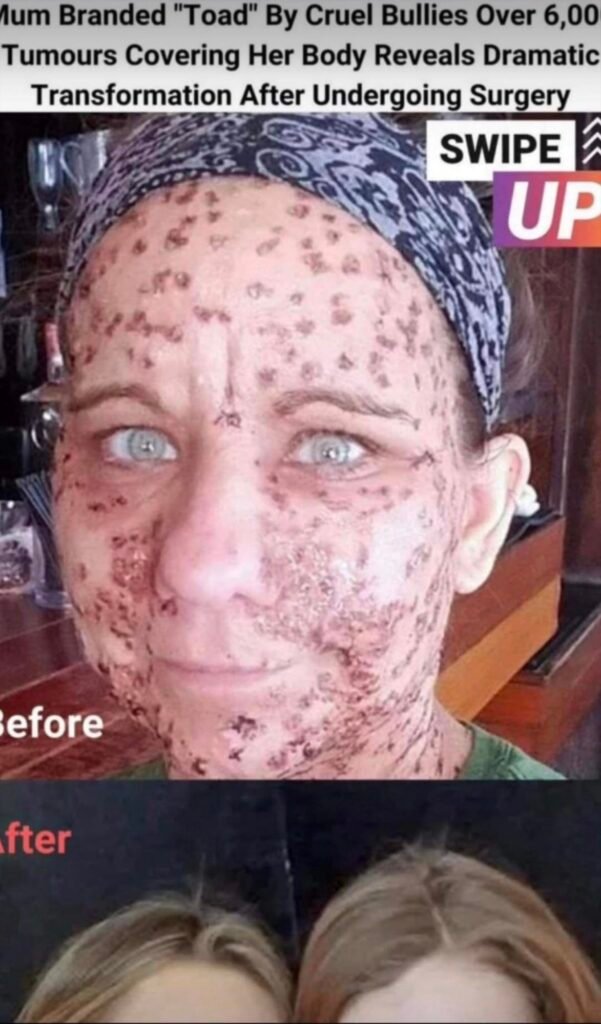
After undergoing medical treatment, the woman featured in the story recently shared images and updates showing a noticeable change in her condition.
According to reports, the treatment helped reduce some of the tumors and improved her overall quality of life. The transformation, while not eliminating the disease, marked a significant step forward compared to years of struggling with symptoms.
For people living with rare disorders, even small improvements can have a profound impact.
Better mobility, less pain, or reduced tumor growth can dramatically improve daily life.
Why Stories Like This Matter
Rare diseases often receive less public attention than more common conditions.
Yet millions of people worldwide live with illnesses that many others have never heard of. Personal stories can help bring visibility to these conditions, encouraging greater research funding and medical innovation.
For patients living with NF1 and similar disorders, awareness can also lead to stronger support networks and improved understanding from the public.
Every new treatment and every improvement offers hope not only to one patient, but to an entire community of people facing similar challenges.
Looking Toward the Future
Medical researchers continue to explore new therapies aimed at treating neurofibromatosis and related disorders.
Advances in genetics, targeted medications, and surgical techniques are gradually improving outcomes for many patients.
While the journey for people living with NF1 remains complex, stories of improvement and resilience serve as reminders that progress in medicine is ongoing.
For those affected by rare conditions, even incremental breakthroughs can represent meaningful steps toward a better quality of life.