Most people notice it once, usually by accident. You borrow a shirt. You try one on in a store. Something feels subtly off—not wrong, just unfamiliar. The buttons are on the opposite side of what you expect.
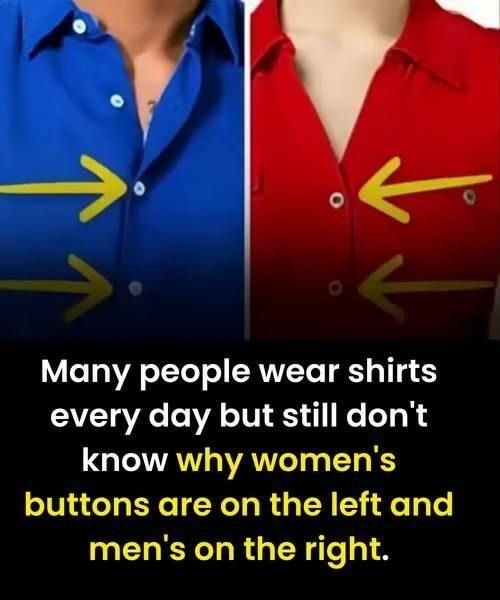
Men’s shirts button one way. Women’s shirts button the other.
It’s such a small detail that it’s easy to assume there must be a practical reason tied to body shape or modern design. In reality, the explanation reaches much further back—into class structure, labor, and how clothing once signaled status long before it signaled style.
The Difference Isn’t About Anatomy
Despite common assumptions, the placement of buttons has nothing to do with hand dominance, body contours, or ease of movement for women.
If practicality were the reason, the logic wouldn’t hold up:
Most people are right-handed, regardless of gender
Buttoning direction doesn’t significantly change comfort
The design persists even when it offers no functional advantage
The persistence of the difference suggests something else entirely: tradition.
Clothing Once Reflected Who Had Help — And Who Didn’t
To understand the button placement, you have to step into a time when clothing was less about convenience and more about signaling social position.
Historically, men—especially working men—dressed themselves. Their clothing needed to be functional, fast to put on, and easy to manage alone. Buttons on the right side (from the wearer’s perspective) made sense for a right-handed person dressing independently.
Women of higher social classes, however, often didn’t dress themselves.
They had assistance.
Buttons on women’s garments were placed for the convenience of the person doing the dressing, not the person wearing the clothes. When someone else stood facing you and fastened your shirt or dress, reversed button placement was easier.
That design choice became embedded—not because it was better, but because it reflected a social reality at the time.
How a Class Marker Became a Gender Norm
Originally, this distinction applied primarily to wealthy women. Working-class women wore simpler garments or clothing similar to men’s, often fastening them themselves.
But fashion has a way of copying upward.
As clothing styles were mass-produced, design conventions from elite fashion were standardized and sold broadly. Over time, button placement shifted from a class indicator to a gender marker.
The original reason faded. The pattern remained.
Why the Tradition Never Disappeared
Once manufacturing standards are set, they’re difficult to undo.
Button placement became:
A signal manufacturers expected
A detail consumers unconsciously recognized
A convention retailers organized around
Changing it would have required re-educating customers and redesigning production lines—without any clear benefit.
So the tradition stayed, even after the social structures that created it disappeared.
Why We Still Notice It Today
What makes this detail interesting isn’t just that it exists—but that it survives in a world where most people dress themselves, regardless of gender.
It’s a reminder that everyday objects often carry history quietly. We interact with them daily without realizing they’re artifacts of older systems.
Buttons aren’t neutral. They’re inherited decisions.
Similar Details Hidden in Plain Sight
Button placement isn’t unique. Many aspects of clothing design come from outdated assumptions:
Pockets designed differently across genders
Decorative elements replacing functional ones
Sizing systems based on historic body ideals
These features persist not because they’re optimal, but because they’re familiar.
Why This Isn’t About “Fixing” It
There’s no urgent need to reverse button placement. The point isn’t to correct it—it’s to understand it.
Recognizing these details gives context to how deeply social history is woven into modern life. Even something as simple as a shirt closure can reflect centuries-old norms about labor, class, and autonomy.
A Small Detail With a Long Memory
The next time you notice the buttons on a women’s shirt sitting opposite from what you expect, it’s worth pausing for a moment.
That difference isn’t decorative. It isn’t random. And it isn’t about fashion trends.
It’s a quiet reminder that what we wear still carries traces of who once had help, who didn’t—and how long those assumptions can outlive the world that created them.
Posted inUncategorized