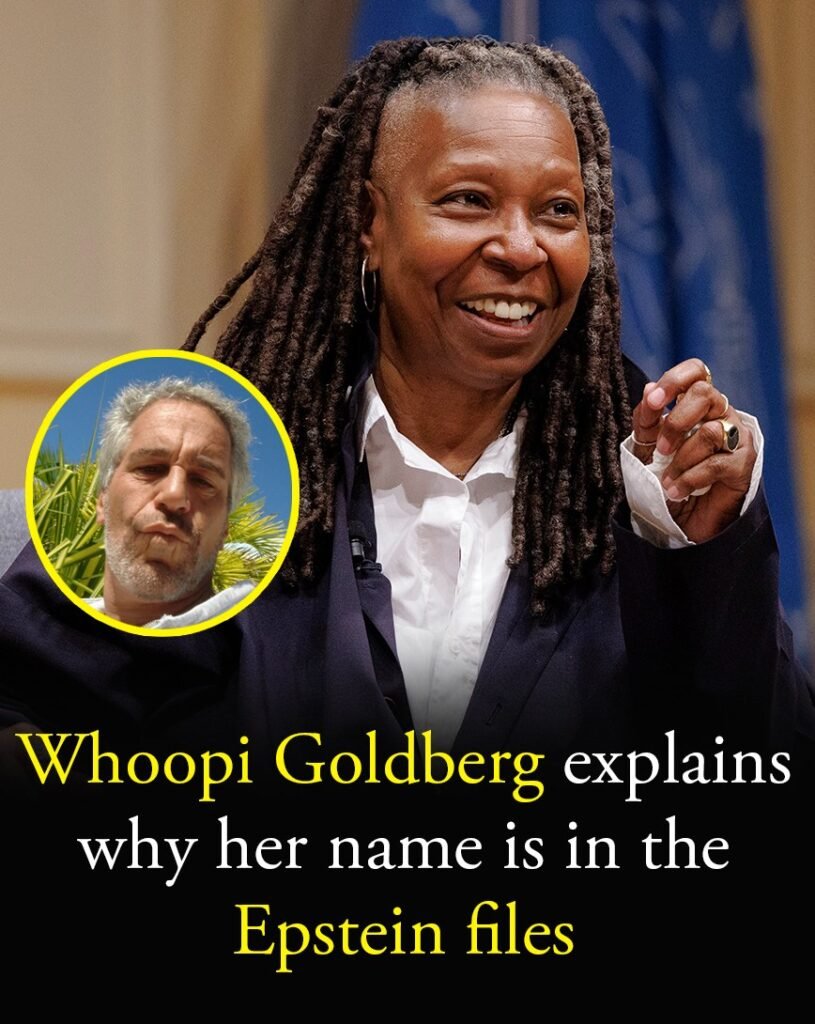
The rumor didn’t begin on a broadcast or in a court document. It surfaced online, quietly at first, then rapidly spreading through reposts, clipped headlines, and speculative commentary. Within days, it had grown large enough to demand a response — not because it was substantiated, but because it was circulating.
When Whoopi Goldberg publicly addressed claims tying her name to Epstein-related allegations, the moment highlighted less about her personally and more about how modern misinformation evolves, amplifies, and pressures public figures to respond.
How Unverified Claims Take Shape Online
Online rumors often follow a predictable pattern. A name is loosely connected to a trending topic. Context is stripped away. Ambiguity fills the gaps. Engagement rewards escalation rather than accuracy.
In high-profile cases connected to figures like Jeffrey Epstein, the emotional weight of the subject accelerates this process. People share content not to inform, but to signal outrage, suspicion, or alignment with a narrative.
Once a rumor gains traction, its visibility can outpace fact-checking.
Why Public Silence No Longer Works
In the past, ignoring rumors was often the safest strategy. Today, silence can be interpreted as avoidance or guilt, even when no evidence exists.
Public figures now face a different equation. Allowing false claims to circulate unchallenged risks them becoming “accepted” by repetition alone. Addressing them directly, while uncomfortable, can stop speculation from hardening into belief.
Goldberg’s response reflected this shift. It wasn’t defensive theater — it was a boundary.
The Role of Association in Modern Accusations
Many online allegations rely on proximity rather than proof. Appearing in the same social era, professional space, or media ecosystem becomes enough for implication.
This logic ignores degrees of separation and replaces evidence with inference. It’s persuasive because it feels intuitive, even when it’s logically flawed.
Breaking this pattern requires clear statements that reassert facts over associations.
The Speed Gap Between Truth and Virality
Truth moves slowly. It requires verification, context, and restraint. Viral content moves quickly because it thrives on emotion.
This imbalance creates a gap where false narratives can dominate before corrections are seen — if they’re seen at all. By the time clarification arrives, the rumor may already feel familiar.
Public rebuttals aim to close that gap, even if they can’t erase it entirely.
Why Epstein-Related Claims Are Especially Volatile
Anything connected to Epstein carries moral intensity. The crimes involved real harm, which makes skepticism toward institutions and elites understandable.
However, this intensity also lowers thresholds for belief. The desire for accountability can blur into suspicion without standards.
Addressing false claims in this context requires precision. Denial alone isn’t enough; clarity matters.
The Psychological Pull of Scandal Narratives
Scandal narratives offer emotional certainty. They simplify complex realities into heroes, villains, and conspiracies.
Online platforms reward this simplicity. Nuance doesn’t trend as easily as outrage. This dynamic pressures public figures to respond not just to accusations, but to the emotional environment that sustains them.
Goldberg’s response challenged the narrative rather than feeding it.
The Cost of Responding — and Not Responding
Responding to rumors carries risk. It can amplify the very claims being denied. Yet not responding can allow misinformation to calcify.
There is no perfect choice. Public figures must weigh reputational harm against visibility. Increasingly, clarity is chosen over silence.
This shift reflects how attention economies now function.
What This Moment Reveals About Media Literacy
The episode underscores the importance of media literacy. Audiences must learn to distinguish evidence from implication, reporting from speculation.
When misinformation spreads faster than verification, responsibility doesn’t rest solely with public figures. Platforms, publishers, and consumers all play roles.
Addressing rumors publicly is a stopgap, not a solution.
A Broader Pattern, Not an Isolated Event
This situation isn’t unique. It reflects a broader pattern in which high-profile names are pulled into narratives by proximity rather than proof.
Each response becomes part of an ongoing negotiation between truth and virality. The goal isn’t to silence discussion, but to anchor it in reality.
In the end, Goldberg’s decision to address the rumors wasn’t about giving them oxygen. It was about reclaiming narrative space — and reminding audiences that repetition is not evidence, and speculation is not truth.