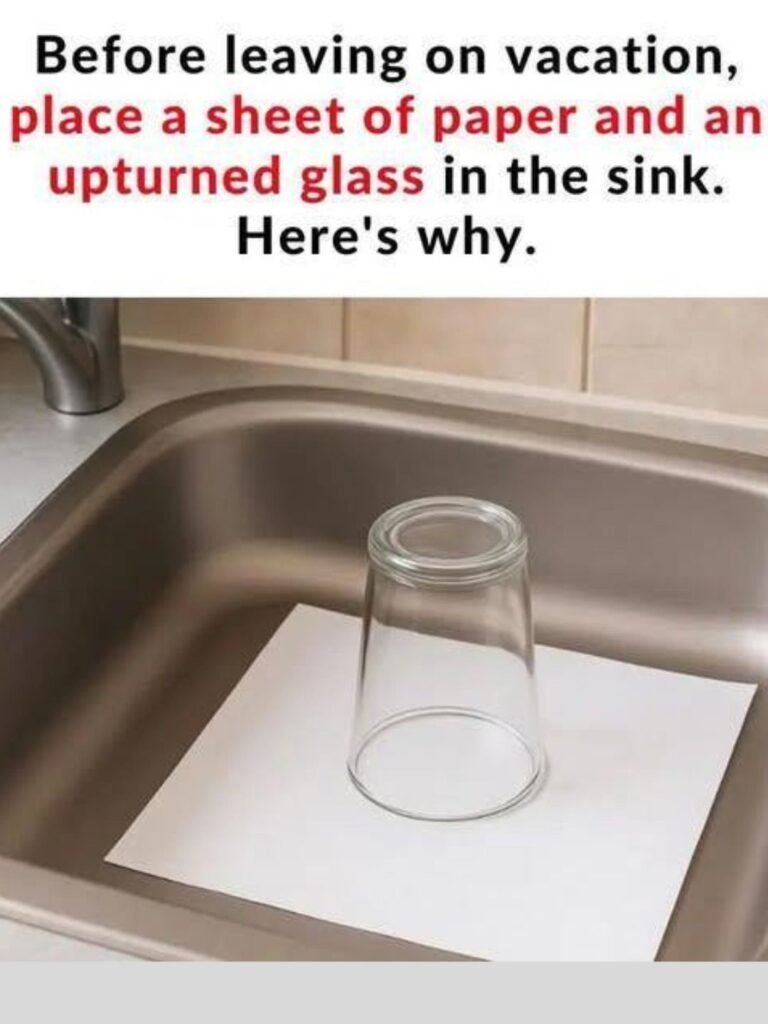
It looks strange the first time you see it: a clean drinking glass placed upside down in the kitchen sink, with a sheet of paper tucked underneath. No water running. No food nearby. Just… that.
At a glance, it feels like superstition. But the habit didn’t come from nowhere. It’s a low-effort, low-cost precaution rooted in how homes behave when no one is around—and what tends to show up when routines stop.
To understand why this works (and where it doesn’t), it helps to break the idea down piece by piece.
The Real Problem Isn’t the Sink — It’s What’s Below It
When you leave home for several days or weeks, your plumbing changes behavior.
Normally, water flowing through sinks and drains keeps the P-trap filled. That curved section of pipe holds water specifically to block sewer gases and pests from traveling back up into your home.
When a house sits unused:
- Water in traps can slowly evaporate
- Pressure changes can pull air upward
- Tiny insects can explore new paths
The sink becomes an access point—not because it’s dirty, but because it’s quiet.
What the Upside-Down Glass Is Actually Blocking
An upside-down glass placed over the drain creates a physical barrier.
It doesn’t seal the drain airtight, but it:
- Disrupts airflow
- Blocks direct vertical access
- Prevents insects from exiting the pipe easily
For bugs like drain flies, cockroaches, or ants exploring moisture sources, that obstacle is often enough to make them turn back.
It’s not a trap. It’s a deterrent.
Why the Paper Matters More Than People Think
The paper under the glass isn’t random.
Its role is diagnostic.
If something tries to come up through the drain while you’re gone:
- The paper shifts
- Crumples
- Gets pushed aside
When you return, you have immediate visual feedback that something moved. No guessing. No surprises crawling out while you unpack.
It turns a passive barrier into a simple indicator.
What This Trick Does Not Do
This is where context matters.
The glass-and-paper method:
- ❌ Does not stop serious plumbing issues
- ❌ Does not replace proper drain maintenance
- ❌ Does not block sewer gas if traps are fully dry
It’s not a solution for long-term vacancy or structural problems. It’s a short-term safeguard against minor intrusions during normal travel.
Think of it as a seatbelt, not an airbag.
Why Kitchens Get This Treatment More Than Bathrooms
People usually do this in kitchen sinks for a reason.
Kitchen drains:
- Are larger
- Connect to food-related waste lines
- Attract insects more than bathroom drains
Bathrooms often stay humid longer, and toilet traps hold water more reliably. Kitchen sinks dry out faster—especially in warm weather.
That makes them the more likely entry point.
How This Compares to Other Common Precautions
People prepare homes for travel in dozens of ways:
- Unplugging electronics
- Turning off water mains
- Emptying trash
- Locking windows twice
The upside-down glass fits into that same category: small action, low cost, low regret.
It doesn’t interfere with anything.
It doesn’t require tools.
And it takes about ten seconds.
When It Actually Makes Sense to Do This
This method is most useful if:
- You’ll be gone more than 3–4 days
- It’s warm or humid
- Your building has shared plumbing
- You’ve had drain insects before
If none of those apply, it’s optional. But that’s exactly why people keep doing it—it’s easier to do than to debate.
A Habit Built on Experience, Not Fear
Like many household rituals, this one survived because it worked often enough to be remembered.
Someone once came home to insects in the sink.
Someone else noticed paper had moved.
Someone told someone else.
Over time, the action stuck—not because it’s dramatic, but because it’s quiet insurance against an annoying surprise.
The Takeaway
An upside-down glass and a piece of paper won’t protect a house from everything. But they don’t need to.
They exist in that narrow space between overthinking and doing nothing—where simple barriers reduce small risks during long absences.
It’s not magic.
It’s not folklore.
It’s just a practical response to how empty homes behave when no one’s watching.
And sometimes, that’s enough.