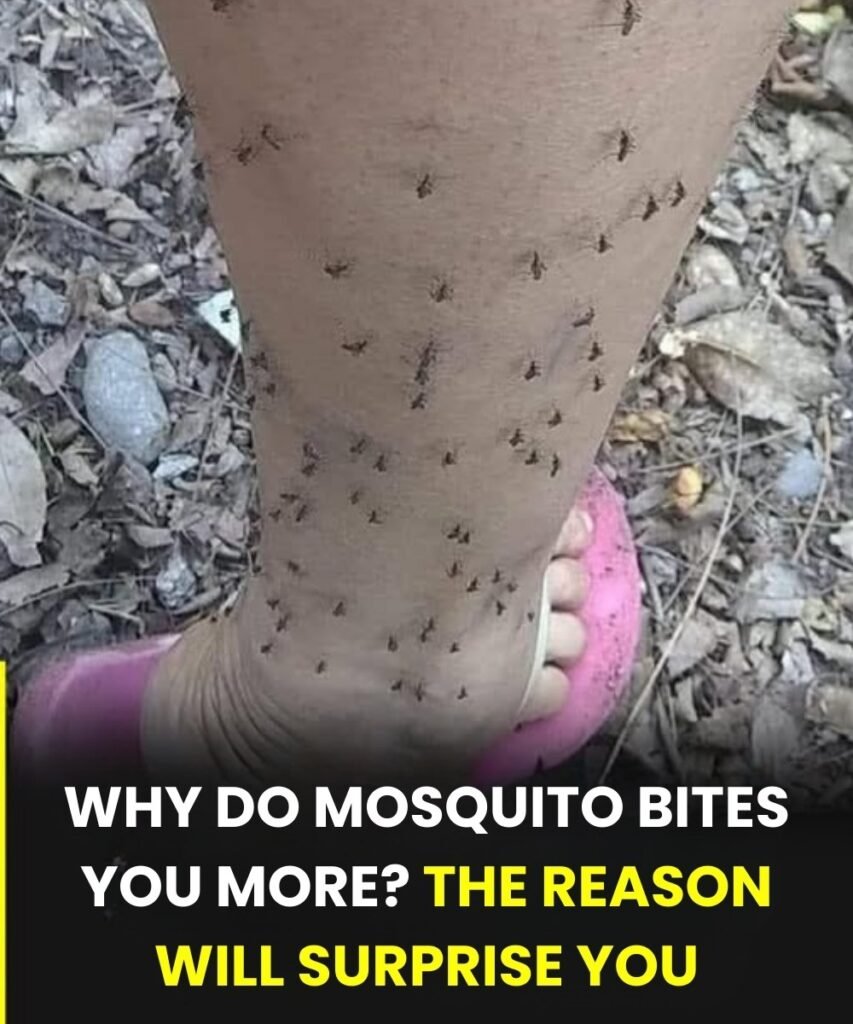
It’s a familiar summer ritual: you step outside for fresh air, flip open the porch light, or take a quiet evening walk — and suddenly it’s like the mosquitoes have your name written on them. While others stand unbothered, you’re the one doing the itchy dance with bug bites.
Is it bad luck? Your imagination? Nothing more than coincidence?
Actually, there’s real biology behind it.
Mosquitoes aren’t just random in who they bite — they’re choosing based on chemical signals your body emits. Here’s what science says about why mosquitoes seem to pick you every time.
Mosquitoes Don’t Bite “at Random”
Contrary to popular belief, mosquitoes aren’t equally attracted to everyone. Instead, they rely on sensory cues to locate their next meal.
They’re drawn by a combination of:
- Chemical signals from your skin
- Carbon dioxide you exhale
- Heat from your body
- Movement and moisture
Some people naturally emit stronger signals — making them more noticeable to these tiny predators.
Carbon Dioxide: The First Clue
Every breath you take releases carbon dioxide (CO₂). Mosquitoes have tiny receptors on their antennae that pick up CO₂ from up to 50 meters away.
The more CO₂ you exhale — the more likely mosquitoes are to notice you.
Factors that increase CO₂ output include:
- Larger body size
- Exercise
- Heavy breathing
- Higher metabolic rates
So if you’re active, warm, or breathing deeply, you’re effectively sending mosquitoes a bright flashing beacon.
Body Heat and Movement
Mosquitoes are attracted to warmth. They see heat as a sign of a living being — and that’s their target.
Your body temperature naturally fluctuates based on:
- Activity level
- Hormones
- Internal metabolism
Anyone who’s warmer than the surrounding air becomes an easier target for mosquitoes.
Movement plays a role too. Every step you take stirs up heat and CO₂, making you easier to track than someone standing still.
Skin Chemistry and Microbes
Here’s where things get personal.
Your skin carries millions of bacteria — and each person’s bacterial makeup is unique.
These skin microbes interact with your sweat and natural oils to produce tiny chemical compounds. Mosquitoes are particularly sensitive to some of these — and not others.
Scientists have identified several substances that attract mosquitoes more strongly, including:
- Lactic acid
- Certain fatty acids
- Ammonia
- Uric acid
People who naturally excrete higher amounts of these compounds — thanks to genetics or lifestyle — tend to be mosquito magnets.
Blood Type May Play a Role
Research suggests that blood type might influence mosquito attraction.
In some studies:
- People with type O blood get bitten more often
- Type A individuals tend to be bitten less
- Types B and AB fall somewhere in between
Why? Mosquitoes seem to prefer the scent profile associated with certain blood types — though this is only one piece of a larger puzzle.
Clothes Color: What You Wear Matters
You might think bites are all about your biology — but what you wear also sends signals to mosquitoes.
Dark colors — especially black, navy, and red — absorb heat and make you easier to spot. Light colors tend to reflect heat, making you slightly less noticeable.
So a midnight black shirt on a summer evening won’t help your mosquito situation.
Beer, Sweat, and Sugar
A cold drink and a backyard barbecue are summer staples — but some beverages can increase your attractiveness to mosquitoes.
Alcohol consumption has been linked to higher mosquito bites, possibly because:
- It increases body temperature
- It makes you emit more CO₂
- It influences sweat composition
That’s not a reason to stop enjoying summer nights — just an insight into how certain habits affect your appeal to insects.
Genetics and Individual Variation
Some people seem to get all the bites while others walk away unmarked. Scientists believe genetics plays a role in this.
Your DNA influences:
- Metabolic rate
- Skin microbiome
- Sweat composition
- Hormonal signals
That’s why siblings at the same picnic might have completely different reactions to the same mosquito swarm.
Mosquitoes and Pregnancy
Pregnant people tend to attract more mosquito attention — and science explains why.
During pregnancy:
- CO₂ output increases
- Body temperature rises
- Blood flow changes
These are precisely the same cues mosquitoes use to find a host — so pregnancy inadvertently boosts your visibility to biting insects.
How to Reduce Your Mosquito Appeal
If you’re tired of being the target, there are steps you can take:
1. Choose lighter clothing
Reflect heat and avoid drawing extra attention.
2. Use proven repellents
Products with DEET, picaridin, or oil of lemon eucalyptus are effective.
3. Stay cool
A fan on your porch isn’t just pleasant — it disrupts mosquito flight patterns too.
4. Avoid alcohol before going outside
It may help reduce body heat and CO₂ output slightly.
5. Time outdoor activities
Dawn and dusk are peak mosquito hours — limiting exposure helps.
When Bites Cause a Reaction
Most mosquito bites are harmless irritations. But some people experience:
- Strong inflammation
- Hives
- Itchy welts that last days
If reactions are severe or accompanied by fever, it’s worth consulting a healthcare provider.
Additionally, in regions where disease-carrying mosquitoes are present, taking extra precautions is essential.
A Broader Perspective
Mosquitoes don’t single you out out of malice.
They are responding to a complex combination of chemical, physical, and biological cues.
Your body simply emits more of the signals they are programmed to follow.
It’s not personal.
It’s biological.
And understanding it means you can make smarter choices — not only about how you dress or when you go outside, but about how you protect yourself and reduce discomfort.
Final Thought
What feels like “bad luck” is really a conversation between your body and the world around you.
Mosquitoes are listening to the signals you send — and they react accordingly.
So the next time you find yourself the favorite target of biting insects, remember:
You’re not imagining it.
There’s science behind it.
And now you know the why — not just the itch.