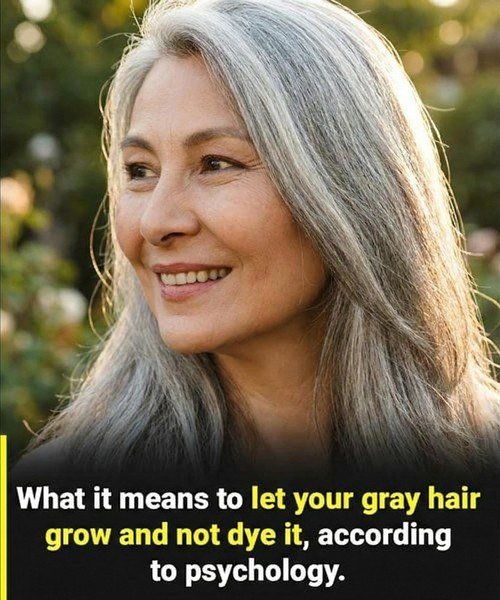
For years, gray hair was treated like something to hide.
A flaw.
A signal to cover up.
A reminder that time was passing.
Now, something unexpected is happening.
Across workplaces, social media, fashion campaigns, and everyday life, more people are choosing to let their natural gray show. Not as a statement. Not as rebellion. Simply as a decision to stop pretending.
What changed?
And why does gray hair suddenly feel powerful instead of problematic?
The Shift No One Announced
There was no official movement.
No manifesto.
No viral campaign telling people to stop dyeing their hair.
Instead, the change happened quietly.
One person decided not to book another salon appointment.
Another stopped touching up roots.
Someone else looked in the mirror and thought, “This is fine.”
Over time, those individual choices added up.
Gray hair stopped being rare in public spaces.
It became familiar.
Then normal.
Then, in many circles, admired.
Section 1: The Pressure That Used to Exist
For decades, beauty culture sent a clear message:
Youth equals value.
Aging equals decline.
Gray hair became one of the strongest symbols of that idea.
It was associated with:
- Being “past your prime”
- Losing relevance
- Letting yourself go
- Not trying hard enough
Especially for women, the pressure was intense.
Dyeing wasn’t framed as optional.
It was framed as maintenance.
Something you were expected to do.
Section 2: Why Constant Coloring Became Exhausting
Over time, many people started questioning the routine.
Dye every four to six weeks.
Touch up roots.
Hide growth.
Repeat.
It never ended.
Financially, it added up.
Emotionally, it became draining.
Physically, it damaged hair.
People began to notice how much energy they were spending trying to look “unchanged.”
And they started wondering why.
Section 3: Social Media Changed the Narrative
One major reason gray hair became accepted is visibility.
On social platforms, people began sharing:
- Transition photos
- Before-and-after journeys
- Unfiltered portraits
- Honest stories
Instead of hiding gray hair, they documented it.
And something surprising happened.
The images were beautiful.
Not in a polished, artificial way — but in a real, human way.
Gray hair looked strong.
Distinctive.
Memorable.
It stopped feeling like something to erase.
Section 4: The Psychology of Letting Go
Letting your gray hair grow out isn’t just a cosmetic choice.
It’s often emotional.
It involves:
- Accepting change
- Releasing control
- Redefining self-image
- Challenging old beliefs
For many people, the hardest part isn’t the color.
It’s the identity shift.
They’re no longer presenting a younger version of themselves.
They’re presenting the current one.
That takes courage.
Section 5: Why Confidence Plays a Bigger Role Than Age
Interestingly, gray hair doesn’t automatically make someone look “old.”
What makes the difference is how they carry it.
People who embrace their gray often project:
- Calm
- Self-assurance
- Comfort in their skin
- Emotional maturity
That energy matters more than color.
Two people can have identical gray hair.
One looks tired.
The other looks striking.
The difference isn’t genetics.
It’s confidence.
Section 6: The Health and Practical Benefits
Beyond appearance, there are practical reasons many people stop dyeing.
Health Considerations
Hair dyes often contain strong chemicals.
Long-term use can cause:
- Scalp irritation
- Hair thinning
- Allergic reactions
- Dryness
Letting hair go natural gives the scalp time to recover.
Time and Cost
No more emergency appointments.
No more last-minute root touch-ups.
No more budgeting for constant treatments.
That freedom matters.
Section 7: Gray Hair and Professional Life
One fear many people have is workplace perception.
Will gray hair affect credibility?
In many fields, the opposite is happening.
Gray is increasingly associated with:
- Experience
- Stability
- Authority
- Reliability
In leadership roles especially, natural aging is often seen as a strength.
It signals that someone has lived through challenges and learned from them.
Section 8: How Fashion Reframed Gray
The fashion industry also played a role.
Designers, photographers, and brands began featuring models with natural gray.
Not as “inspiring exceptions,” but as normal representatives of beauty.
Runways.
Campaigns.
Editorials.
Gray hair stopped being niche.
It became part of the visual language.
Section 9: The Transition Phase — The Hardest Part
Almost everyone who lets their gray grow out says the same thing:
The middle stage is the worst.
Two colors.
Uneven tones.
Awkward lengths.
This phase tests patience.
Some people give up here and return to dyeing.
Those who continue usually describe it as a turning point.
Once the transition ends, relief replaces doubt.
Section 10: Why This Trend Is Likely to Last
Gray hair isn’t trending because it’s fashionable.
It’s trending because it fits modern values.
Today, people care more about:
- Authenticity
- Mental health
- Sustainability
- Self-acceptance
Letting hair go natural aligns with all of them.
It reduces waste.
Lowers stress.
Encourages honesty.
That makes it more than a trend.
It makes it a cultural shift.
A Different Kind of Beauty Standard
The old beauty standard was rigid.
Look young.
Look smooth.
Look unchanged.
The new one is flexible.
Look like yourself.
Look healthy.
Look comfortable.
Gray hair fits naturally into that mindset.
It doesn’t pretend.
It doesn’t perform.
It simply exists.
Calm Conclusion
Letting gray hair show isn’t about giving up.
It’s about choosing not to fight time.
It reflects a quieter form of confidence — the kind that doesn’t need approval, filters, or constant maintenance.
For many people, it marks the moment they stop asking, “How do I look younger?”
And start asking, “How do I feel most like myself?”