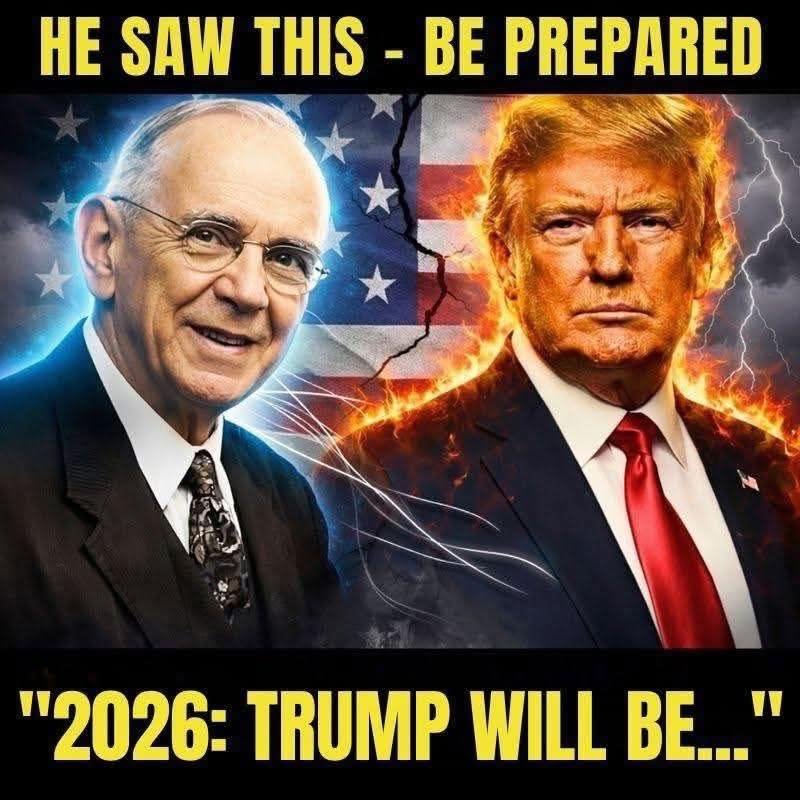
Why do interpretations attributed to Edgar Cayce keep reappearing whenever politics feels unstable? Each resurgence follows a familiar pattern: periods of uncertainty invite renewed interest in figures who promised insight beyond conventional analysis. Cayce, often called the “Sleeping Prophet,” occupies a unique place in that tradition—less as a predictor of specific events and more as a symbol of how people seek meaning during turbulent times.
What matters now is not whether the interpretations are compelling, but how they’re understood—and where the line between historical context and modern projection should be drawn.
Who Edgar Cayce Was—and What He Claimed to Do
Edgar Cayce (1877–1945) was an American spiritual teacher who delivered thousands of trance-based “readings,” many focused on health, spirituality, and moral development. A smaller subset addressed social change, global cycles, and leadership themes.
Cayce did not operate as a political commentator in the modern sense. He rarely named contemporary leaders, avoided partisan framing, and spoke in broad ethical terms. His language emphasized collective responsibility, spiritual law, and the consequences of human choices over time.
That ambiguity is precisely why later generations return to his work.
Why Political Interpretations Multiply During Crisis
When institutions feel strained, people often look for frameworks that explain not just what is happening, but why it feels consequential. Cayce’s readings—filled with metaphor and moral causality—offer a canvas onto which modern anxieties can be projected.
This doesn’t make the interpretations illegitimate, but it does make them malleable. The same passage can be read as a warning about authoritarianism in one era and moral decay in another. Context supplies the specifics; the text supplies the tone.
Understanding that dynamic helps explain why interpretations surge at certain moments and fade at others.
What the Readings Actually Say About Power
Across Cayce’s material, recurring themes appear: leadership as stewardship, the dangers of self-interest, and the idea that societies rise or fall based on ethical alignment rather than strategy alone.
Notably absent are timelines and names. Cayce’s political language is structural, not predictive. He describes patterns—concentration of power, neglect of the vulnerable, erosion of trust—without tying them to elections or parties.
This makes his work less a forecast and more a mirror.
The Risk of Retrofitting Prophecy
A common pitfall is retrofitting—matching broad statements to specific events after they occur. This practice can feel convincing, especially when outcomes are dramatic, but it confuses resonance with accuracy.
Because the readings are general, they can be aligned with many different scenarios. That flexibility is not proof of foresight; it’s a feature of symbolic language.
Responsible engagement requires acknowledging that alignment is interpretive, not evidentiary.
Why These Interpretations Travel So Fast Online
Digital platforms reward certainty and novelty. A post that claims a century-old reading “predicted” a current event spreads faster than one that explains nuance.
Algorithms amplify emotionally charged claims, while caveats get lost. Over time, interpretations harden into assertions, and assertions become lore.
The result is a feedback loop where complexity is flattened and context disappears.
Separating Insight From Instruction
Many readers find value in Cayce’s ethical emphasis without treating it as instruction for policy or prediction. That distinction matters.
Insight can provoke reflection—about leadership, accountability, and collective values—without directing action or declaring inevitability. Instruction, by contrast, implies authority over outcomes.
Cayce’s work supports the former far more than the latter.
What Scholars and Archivists Emphasize
Institutions that preserve Cayce’s readings stress careful sourcing and historical framing. They caution against selective quotation and urge readers to consider entire sessions rather than isolated lines.
This approach reframes the material as philosophical and spiritual, not tactical. It also underscores a basic principle: meaning changes when context is removed.
Archival integrity is the antidote to sensational interpretation.
Why the Appeal Persists Despite the Caveats
Even when approached cautiously, the appeal remains. Cayce’s language offers coherence in moments that feel fragmented. It reassures readers that cycles exist, that choices matter, and that outcomes are not random.
That reassurance doesn’t depend on literal prediction. It depends on narrative structure—beginning, consequence, possibility of correction.
For many, that structure is enough.
How to Read These Claims Without Losing Perspective
A responsible approach asks a few simple questions:
Is this interpretation supported by original text?
Does it rely on broad themes or specific claims?
Is it presented as reflection or certainty?
Answers to those questions often reveal whether a claim invites understanding or demands belief.
A Framework for Meaning, Not a Map for Events
Edgar Cayce’s political interpretations endure because they speak to perennial concerns: power, ethics, and responsibility. They offer a lens, not a ledger.
Used thoughtfully, they can enrich conversation about values during uncertain times. Used carelessly, they can blur the line between reflection and prediction.
The difference lies not in the readings themselves, but in how—and why—they’re being read now.