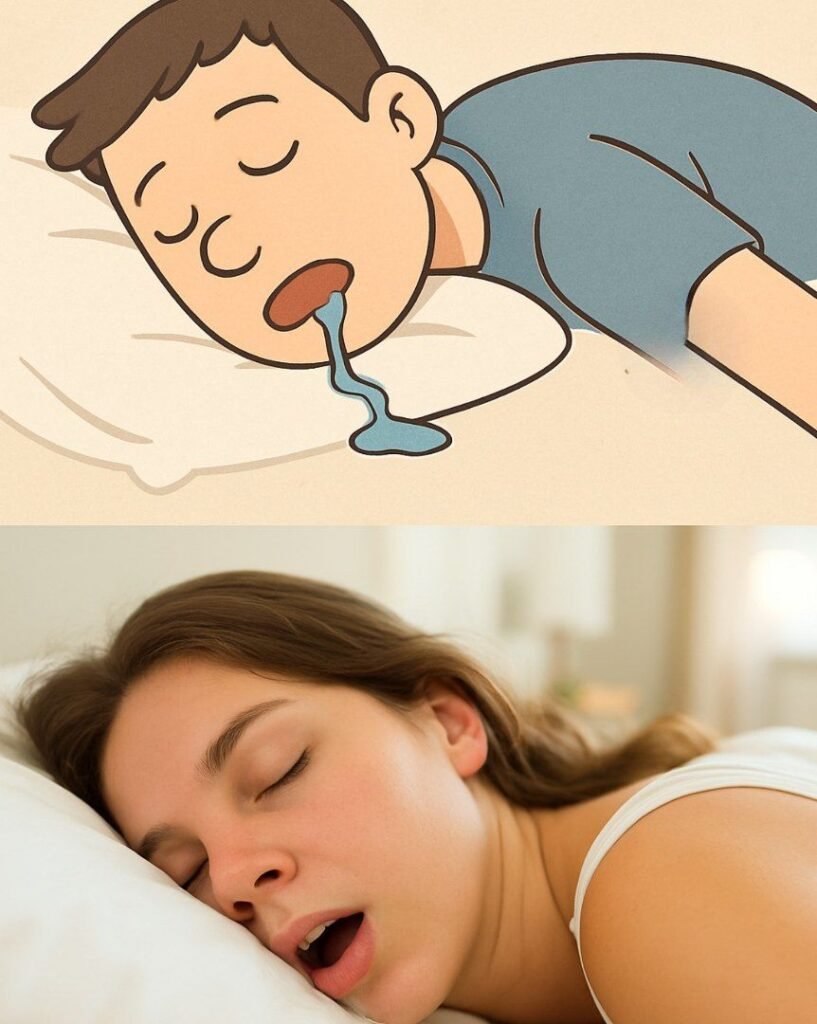
Waking up with a damp pillow is usually dismissed as awkward and harmless.
Most people laugh it off.
They change the pillowcase.
They move on.
Occasional drooling during sleep is normal.
But when it happens often — night after night — it can point to underlying issues that deserve attention.
Your body doesn’t waste effort without reason.
Neither does your nervous system.
How Drooling Happens During Sleep
While awake, swallowing happens automatically.
At night, muscle tone relaxes.
Swallowing slows.
Jaw position changes.
If saliva production continues at normal levels, it may escape.
This is where drooling begins.
1 — Sleeping Position Matters
Side and stomach sleepers are more likely to drool.
Gravity pulls saliva outward.
Back sleepers usually swallow more effectively.
A simple position change sometimes solves the problem.
2 — Nasal Congestion and Mouth Breathing
Blocked nasal passages force mouth breathing.
When the mouth stays open:
- Saliva evaporates slower
- Swallowing decreases
- Drooling increases
Allergies, sinus infections, and colds are common triggers.
3 — Sleep Apnea and Airway Obstruction
Sleep apnea disrupts breathing patterns.
It also affects jaw and tongue position.
People with untreated apnea often drool more frequently.
Snoring and daytime fatigue are related clues.
4 — Gastroesophageal Reflux (GERD)
Acid reflux stimulates saliva production.
The body tries to neutralize acid.
Extra saliva increases nighttime leakage.
Heartburn, sour taste, and throat irritation often accompany it.
5 — Neurological Changes
The brain controls swallowing.
Certain neurological conditions interfere with muscle coordination.
This can lead to poor saliva control during sleep.
Even mild disruptions may show up early as drooling.
6 — Medication Side Effects
Some medications increase saliva.
Others reduce muscle control.
Common contributors include:
- Sedatives
- Antidepressants
- Parkinson’s medications
- Allergy treatments
Changes in prescriptions sometimes explain new symptoms.
Why It’s More Common With Age
Aging affects:
- Muscle tone
- Nerve signaling
- Sleep structure
- Medication use
These shifts make drooling more likely in older adults.
When Drooling Becomes a Health Signal
Occasional drooling is harmless.
Persistent drooling combined with:
- Speech changes
- Swallowing difficulty
- Facial weakness
- Frequent choking
requires medical evaluation.
These signs suggest deeper neurological involvement.
Simple Ways to Reduce Nighttime Drooling
Helpful adjustments include:
- Improving nasal airflow
- Using allergy control
- Sleeping slightly elevated
- Staying hydrated
- Reviewing medications
Small changes often bring relief.
Oral Health’s Role
Infections and gum disease affect saliva balance.
Regular dental care reduces inflammation.
Healthier mouths manage saliva better.
Why People Rarely Ask About It
Drooling feels embarrassing.
People avoid discussing it.
Doctors aren’t told.
Symptoms go unexamined.
Silence delays solutions.
The Body’s Subtle Communication System
Your body speaks in patterns.
Through sleep.
Through posture.
Through secretions.
Through habits.
Drooling is one of those signals.
Not dramatic.
Not alarming.
But meaningful.
The Calm Takeaway
Drooling during sleep is usually minor.
But when it becomes routine, it deserves curiosity.
Not fear.
Not shame.
Just attention.
Because sometimes the smallest signs carry the clearest messages.