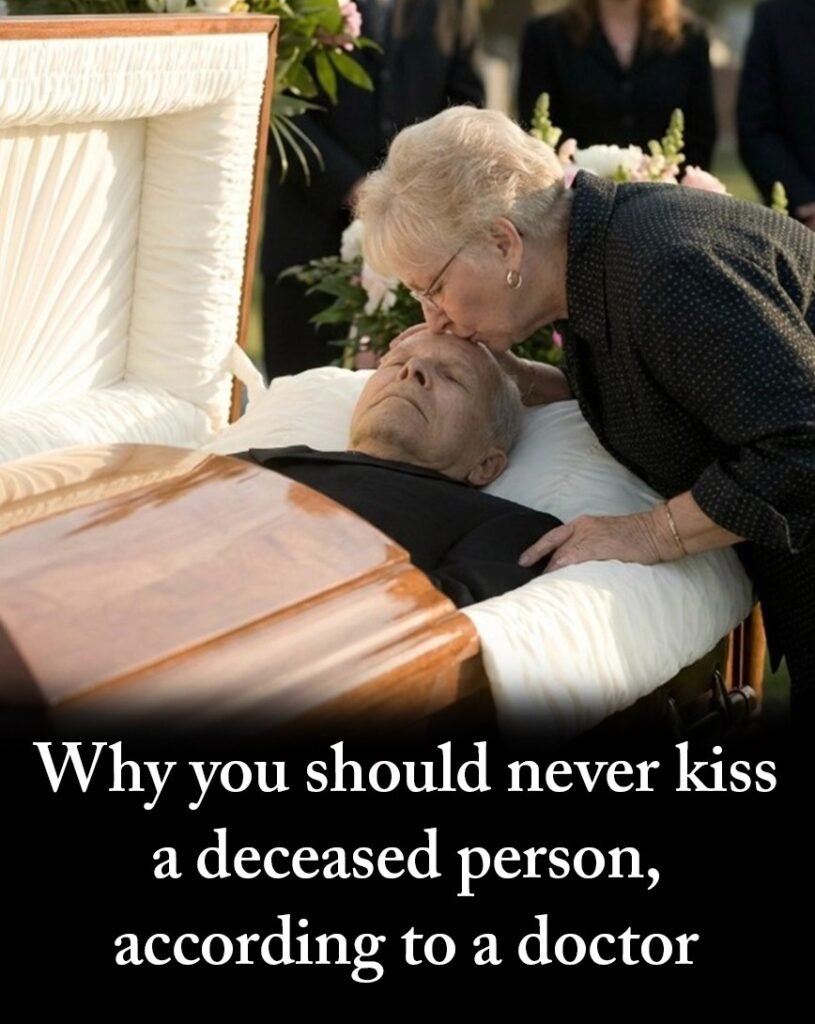
In moments of grief, instinct often takes over.
When someone we love passes away, many of us feel an overwhelming urge to stay close. We hold their hand. We touch their face. Some lean in for one last kiss—a final gesture of love, farewell, and connection.
It feels natural.
It feels meaningful.
It feels human.
But medical experts caution that this deeply emotional act can carry unexpected health risks—risks that most people never consider in the moment.
This warning is not meant to diminish grief.
It is meant to protect the living.
What Happens to the Body After Death
The human body begins changing almost immediately after death.
Once the heart stops beating and oxygen no longer circulates, cells begin to break down. This process is called decomposition, and it starts within minutes.
Early changes include:
- Loss of immune defense
- Breakdown of tissue barriers
- Bacterial migration
- Release of bodily fluids
- Rapid microbial growth
Without circulation and immune response, bacteria that were once harmless inside the body begin to multiply and spread.
The mouth, nose, and respiratory tract are among the first areas affected.
This is where risk begins.
The Growth of Bacteria After Death
While alive, the body constantly regulates bacteria through temperature control, immune cells, and circulation.
After death, those protections disappear.
As a result:
- Oral bacteria multiply rapidly
- Gut bacteria migrate to other areas
- Pathogens become more concentrated
- Natural filters stop working
Within hours, the mouth can contain significantly higher levels of harmful microorganisms than it did during life.
A kiss—especially on the lips—creates direct contact with this environment.
Potential Pathogens Involved
Medical researchers have identified several types of bacteria and viruses that may become more dangerous after death.
These can include:
- Streptococcus species
- Staphylococcus bacteria
- E. coli
- Respiratory pathogens
- Fungal organisms
If the deceased had an infectious illness before passing, the risk increases further.
Some diseases remain contagious for hours or even days after death, depending on conditions.
Why the Mouth Is Especially Risky
The mouth is one of the most biologically active areas of the human body.
It contains:
- Saliva
- Mucus
- Microbes
- Open tissue surfaces
After death, saliva may pool, and tissues begin breaking down. This creates an ideal environment for bacterial growth.
Kissing exposes another person’s mouth, lips, and sometimes small cuts or sores to this environment.
These tiny openings are enough for bacteria to enter the bloodstream.
Risk of Infection for the Living
In most cases, a single kiss will not automatically cause illness.
However, doctors emphasize that risk is cumulative and unpredictable.
Possible consequences include:
- Oral infections
- Respiratory infections
- Skin infections
- Bloodstream infections
- Complications in immunocompromised people
People with weakened immune systems, diabetes, chronic illness, or recent surgery are especially vulnerable.
For them, even minor exposure can lead to serious complications.
Cases That Prompted Medical Warnings
Health authorities began emphasizing these risks after several documented cases in which mourners became ill following close contact with deceased loved ones.
Some involved:
- Bacterial pneumonia
- Severe mouth infections
- Blood infections
- Rare viral transmission
While these cases are uncommon, they were serious enough to prompt formal guidance.
Public health agencies now include these warnings in post-death care protocols.
Cultural and Emotional Context
It is important to understand that kissing the deceased is deeply rooted in many cultures and traditions.
Across societies, it symbolizes:
- Respect
- Love
- Farewell
- Spiritual connection
- Closure
Medical experts do not dismiss this meaning.
Instead, they acknowledge the emotional importance while encouraging safer alternatives.
The goal is not to restrict grief.
It is to prevent additional suffering.
Why Funeral Professionals Often Discourage It
Funeral directors and mortuary staff are trained to manage biological risks.
They routinely advise families to avoid direct contact with the mouth, nose, and eyes of the deceased.
This is why viewing practices often involve:
- Cosmetic preparation
- Protective treatments
- Controlled environments
- Limited physical contact
These measures reduce—but do not eliminate—microbial risk.
Professionals understand that families are vulnerable in these moments and may not think about safety.
Their guidance exists for a reason.
Safer Ways to Say Goodbye
Medical and grief specialists recommend alternatives that preserve emotional meaning without physical risk.
These include:
- Holding the hand
- Touching the forehead
- Speaking softly
- Placing flowers
- Writing letters
- Silent reflection
These gestures offer closure without exposing sensitive areas.
They honor connection without compromising health.
The Role of Shock and Impulse
Grief often triggers impulsive behavior.
In moments of loss, the brain’s emotional centers override logical processing. People act from instinct rather than analysis.
This is normal.
It is also why advance awareness matters.
When people know the risks beforehand, they are more likely to make informed choices—even in emotional situations.
Special Considerations for Certain Deaths
In some circumstances, the risk is higher than usual.
These include deaths involving:
- Infectious diseases
- Respiratory illness
- Bloodborne infections
- Hospital-acquired bacteria
- Long-term hospitalization
In these cases, close contact with the mouth or face is strongly discouraged.
Hospitals and public health officials often issue specific guidance to families.
Psychological Impact of Medical Warnings
Some people worry that such warnings make grieving feel “clinical” or cold.
Experts emphasize that this is not the intention.
Grief does not require physical contact to be real.
Love does not require risk.
Memory does not require exposure.
Emotional bonds exist beyond touch.
Why This Guidance Matters
The death of a loved one is already overwhelming.
Adding illness or hospitalization afterward only deepens trauma.
Medical warnings aim to prevent secondary tragedies.
They exist to protect families during their most vulnerable moments.
Conclusion: Respecting Both Love and Health
Kissing someone who has passed away is an instinct rooted in love, connection, and finality.
It comes from the heart.
But the body after death becomes biologically unstable and potentially harmful.
Understanding this does not diminish grief.
It strengthens it by honoring life—both the one that ended and the ones that continue.
There are many ways to say goodbye.
Many ways to express devotion.
Many ways to carry someone forward.
Choosing a safer path is not a lack of love.
It is an act of care.
For yourself.
For your family.
And for the future.