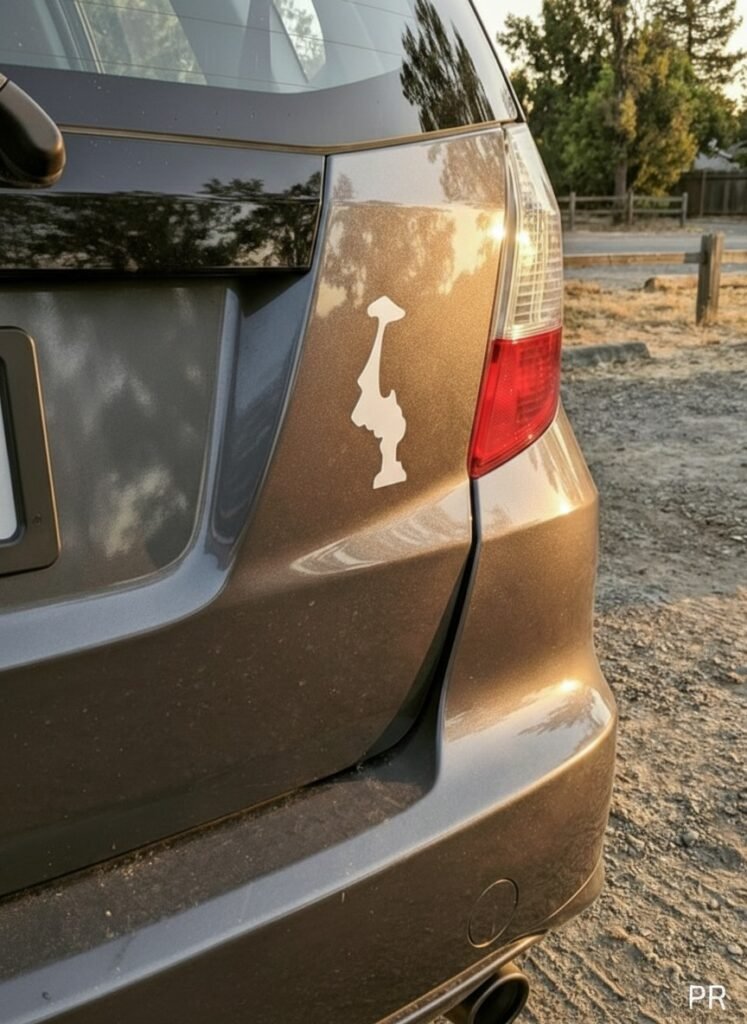
It usually takes a moment to notice. A familiar sticker, logo, or symbol appears slightly off — flipped upside down on the back of a car. At first, it seems like a mistake. A careless placement. Maybe a joke.
But as more drivers began spotting the same reversed detail on different vehicles, curiosity replaced coincidence. What looked accidental started to feel intentional.
This small visual shift has quietly become a form of expression on the road.
How the Trend Started
Upside-down stickers are not tied to a single brand or movement. Instead, the practice appears to have emerged organically among drivers who wanted to signal something without drawing overt attention.
Some first noticed the trend in online forums, where drivers shared photos of vehicles displaying familiar decals inverted. Others encountered it in parking lots and traffic lines, prompting quiet speculation.
The lack of a clear origin only added to its intrigue.
A Subtle Way to Signal Discontent
For many, flipping a sticker upside down is less about decoration and more about message. Inverting a symbol can suggest disagreement, dissatisfaction, or protest without the need for explanation.
Unlike bold slogans or confrontational graphics, an upside-down sticker is ambiguous. Those who recognize it may interpret it as intentional commentary. Those who don’t may see nothing unusual at all.
This ambiguity is part of its appeal.
The Psychology of Small Acts
Sociologists often point out that subtle symbols allow people to express identity while avoiding conflict. Small acts feel safer than loud declarations, especially in shared public spaces like roads.
An inverted sticker can function as a quiet nod to others who feel similarly — a low-risk way to say, “I see this differently.”
In an environment where polarization is high, understatement becomes a form of self-protection.
How Drivers Are Interpreting the Meaning
Interpretations vary widely. Some see the flipped sticker as a sign of protest against the organization or idea the symbol represents. Others view it as ironic humor or a personal inside joke.
Because no single meaning is universally agreed upon, the symbol remains flexible. That flexibility allows drivers to project their own intent onto it, making it a blank canvas for expression.
Why It’s Spreading Without Going Viral
Unlike trends driven by social media challenges, this one spreads through observation. A driver notices it once, then again. Curiosity grows. Someone tries it themselves.
The trend does not rely on algorithms or influencers. It moves slowly, through real-world repetition, making it feel more organic than manufactured.
Its subtlety may be exactly why it endures.
A Reflection of Quiet Resistance
Small symbols often reveal larger moods. The rise of upside-down stickers suggests a desire to express individuality and dissent without shouting.
It reflects a moment where people want to be seen, but not necessarily debated. Where meaning is hinted at rather than spelled out.
On the surface, it’s just a sticker placed differently. But beneath that simplicity lies a broader impulse — to communicate quietly in a loud world.
Sometimes, turning something upside down is the simplest way to show you see it differently.