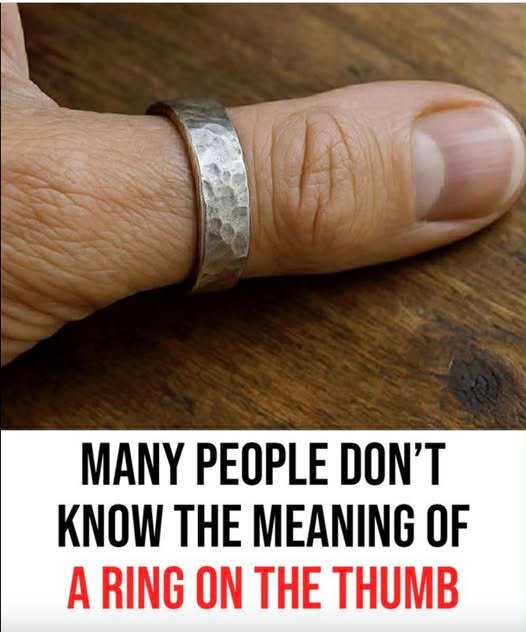
A piece of jewelry worn on the thumb is easy to overlook. It does not sparkle more than other rings, nor does it demand attention through size or design. Yet across cultures, generations, and social groups, the thumb ring has repeatedly carried meanings that go far beyond decoration.
What appears to be a minor styling choice often functions as a subtle signal of personality, independence, and social positioning.
The Historical Roots of Thumb Rings
Historically, thumb rings served practical purposes before becoming symbolic. In ancient societies, they were used by archers to protect fingers while drawing bows. In parts of Asia and the Middle East, they signified status, wealth, and authority.
Over time, these functional and hierarchical roles evolved into aesthetic traditions. Thumb rings gradually became associated with strength, control, and individuality, themes that still influence modern interpretations.
Why the Thumb Is Different From Other Fingers
Each finger has cultural associations, but the thumb occupies a unique position. It is structurally separate from the rest of the hand and plays a central role in grip and dexterity. Symbolically, it represents autonomy and capability.
Because of this, wearing a ring on the thumb is often interpreted as a declaration rather than an accessory. It draws attention precisely because it defies convention.
Unlike wedding or engagement rings, it carries no universally fixed meaning.
Psychological Interpretations of Thumb Jewelry
Behavioral studies and fashion psychology suggest that unconventional accessory choices often reflect confidence and self-directed identity. Individuals who select non-traditional placements tend to value personal expression over social conformity.
Thumb rings are frequently linked to traits such as assertiveness, independence, and resilience. They suggest comfort with standing apart from dominant trends.
While not universal, these patterns appear consistently in style research.
Gender and Social Perceptions
Historically, thumb rings were more commonly worn by men in formal contexts, particularly in aristocratic and military settings. In contemporary culture, they are worn across genders and age groups.
For women, thumb rings have sometimes been associated with autonomy and resistance to traditional expectations. For men, they are often linked to confidence and authority.
Modern fashion has largely neutralized these distinctions, allowing broader personal interpretation.
Cultural Variations in Meaning
In some Eastern traditions, thumb rings symbolize self-control and discipline. In Western fashion, they are more closely associated with creativity and individuality.
Certain subcultures have adopted thumb rings as identity markers, using them to communicate membership, values, or aesthetic alignment.
Meaning, therefore, depends heavily on cultural context.
Material, Size, and Design Choices
Not all thumb rings communicate the same message. Thick metal bands tend to convey strength and permanence. Slim or minimalist designs suggest subtlety and restraint. Gemstones can indicate emotional or spiritual significance.
The size of the ring also matters. Oversized designs emphasize boldness, while fitted styles reflect precision.
These details shape perception as much as placement.
Why Thumb Rings Resist Standardization
Unlike other finger rings, thumb rings have avoided rigid symbolic definitions. There is no single tradition that governs their use. This flexibility allows wearers to assign personal meaning without conflict.
This resistance to standardization is part of their appeal. They function as open symbols rather than prescribed ones.
In a world of codified fashion signals, this ambiguity is rare.
Social Media and the Revival of Thumb Rings
In recent years, social platforms have contributed to renewed interest in thumb jewelry. Influencers, musicians, and designers have integrated them into visual branding.
Images circulate rapidly, transforming niche choices into global trends. However, unlike many viral accessories, thumb rings retain personal interpretation.
They are adopted, not copied.
Practical Considerations in Everyday Use
Because the thumb is highly active, comfort is essential. Poorly fitted rings can restrict movement or cause irritation. Many wearers select adjustable designs or lightweight materials.
Practical usability often determines long-term adoption more than aesthetics.
This functional requirement reinforces the connection between thumb rings and self-awareness.
Identity Through Subtle Expression
Thumb rings operate at the intersection of function, fashion, and psychology. They allow individuals to express autonomy without overt signaling.
They are visible enough to be noticed, yet understated enough to avoid spectacle.
This balance explains their enduring relevance.
What a Small Choice Reveals
Choosing to wear a ring on the thumb is rarely accidental. It reflects comfort with individuality, preference for nonconformity, and awareness of self-image.
It is a quiet declaration, not a loud one.
In modern style culture, where trends shift rapidly, the thumb ring remains a consistent marker of personal agency.