How often are serious symptoms mistaken for something harmless?
It’s a difficult question, but one that surfaces every time a case emerges where early warning signs are overlooked. In some situations, what appears minor at first can turn out to be far more severe—sometimes with devastating consequences.
One recent case involving a teenage boy has brought this issue into sharp focus, highlighting how quickly circumstances can change when an underlying condition goes undetected.
A Sudden and Unexpected Turn
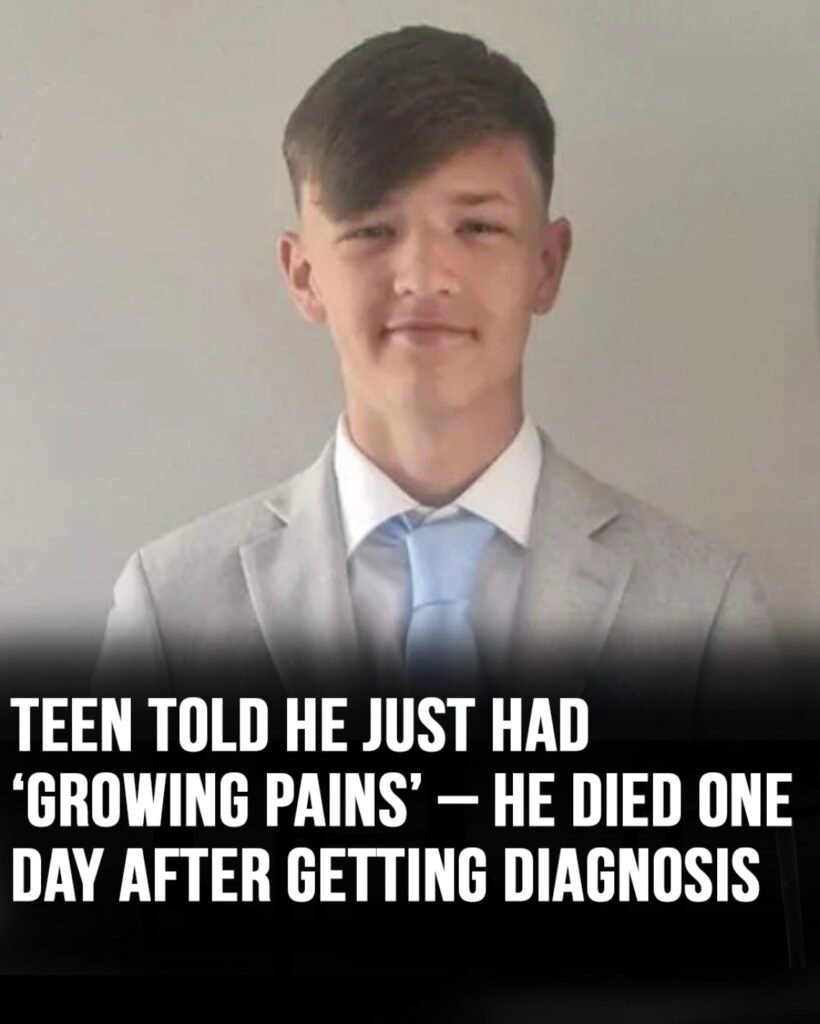
The story centers on a 16-year-old boy who initially complained of feeling unwell. His symptoms were not immediately seen as alarming. They were attributed to something common—possibly a viral illness or what many refer to as “growing pains.”
This kind of explanation is not unusual. Growing pains are relatively common in children and teenagers and are generally considered harmless, often appearing as recurring discomfort in the legs that fades on its own.
But in this case, the situation was very different.
As time passed, his condition worsened. New symptoms appeared—ones that signaled something more serious. Eventually, he was taken to the hospital, where doctors made a critical diagnosis: an aggressive form of leukemia.
Within just one day of that diagnosis, he passed away.
Why Misinterpretation Can Happen
Situations like this are rare, but they reveal an important reality: early symptoms of serious illnesses can sometimes resemble common, non-threatening conditions.
Fatigue, aches, or general discomfort can easily be linked to everyday explanations—especially in younger individuals who are otherwise healthy.
In the case of leukemia, symptoms can initially be subtle. They may include tiredness, unexplained pain, or minor changes that don’t immediately raise concern. It’s only when the condition progresses that clearer warning signs appear.
This overlap is what makes early detection challenging.
The Limits of Initial Assessments
Medical evaluations often rely on what is visible at the time. If symptoms appear mild or typical, the initial conclusion may reflect that.
In many cases, this approach is reasonable—most minor complaints do turn out to be harmless.
However, this also means that rare but serious conditions can be missed in their early stages. By the time more obvious symptoms appear, the illness may have already advanced significantly.
In this case, the disease had progressed rapidly, causing severe internal complications by the time it was diagnosed.
The Speed of Aggressive Illnesses
One of the most striking aspects of this story is how quickly everything unfolded.
Aggressive forms of leukemia can develop and worsen in a very short period. Once they reach an advanced stage, they can affect multiple systems in the body, leading to life-threatening complications.
This rapid progression is what makes timely diagnosis so critical—but also what makes these cases so difficult to prevent entirely.
Even with medical attention, the window for intervention can sometimes be extremely narrow.
The Emotional Impact on Families and Communities
Beyond the medical details, stories like this leave a deep emotional impact.
For families, the shift from reassurance to loss can happen in an incredibly short time. There is little opportunity to process what’s happening before everything changes.
Communities often feel this loss as well. In this case, the teenager was described as active, involved in sports, and well-liked among peers.
The suddenness of the situation makes it especially difficult to comprehend.
A Broader Reflection on Awareness
Cases like this often lead to broader conversations about awareness—how symptoms are interpreted, when to seek further evaluation, and how rare conditions can sometimes present in unexpected ways.
It’s important to recognize that most common explanations, like growing pains, are usually accurate and harmless. But this story serves as a reminder that not all cases follow typical patterns.
Paying attention to changes—especially when symptoms persist or worsen—can make a difference, even if outcomes are not always predictable.
A Difficult but Important Lesson
There is no simple conclusion to draw from a case like this.
It doesn’t suggest that every minor symptom is a cause for alarm, nor does it imply that early diagnosis is always possible.
What it does highlight is the complexity of recognizing serious illness in its earliest stages—and the importance of staying attentive when something doesn’t feel right.
The Lasting Takeaway
In the end, this story is not just about a diagnosis.
It’s about how quickly circumstances can change, how fragile assumptions can be, and how important it is to understand that even ordinary symptoms can, in rare cases, carry deeper meaning.
And while such cases are uncommon, their impact is lasting—both for the families affected and for those who hear their stories afterward.