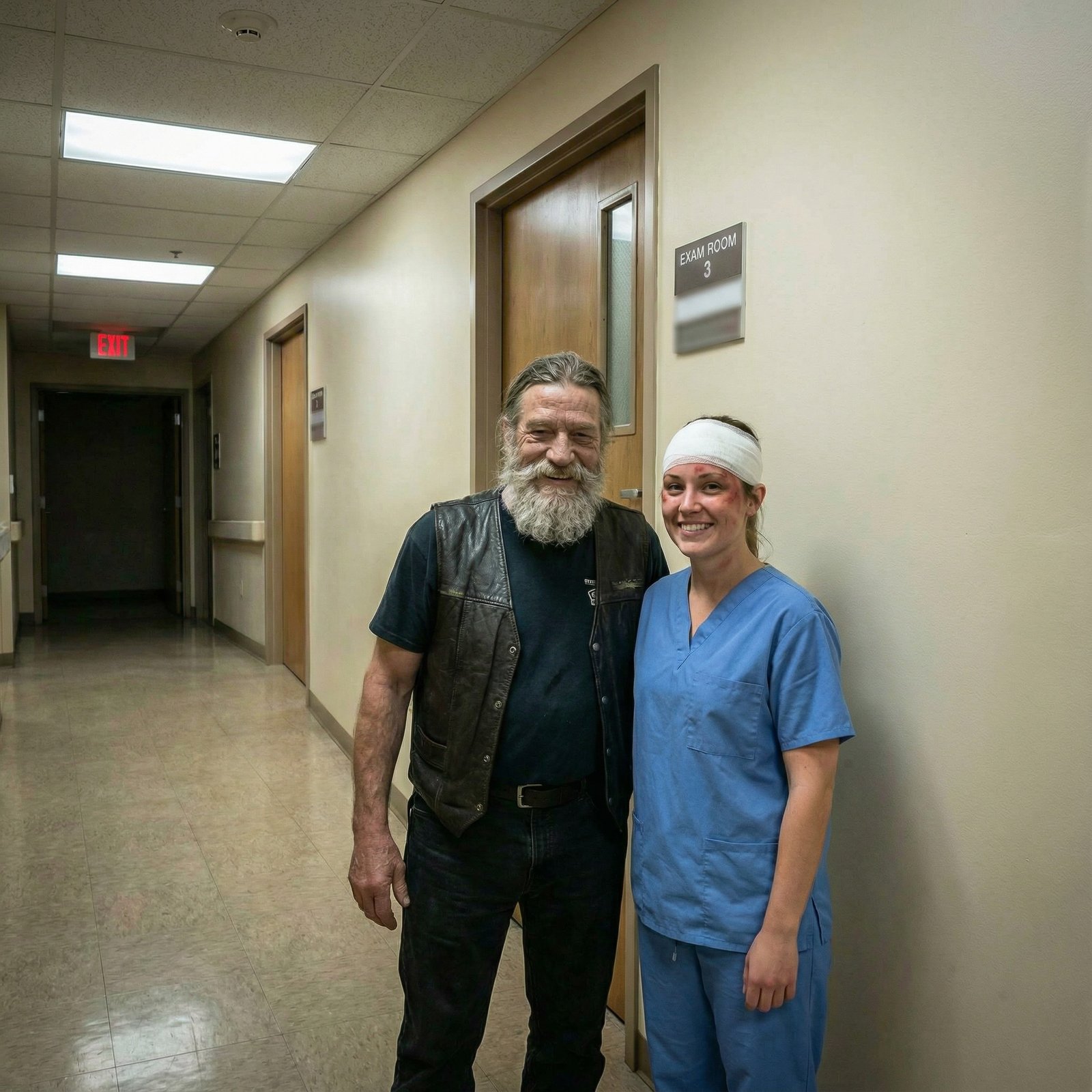
Why do some moments between strangers leave a permanent mark, while others disappear as quickly as they happen? Most acts of kindness go unnoticed, absorbed into daily routines without recognition. But occasionally, one intervention changes the course of someone’s life.
For one woman, that moment came during a violent encounter that could have ended very differently. What began as an ordinary night out turned into a dangerous situation — until an unexpected bystander chose not only to intervene, but to remain present long after the immediate threat was gone.
His decision reshaped her understanding of safety, trust, and human responsibility.
How Situations Escalate Without Warning
Many assaults occur in familiar settings: near homes, in parking lots, outside social venues, or along routine routes. Victims rarely anticipate danger, especially in environments that feel predictable.
In this case, the woman had noticed someone following her but initially dismissed the feeling as coincidence. When the individual confronted her, events unfolded rapidly. Physical force replaced verbal threats. Panic set in. Options narrowed.
Moments like these often unfold in seconds, leaving little time for deliberate action.
The Role of Bystanders in Violent Incidents
Research consistently shows that bystander intervention significantly reduces harm in public assaults. The presence of witnesses alone can disrupt perpetrators’ behavior. Direct intervention, when done safely, can stop violence entirely.
Yet many people hesitate. Fear of retaliation, legal consequences, or misinterpretation leads bystanders to remain passive. In most cases, individuals prioritize self-protection over involvement.
The biker who witnessed this attack made a different choice.
Why He Chose to Act
According to later accounts, he had been riding nearby when he noticed the struggle. He stopped immediately, positioning himself between the attacker and the victim. His physical presence alone was enough to destabilize the situation.
He did not escalate the confrontation. He did not pursue revenge. He focused on separation, safety, and control.
Once the attacker fled, his role did not end.
Staying When Others Would Leave
After emergency services were contacted, the biker remained. He offered his jacket. He helped her sit. He stayed visible and calm while shock subsided.
Most bystanders consider their responsibility complete once danger passes. In this case, the emotional aftermath was recognized as equally important.
Trauma does not end when violence stops.
By staying, he reduced isolation during the most vulnerable phase.
The Psychological Impact of Immediate Support
Survivors of assault often describe the minutes and hours afterward as disorienting. Cognitive processing slows. Emotional responses fluctuate. Memory becomes fragmented.
Having a stable, supportive presence helps regulate these responses. It reduces long-term trauma symptoms and improves recovery outcomes.
In practical terms, companionship becomes part of first aid.
Challenging Stereotypes About Intervention
The image of a biker is often associated with toughness, detachment, or indifference. This incident contradicted those assumptions.
Intervention does not require heroism. It requires awareness, willingness, and restraint. The biker’s actions reflected training, empathy, and situational judgment.
He demonstrated that protective behavior is not defined by appearance.
Legal and Safety Considerations for Bystanders
Many people hesitate to intervene due to legal uncertainty. While laws vary by region, most jurisdictions protect individuals who act in good faith to prevent harm.
Effective intervention prioritizes safety: creating distance, calling authorities, attracting attention, and offering support. Physical engagement is a last resort.
This case followed those principles.
Rebuilding a Sense of Security
In the weeks that followed, the woman struggled with anxiety and hypervigilance. Ordinary activities felt risky. Trust in public spaces had been damaged.
However, her memory of the biker’s response counterbalanced fear. It provided evidence that danger is not the only possible outcome — compassion can emerge as well.
That realization became part of her healing.
Why Small Decisions Carry Large Consequences
The biker did not plan to be a hero. He was simply present and attentive. His choice to stop, intervene, and stay created a chain of positive outcomes.
Without him, the situation could have escalated. Without his presence afterward, recovery would have been harder.
Small decisions compound.
A Broader Lesson About Collective Responsibility
Public safety depends not only on institutions but on ordinary people responding to one another. When individuals disengage, harm spreads. When they act responsibly, communities strengthen.
This story illustrates how one person’s willingness to care can alter another’s trajectory.
Quiet Courage in Everyday Life
No awards followed. No interviews. No recognition campaign. The biker returned to his routine.
But his actions remained.
They lived on in the restored confidence of someone who learned, in her darkest moment, that strangers can choose to protect rather than ignore.