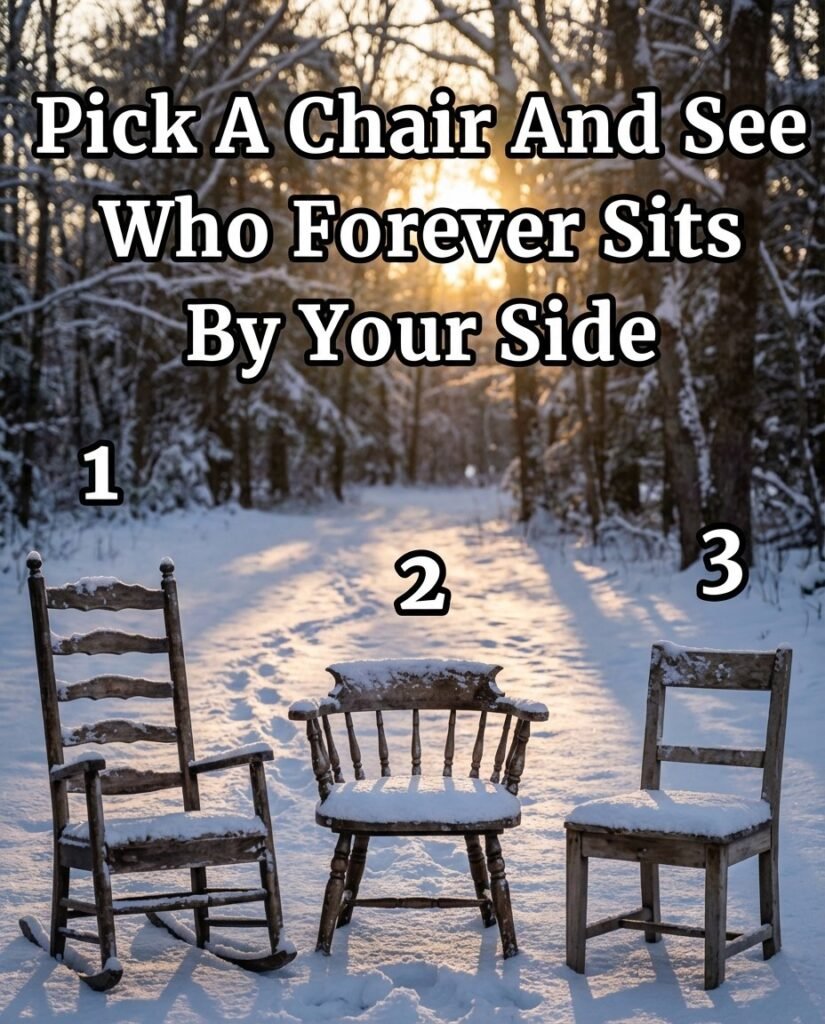
Imagine this: you walk into a gathering, and there are several chairs in different spots around the room. You don’t think much — you just sit. But according to a popular personality framework circulating online, which chair you choose first may reveal deeper aspects of your character — especially how you handle loyalty, relationships, and personal priorities.
Before we dive into what each chair might say about you, it’s important to note: this is not a clinical psychological assessment. It’s a fun, interpretive way of thinking about behavior — more like personality symbolism than hard science. That said, it can spark interesting self-reflection. (Adapted from the viral quiz framework on likya.org.)
Why Chair Choice Matters (Symbolically)
Human beings make thousands of tiny decisions every day without realizing it. Which way you turn in a room. What you glance at first. Where you plant yourself. These choices may reflect unconscious preferences, comfort zones, or social instincts.
Choosing a chair isn’t just about comfort. It’s about:
- Perceived safety — where you feel secure
- Social positioning — how you relate to others
- Direction of sightlines — what you want to see or avoid
- Proximity to people — how close you like to be
In personality symbolism, these elements can be linked to patterns of loyalty, trust, and interpersonal engagement.
Chair 1 — The Corner Seat: Loyal and Cautious
People who pick a corner seat often prioritize safety and stability.
What this suggests:
- You prefer clarity over chaos
- You observe before engaging
- You don’t rush into social commitments
- You value people who have proven themselves over time
Symbolically, corner-sitters are loyal because loyalty isn’t given lightly, it’s earned. You tend to keep your inner circle small but steadfast. You may be the person others rely on during crises because you weigh decisions carefully.
Strength: Steadfast and dependable
Potential blind spot: Slow to open up to new connections
Chair 2 — The Center of the Room: Warm and Connected
If you choose a seat near the center, you might relish connection and inclusivity.
What this suggests:
- You’re comfortable being seen
- You enjoy shared energy
- You value group cohesion
- You may naturally act as a social hub
This placement suggests a form of loyalty that’s expansive, not guarded. You show care openly and expect goodness in return, but that also means loyalty can feel fragile if trust is broken.
Strength: Open, expressive, community-oriented
Potential blind spot: May take others’ commitment for granted
Chair 3 — Beside Someone You Know: Supportive and Relationship-Focused
This choice signals that relationships matter — and that you prefer them close and immediate.
What this suggests:
- You prioritize people over position
- You prefer deep over broad connections
- You invest energy in attached relationships
- You’re comfortable showing care directly
Your loyalty tends to be personal rather than abstract. You seek mutual respect and expect reciprocal commitment. You make time for those you care about, even when life is busy.
Strength: Trustworthy and heartfelt
Potential blind spot: May focus on individual ties at the expense of broader opportunities
Chair 4 — The Edgy Spot: Independent and Selective
Choosing a seat that’s off to the side or slightly removed may indicate a preference for autonomy.
What this suggests:
- You value independence
- You think before you commit
- You’re selective about closeness
- You enjoy personal space without isolation
In loyalty, this often looks like quality over quantity. You choose friends carefully, and once chosen, you defend and uphold those ties — but you avoid crowd consensus or follow-the-group behavior.
Strength: Self-aware and selective
Potential blind spot: May appear aloof or distant to others
Why These Interpretations Resonate
This symbolic framework works — in part — because it taps into familiar patterns:
- Where you sit often reveals how you relate
- People seek comfort aligned with their internal social wiring
- Small actions reflect unconscious preferences
Just as psychologists observe posture, eye contact, or movement, chair placement may be another subtle expression of personality.
What It Doesn’t Mean
These interpretations are not:
- Formal psychological diagnoses
- Universal statements about every individual
- Absolutes that can’t change over time
We all behave differently in different contexts. Mood, prior experiences, fatigue, and environment all influence simple choices like where we sit.
Use these insights as reflection prompts, not labels.
How Loyalty Is Reflected in Choices
Across these placements, a theme of loyalty appears — but not in the same way for everyone.
- Corner seat loyalty is deliberate and enduring
- Center seat loyalty is expressed through connection
- Beside someone loyalty is personal and immediate
- Selective seat loyalty is protective and intentional
Loyalty is not monolithic. It can be quiet and steady. Bold and communal. Focused and relational. Or balanced and autonomous.
What This Insight Can Teach You
Next time you find yourself choosing a spot in a room — or making any small, instinctive choice — consider:
- What drew me here?
- What does this say about where I feel comfortable?
- Does this match how I show commitment in relationships?
Sometimes the tiniest decisions reveal the strongest truths.
A Final Thought
You don’t need an expert test to understand yourself.
Everyday behavior — down to where you sit — contains clues waiting to be interpreted.
And if a single seat choice can mirror patterns of loyalty and comfort, imagine what other small decisions might reveal about what matters most to you.