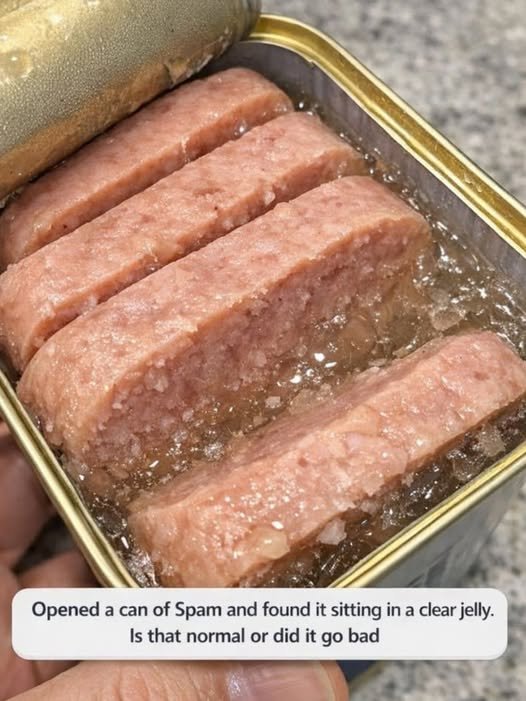
Opening a can of Spam is usually predictable.
The familiar shape slides out. The color looks the same. The smell is familiar. It’s one of the reasons people trust it.
So when someone finds clear, jelly-like material surrounding the meat, the reaction is immediate: something must be wrong.
Is it spoiled?
Is it contaminated?
Is it dangerous?
In most cases, the answer is no.
But understanding why it appears helps separate harmless food chemistry from genuine warning signs.
What the “Jelly” Actually Is
That transparent gel is not artificial filler.
It is a natural result of:
- Cooked meat proteins
- Collagen
- Gelatin
- Meat juices
During processing, Spam is cooked at high temperatures. Proteins and connective tissues break down and dissolve into liquid.
When the product cools, that liquid solidifies into gel.
It is the same process that turns broth into jelly in homemade soup.
Why It Forms in Canned Meat
Canning requires intense heat and pressure.
This process:
- Sterilizes the product
- Seals moisture inside
- Preserves texture
- Prevents bacterial growth
As meat cooks inside the sealed can, juices are released and trapped. Once cooled, they thicken.
No additives are required for this to happen.
It is basic food science.
Why Some Cans Have More Than Others
Not all cans look identical.
Gel formation varies depending on:
- Fat content
- Protein concentration
- Temperature fluctuations
- Storage conditions
- Transport duration
Cans exposed to cooler temperatures may show firmer gel. Warmer storage may soften it.
Both are normal.
When Jelly Is a Sign of Quality
Surprisingly, visible gel often indicates proper processing.
It shows that:
- Moisture was retained
- Proteins remained intact
- No excessive drying occurred
Dry, crumbly canned meat is more likely to signal poor storage or aging.
Moisture matters.
What It Is Not
Many myths surround canned food textures.
The gel is not:
- Mold
- Bacteria
- Chemical residue
- Artificial filler
- Plastic-like substance
It is simply solidified meat liquid.
Once heated, it melts back into liquid.
Signs That Actually Indicate a Problem
While gel is normal, other signs should not be ignored.
Discard the product if you notice:
- Swollen or leaking cans
- Rust near seams
- Strong sour odors
- Bubbling liquid
- Unusual discoloration
These suggest compromised sealing or contamination.
Texture alone is not enough.
How Storage Affects Appearance
Temperature changes influence food structure.
Repeated heating and cooling cycles can:
- Separate proteins
- Alter gel consistency
- Change surface moisture
This affects appearance, not safety.
Proper storage — cool, dry, stable — preserves quality best.
Why This Confuses So Many Consumers
Modern food rarely shows its natural processes.
Most products are heavily processed to look uniform. When something appears “different,” people assume something is wrong.
But canned meats are closer to traditional preservation methods than many packaged foods.
They reflect chemistry, not manipulation.
The Psychology of Unexpected Texture
Humans associate unfamiliar textures with danger.
This instinct protects us from spoiled food — but it also creates false alarms.
When expectations are violated, suspicion rises.
Understanding reduces unnecessary waste.
How to Use Spam With Gel Present
If the can is intact and smells normal, the gel is safe.
You can:
- Heat it to dissolve the jelly
- Drain it if preferred
- Cook it into dishes
- Slice and pan-fry
It will behave like any other properly stored canned meat.
What That Jelly Really Represents
The clear gel is evidence of preservation working as intended.
It reflects:
- Heat treatment
- Protein breakdown
- Moisture retention
- Long-term stability
Not spoilage.
Not contamination.
Just chemistry.
And once you know that, opening a can becomes ordinary again.