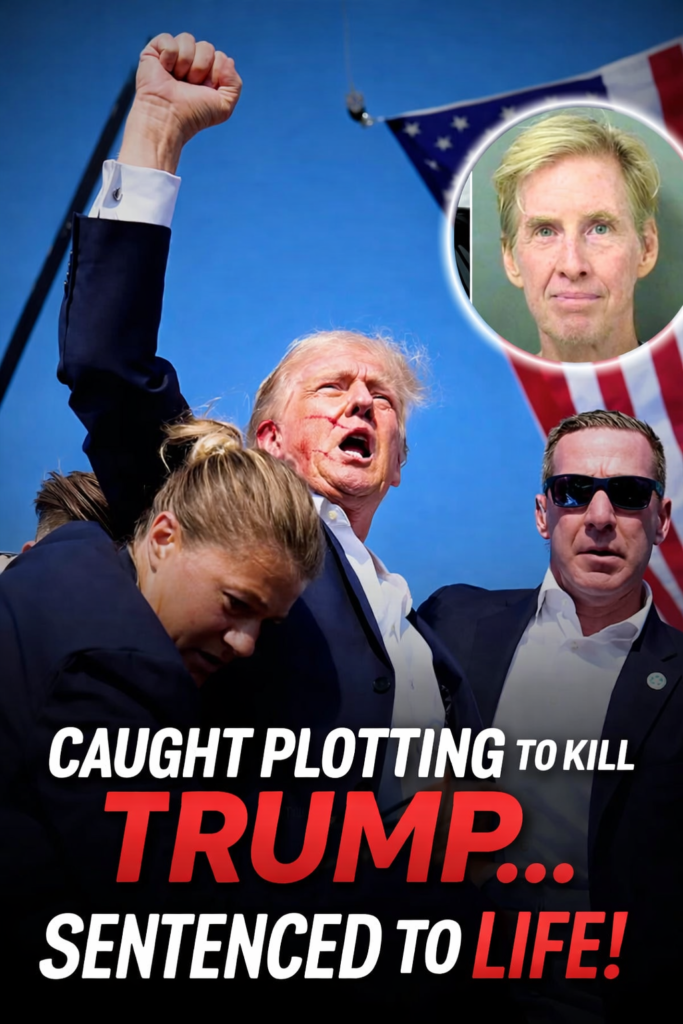
A federal court has sentenced Ryan Wesley Routh, a 59-year-old man from Hawaii, to life in prison after finding him guilty of attempting to assassinate former U.S. President Donald Trump during the 2024 presidential campaign.
The case has drawn attention not only for its dramatic context but also for how it highlights legal consequences for political violence in the United States. Here’s a breakdown of what prosecutors proved, what the court decided, and why the sentence matters.
The Plot and the Arrest
Prosecutors said Routh spent weeks preparing for the attack before positioning himself outside the Trump International Golf Club in West Palm Beach, Florida, on September 15, 2024 — roughly two months before the U.S. election.
According to official accounts, he hid in the bushes with a semiautomatic rifle and waited for Trump to arrive. A Secret Service agent spotted the weapon protruding from the foliage and intervened, firing several shots and forcing Routh to flee. He was later arrested by law enforcement.
Although no shots were ultimately fired at Trump, the evidence presented in court showed that Routh’s actions were more than just an armed presence — they signaled a planned attempt to kill a major political candidate.
Federal Charges and Conviction
Last year, Routh was convicted on five federal counts, including:
Attempted assassination of a major presidential candidate Assaulting a federal law enforcement officer Multiple firearms offenses related to possession and use of a weapon in furtherance of a violent crime
The Department of Justice has said this case exemplifies the seriousness with which political violence is treated under U.S. law. According to federal prosecutors, an attempt on the life of a political leader isn’t just a crime against that individual: it’s an attack on democratic processes and public safety.
A Life Sentence and Additional Penalties
On February 4, 2026, a federal judge handed down the maximum possible prison term for Routh’s attempted assassination: life in prison without the possibility of parole.
In addition to the life sentence under federal guidelines, Routh received additional years tied to firearms violations. Some news outlets report that these consecutive terms could add up to an effective life term plus extra time behind bars.
The defense had sought a significantly lower term, suggesting that Routh’s age and mental health should mitigate the sentence. But prosecutors argued that the premeditated nature of the plot — including detailed planning and firearm possession — warranted the harshest penalty available.
Broader Context: Political Violence and Security
This isn’t the first time Trump has been targeted. A separate assassination attempt in Pennsylvania in 2024 grazed the former president’s ear but did not succeed. These repeated threats have led federal agencies to expand protective measures around public figures, including increased Secret Service coordination and updated security directives for local and national authorities.
Security experts say that high-profile political figures, especially during election campaigns, are frequent targets of extremist plots or lone attackers. Prosecutors in this case stressed that the sentence reflects a broader commitment to deterring politically motivated violence, not just punishing one individual.
Why the Case Matters
A few key legal and societal implications stand out:
1. Enforcement of Federal Law Against Political Violence
Attempted assassination, especially of a sitting or former president, is one of the most serious federal crimes. Life imprisonment sends a clear message that such violence will not be tolerated in American public life.
2. The Role of Intent Over Outcome
Although Routh never fired a shot at Trump, the conviction was based on his intent and preparations — even the presence of a weapon in a threatening context can meet the legal definition of attempted assassination.
3. Federal Protection Efforts
The case highlights how agencies like the Secret Service play a critical role in preventing violence and protecting democratic institutions.
What Comes Next
Under federal law, Routh has limited options for appeal. The sentence is expected to be carried out in a high-security federal facility. Defense teams have previously indicated intentions to appeal based on legal and mental health arguments, but given the strength of the evidence and the severity of the charge, overturning a life sentence is rare.
Final Note
The Routh case underscores a broader truth about the American justice system: acts of political violence carry consequences that extend beyond the individuals directly involved. When a courtroom in Florida becomes the scene for the final chapter of a high-profile assassination attempt, it reflects not just a legal judgment, but a societal boundary against violence in political discourse.