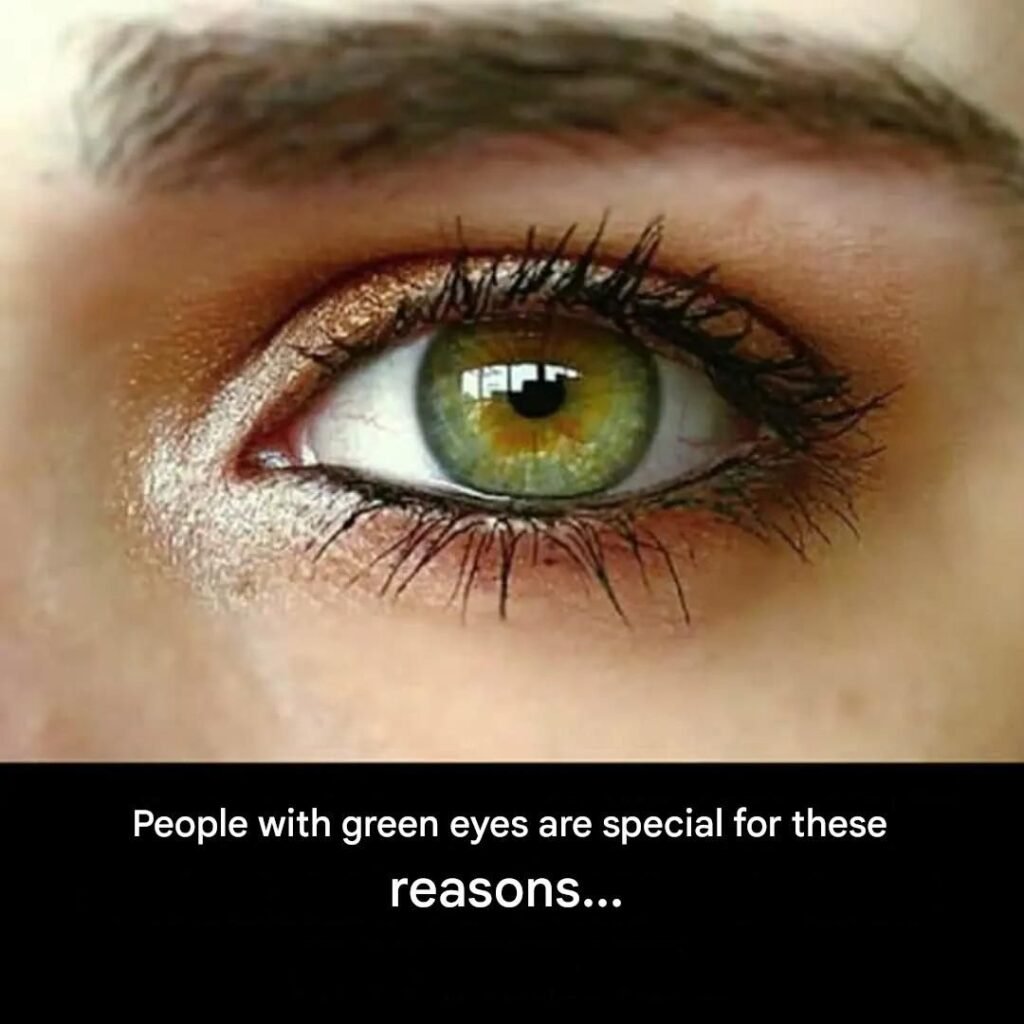
People notice them before they mean to.
In crowded rooms. In passing conversations. In photographs that linger longer than expected.
Green eyes have a way of drawing attention without demanding it. They don’t dominate a face, but they linger in memory. Something about their color feels unusual, almost elusive—never quite the same in different light.
Some days they look soft and pale.
Other days, intense and deep.
That shifting quality has fueled curiosity for centuries.
A Color That Rarely Appears
Worldwide, green eyes are among the least common.
They appear most frequently in parts of Northern and Central Europe, but even there, they remain relatively rare.
Rarity changes perception.
What is uncommon often becomes meaningful. It gathers stories, interpretations, and symbolic value simply because people encounter it less often.
Green eyes became one of those features.
How Light Transforms Their Appearance
Unlike darker eye colors, green eyes respond dramatically to light.
Sunlight brightens them.
Shadows deepen them.
Clothing colors influence their tone.
This constant change creates an illusion of emotional expression. People often feel that green eyes “reflect moods,” even when nothing has changed physically.
The eyes appear alive.
The Science Behind the Shade
Green eyes are not caused by green pigment.
They result from low to moderate levels of melanin combined with how light scatters in the iris.
It is the same principle that makes the sky appear blue.
This interaction produces a color that sits between blue and brown, shifting depending on conditions.
Nature rarely repeats it exactly.
Green Eyes in History and Folklore
Across cultures, green eyes have carried symbolic meaning.
In some traditions, they were associated with mystery and intuition. In others, they were linked to creativity, independence, or emotional depth.
Literature often portrayed green-eyed characters as complex and thoughtful, sometimes unpredictable.
These portrayals shaped public perception long before science explained the color.
Why People Attribute Personality to Eye Color
Humans search for patterns.
When we notice a rare trait, we try to connect it to behavior.
Over time, these connections become stereotypes.
Green-eyed individuals are often described as:
Observant
Emotionally aware
Independent
Imaginative
There is no scientific basis for these traits.
But the associations persist because stories repeat them.
The Influence of Popular Culture
Film and photography have amplified fascination with green eyes.
Lighting techniques often highlight them. Editors enhance contrast. Portraits emphasize their depth.
As a result, green eyes became linked with elegance and intrigue.
Visual media reinforced what folklore had already started.
How Rarity Shapes Identity
People who grow up with uncommon features often become aware of them early.
They receive comments.
They are asked questions.
They notice attention.
Over time, this awareness becomes part of identity.
Some embrace it.
Some ignore it.
Some feel self-conscious.
All responses are natural.
Why Green Eyes Seem “Memorable”
Psychologists suggest that unusual traits stand out in memory.
When something breaks pattern, the brain records it more strongly.
Green eyes do exactly that.
They interrupt visual expectations.
That interruption creates recall.
The Modern View: Beauty in Variation
Today, awareness around genetics and diversity has shifted perception.
Eye color is no longer framed as destiny.
It is recognized as variation.
One of many ways human appearance expresses complexity.
This perspective reduces myth and increases appreciation.
Calm Conclusion: A Quiet Kind of Distinction
Green eyes have never needed explanation to be noticed.
Their rarity, adaptability, and subtle depth speak for themselves.
They remind us that some of the most fascinating traits are not loud or dramatic.
They are quiet.
Changing with light.
Shifting with mood.
Staying memorable without trying.
And that quiet distinction is what keeps people looking twice.