What’s Happening
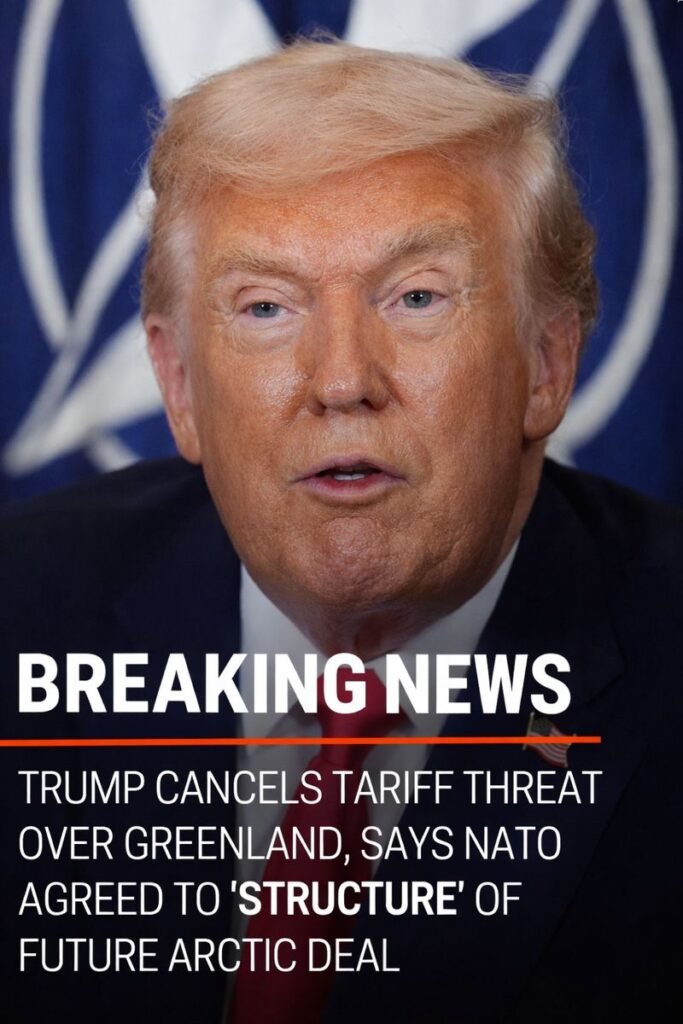
A new U.S.–NATO “framework deal” involving Greenland was announced at the World Economic Forum in Davos, Switzerland, after talks between U.S. President Donald Trump and NATO Secretary-General Mark Rutte. Trump said the arrangement would give the United States “total access” or long-term strategic benefit related to Greenland — an autonomous territory of the Kingdom of Denmark — and that it would help address NATO’s concerns about Arctic security.
Rutte described the pact as requiring NATO allies to boost military presence and cooperation in the Arctic region quickly, with tangible steps expected in 2026. He said commanders will now work out specific security measures, and emphasized that even NATO members without Arctic borders would contribute.
Why Greenland Matters
Greenland sits at a strategically crucial place between the Arctic and North Atlantic oceans. Melting ice has opened shipping routes and military access. Both the U.S. and its NATO partners see enhanced Arctic security as a priority to counter increasing activities by Russia and China in the region.
What the Deal Means (So Far)
- Arctic security commitments: NATO allies are expected to step up patrols, infrastructure, and defense planning in the High North under the new framework agreed with Trump and Rutte.
- No force: Trump said the U.S. would not use military force to pursue territorial aims regarding Greenland.
- Continued talks: Discussions about formalizing elements of the arrangement between the U.S., Denmark, and Greenland are set to continue.
Broader Reactions
Denmark and Greenland leadership have pushed back on any suggestion that sovereignty is being negotiated away. Denmark’s prime minister has insisted that territorial integrity must be respected, and Greenland’s premier has stated no agreement on land transfer exists.
European leaders have echoed these concerns, warning that threats tied to Greenland could complicate NATO and EU relations — especially after tariff threats that were dropped once the framework was announced.
Potential Geopolitical Implications
Though the pact centers on Arctic security cooperation, the Greenland issue has stirred broader diplomatic friction:
- Transatlantic tensions: Trump’s past tariff threats and acquisition rhetoric triggered diplomatic strain between the U.S. and European NATO allies.
- Alliance unity: Rutte has sought to frame the agreement as compatible with NATO’s mission and not at odds with support for Ukraine and other alliance priorities.
Why This Matters
Greenland’s strategic location and vast natural resources make it a focal point for defense planners amid shifting climate conditions and global competition. This emerging NATO framework — though still vague in detail — signals a heightened collective emphasis on Arctic defense and cooperation among allied nations.
If you’d like a deeper breakdown of how this could affect U.S.–European relations or Arctic military strategy, I can provide that next.