A Public Servant’s Shocking Betrayal
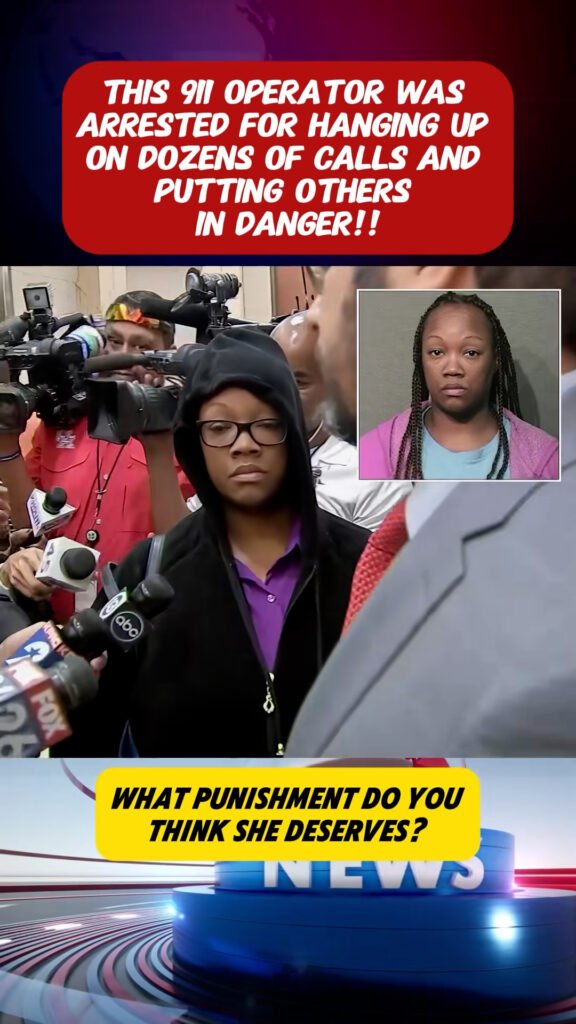
In a case that stunned both the public and emergency services nationwide, a 911 dispatcher from Houston, Texas, was arrested and charged after allegedly hanging up on dozens of emergency callers — including people reporting serious crimes and life-threatening incidents.
The operator, identified as Crenshanda Williams, had been employed with the Houston Emergency Center for nearly two years before investigators uncovered what prosecutors later described as an “unforgivable abuse of public trust.”
A Disturbing Pattern of Neglect
Authorities began investigating after multiple citizens filed complaints claiming that their calls to 911 had been abruptly disconnected.
What they discovered was both alarming and heartbreaking.
Over several months, recordings showed Williams deliberately ending emergency calls without dispatching police, fire, or medical help. One call involved a robbery in progress. Another came from a man desperately trying to report reckless gunfire. In both cases, the victims later testified that they waited for help that never arrived.
Prosecutors played recordings in court where Williams could be heard saying, “Ain’t nobody got time for this,” before hanging up on callers.
Lives Lost, Trust Broken
In one particularly tragic case, a man called to report two vehicles racing and colliding on a highway. The line was cut off within seconds.
Minutes later, a young woman was found dead at the scene — a life that could have potentially been saved if emergency crews had been dispatched immediately.
The revelation sparked outrage across the city, with Mayor Sylvester Turner stating:
“When citizens call 911, they do so because they’re scared and need help. To betray that trust is beyond unacceptable — it’s criminal.”
The Investigation and Arrest
After an internal audit of call logs, officials discovered thousands of disconnected calls during Williams’ shifts. Investigators also learned that she had intentionally manipulated the call system to shorten her call times, allegedly because she “didn’t want to talk to anyone during her shift.”
She was immediately terminated and later charged with interference with emergency telephone calls, a serious offense under Texas law.
Courtroom Reaction
During her court appearance, Williams appeared emotionless as prosecutors detailed how her actions may have cost lives.
Family members of victims sat in the courtroom, many holding back tears.
One man, whose mother died of a heart attack while on the phone with 911, said outside the courthouse:
“She begged for help, and nobody came. I’ll never forgive her for that.”
The defense argued that Williams was suffering from extreme job-related stress, but the jury wasn’t convinced.
After a short deliberation, she was found guilty on multiple counts and sentenced to 10 months in jail and 18 months of probation.
Public Outrage and Reform
The case sent shockwaves across emergency communication departments nationwide, prompting cities to re-evaluate training and oversight programs for dispatchers.
Experts have since called for greater psychological support for 911 operators, who often experience burnout and emotional trauma — but emphasized that it can never excuse deliberate negligence.
A former dispatcher commented:
“We all get tired, we all get overwhelmed. But the second you pick up that phone, someone’s life depends on you. That’s a responsibility you can’t take lightly.”
A Lesson in Accountability
Crenshanda Williams’ story is now used as a training example in dispatcher programs across the U.S., a grim reminder of what happens when apathy replaces duty.
While justice has been served, many families say it came too late. The damage — and the lives lost — can never be undone.