It was a routine Tuesday afternoon at Louisville Muhammad Ali International Airport — until a routine departure ended in disaster. A UPS cargo plane bound for Honolulu lifted off just after 5 p.m., but something went tragically wrong almost immediately. What should have been a standard freight flight turned into one of the deadliest aviation accidents in the region’s recent history.
The incident left communities across Kentucky reeling, responders in full emergency mode, and aviation safety experts poring over wreckage. In the months since, the crash has continued to shape conversations about aircraft safety, aging fleets, and the human cost of industrial accidents.
A Crash That Defied Expectation
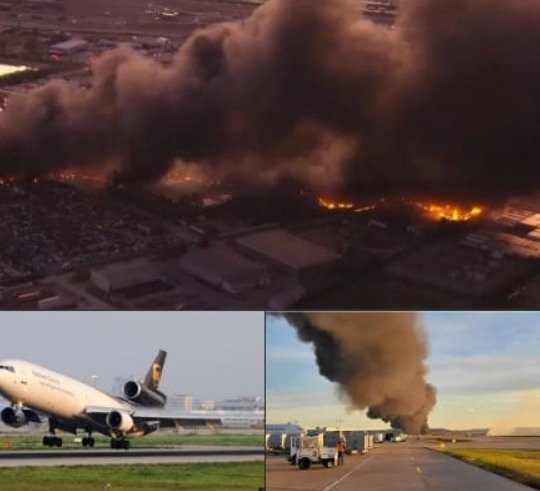
On November 4, 2025, UPS Flight 2976 — a McDonnell Douglas MD-11F cargo jet — began rolling down the runway for departure from its Worldport hub in Louisville. Almost immediately after liftoff, something failed catastrophically. Flames appeared on the aircraft’s left side. Within seconds, the plane fell back toward the ground, exploded in a fireball, and smashed into an industrial area not far from the airport perimeter.
Initial reports confirmed multiple fatalities and serious injuries. The crash scene was chaotic, with fire crews battling blazes and emergency responders triaging survivors. Scenes of smoke rising over the industrial corridor became some of the most iconic and harrowing images of the crash.
The Toll: Lives Lost and Lives Changed
Authorities later confirmed that 15 people died in the crash — including all three crew members on board and 12 people on the ground — with several others injured. The victims on the ground were inside or near businesses and industrial facilities when the aircraft struck.
Among the dead were customers and employees at a local auto parts business struck by debris. Survivors in the vicinity reported the blast as sudden and devastating, shaking structures as far away as nearby neighborhoods and forcing immediate evacuations of surrounding areas.
For the families and communities affected, the tragedy extended far beyond statistics. People lost colleagues, friends, and neighbors; local businesses were destroyed; and trauma lingered in neighborhoods now marked by charred remains of once-bustling workplaces.
What Investigators Have Found So Far
In the aftermath, the National Transportation Safety Board (NTSB) led the investigation into what caused this catastrophic loss of control so soon after takeoff. Early findings suggested metal fatigue and stress in a key engine attachment point as contributing factors to the failure that precipitated the crash.
Preliminary analysis of the cockpit voice recorder and flight data recorder indicated that anomalies began mere seconds after liftoff, with alarms sounding before the aircraft began descending. These early data have been central to understanding potential mechanical and structural causes.
Grounded Fleets and Industry Impacts
The implications of this crash rippled well beyond Louisville.
In response, the Federal Aviation Administration (FAA) ordered emergency inspections of all McDonnell Douglas MD-11 and MD-11F aircraft still in operation, citing safety concerns and the need for rigorous review of aging components.
UPS took decisive action as well: the company announced it would retire its entire MD-11 fleet and accelerate the transition to newer, more reliable Boeing 767 cargo aircraft — a significant modernization shift for its global air network.
FedEx, another major operator of the MD-11, also temporarily grounded its similar aircraft as a precautionary measure while authorities continued analyzing risk and regulatory requirements.
Human Stories in the Aftermath
Perhaps the most poignant reminders of the crash are the personal stories that emerged as months passed.
At the site of one destroyed business, workers and owners returned to what remained of their livelihood — now reduced to twisted metal and scorched earth. Survivors, first responders, and family members shared stories of courage and heartbreak as they continued to process the loss.
Community memorials grew up around wreckage sites, with wreaths and photos honoring friends and coworkers. For many, these symbols became a focal point for collective grief and remembrance.
Ongoing Investigation and Safety Questions
Despite extensive analysis, the NTSB’s full report won’t be complete for many months, if not longer — final conclusions in aviation investigations often take up to two years. Meanwhile, regulators, airlines, and safety engineers continue studying the crash to prevent future tragedies.
Experts emphasize that understanding mechanical causes, maintenance practices, and oversight mechanisms will be key to enhancing cargo aviation safety and ensuring that lessons learned translate into real change.
What This Means for Aviation and Safety
The Louisville cargo plane crash serves as a stark reminder that even highly regulated and routine operations carry inherent risk.
Aviation is one of the safest forms of transportation overall, yet aging aircraft, mounting flight hours, and evolving maintenance challenges mean that vigilance — and transparency — are essential to preserving safety for crews, workers, and communities alike.
In this case, the tragedy underscored the need for:
- Rigorous aircraft inspections
- Proactive maintenance standards
- Swift regulatory action
- Community engagement in emergency response
The loss of life was profound, but so too has been the industry’s response — a collective effort to ensure that such a disaster becomes the impetus for stronger safeguards.
Looking Ahead
Families still grieving seek closure as investigations unfold.
Communities continue rebuilding.
And the aviation world is watching closely as safety lessons from Louisville are studied, debated, and applied.
Above all, the crash reminds us that behind every flight number and cargo manifest are human stories — of lives lived, work done, and the fragility of life when the unexpected occurs.