What happens when grief crosses into action?
Some stories don’t fade with time. They stay in public memory because they raise questions that don’t have simple answers. The case often referred to as the “revenge mom” is one of them—a moment where personal loss collided directly with the justice system.
What Actually Happened
The story is based on a real event from 1981 in Lübeck, Germany.
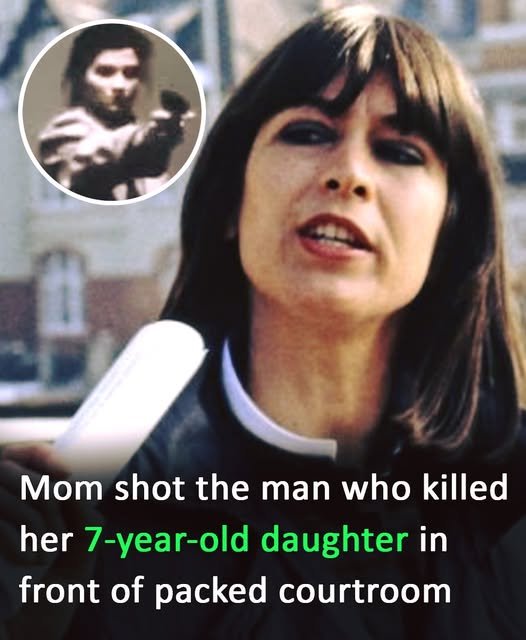
A mother named Marianne Bachmeier entered a courtroom during the trial of a man accused of abducting and killing her young daughter. During the proceedings, she pulled out a firearm and shot him multiple times in front of everyone present.
The man died at the scene, and she was immediately arrested.
It was a shocking moment—not just because of the violence, but because of where it happened: inside a courtroom, a place meant to represent order and justice.
The Tragedy Behind the Act
To understand why the case gained so much attention, it’s important to look at what came before it.
Her daughter, a young girl, had been kidnapped and killed by the man on trial.
During the legal proceedings, the accused reportedly made statements that intensified the mother’s grief and anger.
By the time the trial reached its third day, the emotional weight had built to a point where she took action herself.
Why This Case Still Gets Attention
This story continues to circulate online because it touches on something deeply human:
- The loss of a child
- The limits of patience with the legal system
- The idea of justice versus revenge
For some, her actions are seen as an extreme but understandable response to unimaginable pain.
For others, they represent a dangerous line being crossed—where personal emotion overrides the rule of law.
The Legal Outcome
After the incident, the mother was charged and put on trial.
She was ultimately convicted of manslaughter and illegal possession of a firearm.
Her sentence was six years in prison, though she was released after serving part of that time.
Even that outcome sparked debate.
Some believed the punishment was too harsh given the circumstances. Others argued it was necessary to uphold the principle that justice must remain within the legal system.
Why People See It Differently
This is where the case becomes more than just a historical event.
It becomes a question:
- Is justice purely legal?
- Or can it ever be personal?
There’s no single answer.
Public opinion at the time—and even now—remains divided. Some view her as a grieving parent pushed beyond limits. Others see her actions as a clear example of why laws exist in the first place.
The Broader Lesson
Stories like this often resurface because they sit in a moral gray area.
They don’t offer a clear right or wrong. Instead, they force people to confront uncomfortable questions about fairness, emotion, and the boundaries of justice.
The Lasting Impact
Decades later, the case is still discussed not because of the act alone—but because of what it represents.
A courtroom is meant to deliver justice through process.
In this case, that process was interrupted by something far more immediate—and far more personal.
And that’s why the story continues to resonate.