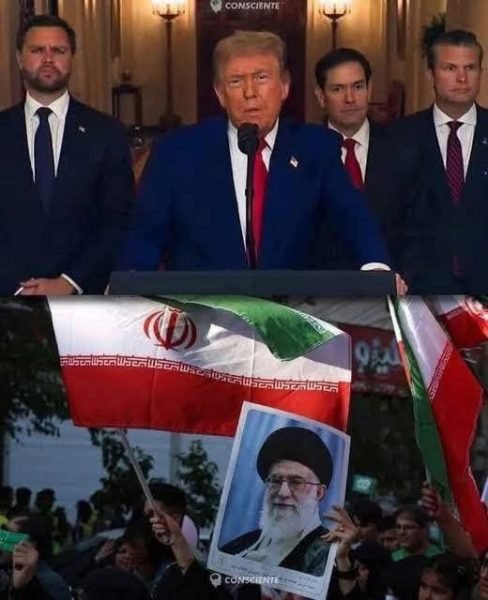
In the digital echo chamber of social media, a few lines of text can carry as much weight as an army. On a chilly January evening, the U.S. President posted a stark message aimed at Tehran—one that blended urgency, warning, and politics in a way that instantly grabbed global attention. For anyone tracking the ebb and flow of relations between Washington and Tehran, it was a familiar yet chilling refrain: negotiate, or face consequences far worse than before.
It didn’t begin with that post alone. It was the result of months of tension building under the surface—strategic positioning, sharp rhetoric, and a growing sense of impatience on both sides. But in that moment, the world saw a reminder that diplomacy and military pressure often walk hand in hand, especially where nuclear ambitions and regional influence intersect.
A Warning Framed for Maximum Impact
The statement was not just another foreign policy pronouncement.
It was crafted to feel immediate—“time is running out,” the president wrote, urging Iran to “come to the table” and negotiate a nuclear deal that would eliminate weapons ambitions. The subtext was unmistakable: the clock is ticking, and patience has limits.
What made these words striking was not just their content, but their delivery: on social media, readable instantly across continents, unfiltered by traditional diplomatic channels. It was a message built for global visibility—not private negotiation.
The Shadow of Past Strikes
Embedded in that post was another reference that carried historical weight: a mention of an earlier U.S. attack last June on Iranian nuclear facilities, a strike that marked one of the most dramatic escalations of recent years. That strike, which knocked out key sites amid rising concerns about nuclear development, was a clear demonstration of how far tensions had already advanced.
By invoking that operation, the president reminded both allies and rivals that military options have already been used—and hinted that they could be used again. In geopolitical chess, such references are not accidental; they are meant to influence calculation, not just conversation.
An Armada on the Horizon
Just as striking as the language was the backdrop: a buildup of U.S. naval forces in the Middle East, including the aircraft carrier USS Abraham Lincoln and its accompanying vessels, was making its way toward Iranian waters. The movement of these forces, described in detail by officials and confirmed by military sources, was interpreted by many as both a show of strength and a tool of coercive diplomacy.
For critics, this deployment raised alarm bells about the risk of escalation. For supporters, it underscored resolve. And for analysts watching closely, it highlighted just how quickly military postures can become intertwined with diplomatic objectives.
Tehran’s Response: Defiance and Readiness
Iran’s reaction was swift and pointed. Senior officials pushed back against the notion that they had asked for talks with the United States, emphasizing instead that negotiations under threat and coercion are not a path forward. The foreign minister made clear that while Iran remains open to discussions based on mutual respect, any military aggression would be met with a powerful response.
This exchange of words was more than just diplomatic sparring. It revealed how each side views the other’s intentions—and how mistrust has hardened over time.
The Broader Context: Internal and External Pressures
Behind the headlines, the situation is shaped not only by U.S.–Iran relations but also by internal dynamics within Iran itself. Widespread antigovernment protests in recent months, amid economic strain and political repression, have added another layer of complexity. Those movements, which drew international attention and condemnation of Tehran’s crackdown, have not only strained the Iranian government domestically but also influenced how external powers view Iran’s stability.
Against this backdrop, pressure from abroad is felt differently at home. Leadership in Tehran must balance national pride, regional influence, and domestic control.
Why Words Matter More Than Ever
In situations like this, public declarations do more than deliver policy—they shape perceptions.
A line about “coming to the table” is interpreted not just as an invitation to negotiate but as a deadline. A warning about future attacks becomes a signal not only to Tehran, but also to allies and adversaries watching closely. And mentions of military build-ups, even when framed as deterrence, can escalate anxiety rather than ease it.
In modern geopolitics, the medium of a message—social media in this case—carries as much strategic signal as the message itself.
The Human Reality Beneath the Strategy
Beyond capitals and command centers are populations living with uncertainty.
Border communities in the Middle East watch tensions with concern. Families in Iran resume daily life even as threats loom large in the news. Military personnel prepare quietly, aware that strategic decisions often overshadow the realities on the ground.
These human dimensions rarely make headlines, but they are inseparable from the politics.
Calm Conclusion: A Moment in a Long Narrative
This latest exchange between Washington and Tehran did not occur in a vacuum. It is part of a long narrative of mistrust, negotiation, missed opportunities, and strategic signaling that has shaped relations between the two nations for decades.
The recent warning from the U.S. president, backed by talk of a naval armada and reminders of past strikes, was both a diplomatic push and a geopolitical statement—one that will likely echo through policy rooms in capitals around the world.
As always in international affairs, the challenge lies not only in what leaders say, but in how those words are interpreted, received, and acted upon by others on the global stage.