It happens in seconds.
You stand in front of the refrigerated section, scanning rows of neatly packaged meat.
Everything looks fresh. Pink. Clean. Safe.
You grab a package, check the price, and move on.
But food experts say there’s something most shoppers never notice — and it’s costing them more than money.
Why Some Meat Looks “Better” Than the Rest
At first glance, brighter meat feels fresher.
That’s what we’ve been trained to believe.
But meat specialists explain that color alone doesn’t tell the whole story.
In fact, some supermarket meat looks bright because of how it’s handled, not because it’s newer or better quality.
The trick lies in:
- Packaging methods
- Oxygen exposure
- Lighting inside display cases
All designed to influence one thing: your perception.
The Oxygen Illusion
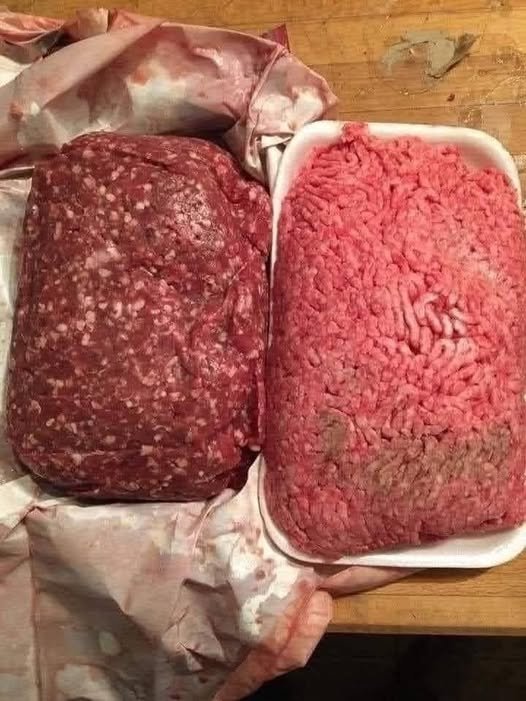
When meat is exposed to oxygen, it turns a brighter red or pink.
This process, called blooming, makes meat look fresher — even if it’s been sitting longer.
That doesn’t automatically mean the meat is unsafe.
But it does mean color can be misleading.
Food inspectors warn that two identical cuts of meat can look completely different depending on:
- How long they’ve been exposed to air
- How they’re packaged
- How often they’re rotated
One food safety expert put it bluntly:
“Shoppers buy with their eyes. Supermarkets know that.”
What Labels Don’t Always Tell You
Many consumers assume “fresh” means recently cut.
But labels like:
- “Fresh”
- “Packaged on”
- “Sell by”
often refer to handling timelines, not the animal’s origin or quality.
This is why some meat that looks perfect may have been:
- Repackaged
- Re-exposed to oxygen
- Moved between containers
All while staying technically within regulations.
What You Should Look For Instead
Food experts recommend paying attention to:
- Texture (should be firm, not slimy)
- Smell (neutral, never sour)
- Consistent color (not patchy or gray-green)
And always read the fine print — especially sourcing information.
Sometimes, the less “perfect-looking” package is the better choice.
The Bigger Picture
This isn’t about panic.
And it’s not about avoiding supermarkets.
It’s about understanding how presentation influences trust.
When you know what you’re looking at, you stop being fooled by surface-level tricks — and start shopping with confidence instead of assumption.
Because in the end, the smartest shoppers aren’t the ones who grab the brightest package…
They’re the ones who know why it looks that way.