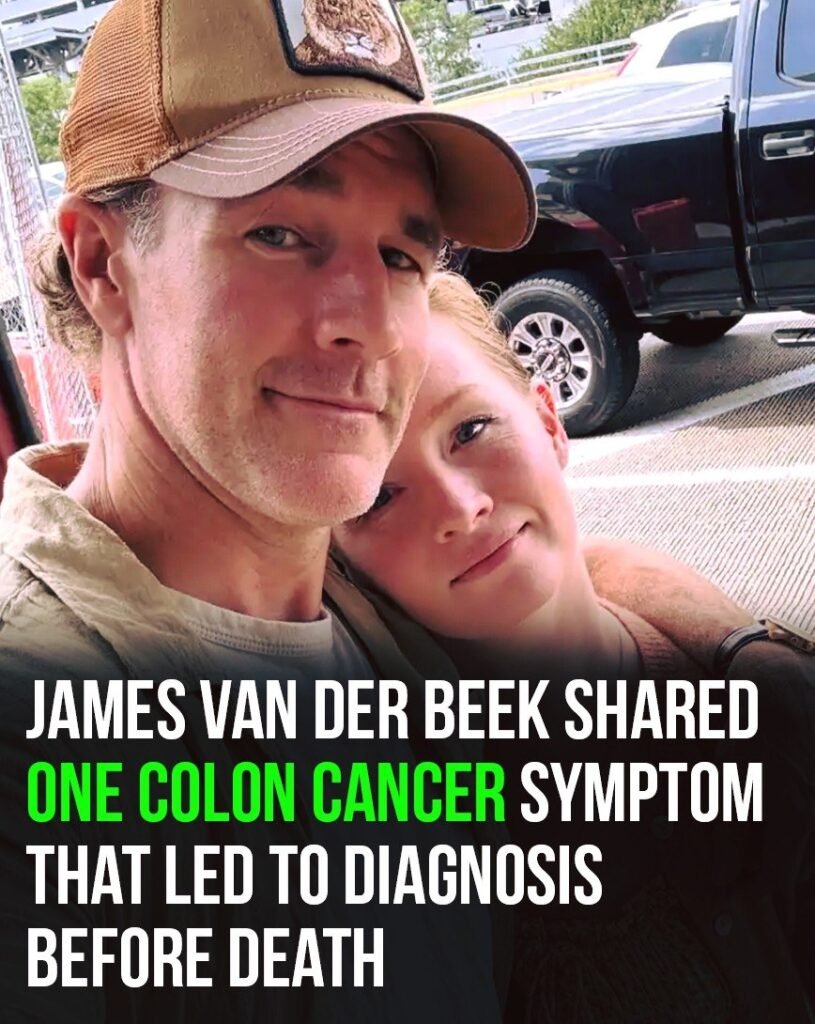
The photo feels personal. James Van Der Beek sits close to a child, their faces relaxed, the moment clearly private rather than staged. It’s the kind of image that signals family, trust, and everyday life. Overlaid text, however, pulls the viewer in a different direction—toward illness, diagnosis, and a claim framed around loss.
That contrast is what gives the image its power. And it’s also why it needs to be read carefully.
What the Image Is Pointing To
The text on the image states that James Van Der Beek shared one colon cancer symptom that led to a diagnosis, framed in connection with death. The wording is absolute and emotionally charged, designed to make the message feel final.
What is verifiable is that James Van Der Beek has spoken publicly in the past about health awareness and the importance of listening to early warning signs in the body. What is not established through credible reporting is the implication that he has passed away.
That distinction matters.
The Symptom He Has Spoken About
In public discussions and interviews, Van Der Beek has highlighted how subtle physical changes are often ignored. One of the most commonly referenced early warning signs of colon cancer is a persistent change in bowel habits, including irregularity, ongoing discomfort, or unexplained digestive changes.
Doctors consistently note that it’s not a single episode that raises concern—it’s persistence. When a symptom becomes routine rather than temporary, it deserves attention.
This is the part of the message that aligns with established medical guidance.
Why Colon Cancer Symptoms Are Often Missed
Colon cancer is known for developing quietly in its early stages. Many symptoms overlap with common digestive issues caused by stress, diet, or lifestyle.
Because of that overlap, people frequently delay seeking medical advice. By the time symptoms feel serious, the disease may already be more advanced.
That’s why awareness campaigns focus less on fear and more on pattern recognition.
How Images Like This Shape Perception
The photo itself does not show illness. It shows connection and closeness. The overlay text does the narrative work, guiding the viewer toward a conclusion the image alone does not support.
This technique is common in viral health posts. A real person, a real concern, and an implied outcome are combined to create urgency.
Urgency, however, is not the same as confirmation.
What Is Known—and What Isn’t
What is known:
- Colon cancer can present with subtle, easily dismissed symptoms
- Early attention improves outcomes
- Public figures sometimes share personal health lessons to raise awareness
What is not confirmed:
- That James Van Der Beek has died
- That the image reflects a final statement or posthumous warning
Responsible reading requires separating those two categories.
Why Caution Is Especially Important With Health Claims
Health-related claims spread quickly because they feel helpful. People share them out of concern, not malice. But when claims include unverified outcomes, they can unintentionally mislead or distress others.
Accuracy protects both the subject of the image and the audience receiving the message.
The Real Takeaway Worth Keeping
The most valuable part of this image isn’t the implied ending—it’s the reminder embedded in the middle: early symptoms matter.
Colon cancer screening and early evaluation save lives. Paying attention to ongoing changes in the body is not overreacting—it’s preventative care.
That message stands on its own, without needing exaggeration.
A Clear and Calm Perspective
Images like this often blend truth, implication, and emotion into a single frame. The safest way to engage with them is to slow down and ask what’s actually supported by facts.
James Van Der Beek has spoken about health awareness. Colon cancer symptoms are often subtle. Those points are real.
Anything beyond that deserves confirmation before being accepted as fact.
Sometimes, protecting the truth is the most responsible form of sharing.