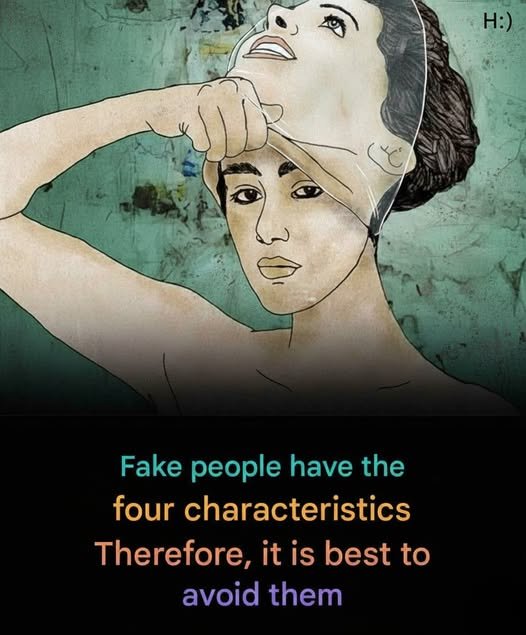
It usually isn’t one dramatic moment that exposes a fake person. More often, it’s a pattern — small inconsistencies that, over time, begin to feel off. People sense it before they can explain it, a quiet discomfort that grows as words and actions fail to line up.
Behavioral experts note that inauthenticity tends to follow recognizable paths. While no single trait proves intent, certain characteristics repeatedly surface when someone is presenting a version of themselves that isn’t real.
Inconsistency Between Words and Actions
One of the most common signs is a mismatch between what someone says and what they consistently do. Promises come easily, but follow-through is rare. Values are spoken confidently, yet behavior contradicts them when circumstances change.
This inconsistency often appears subtle at first. Excuses sound reasonable. Delays feel temporary. Over time, however, the pattern becomes difficult to ignore.
Genuine people may make mistakes, but their core behavior remains steady. Inauthentic individuals adjust their stance depending on who is watching.
Selective Empathy and Conditional Kindness
Another red flag is empathy that seems transactional. Concern appears when it benefits the person expressing it, but fades when there is nothing to gain.
These individuals may perform compassion publicly while showing indifference in private settings. Kindness becomes a tool rather than a value, applied strategically rather than naturally.
Observers often describe feeling supported in moments of visibility, but dismissed when attention shifts elsewhere.
Excessive Image Management
People who are not being genuine often invest heavily in controlling how they are perceived. Conversations revolve around status, appearance, or approval. Failures are reframed, deflected, or blamed on others.
This focus on image leaves little room for vulnerability. Admitting uncertainty or fault threatens the carefully constructed persona, so responsibility is avoided at all costs.
Authenticity, by contrast, allows for imperfection without defensiveness.
Relationships Built on Convenience
A final indicator appears in how relationships are maintained. Fake individuals tend to disappear when support, effort, or accountability is required. Connections are strongest when needs are being met and weakest when reciprocity is expected.
This pattern creates one-sided dynamics that drain others over time. Loyalty feels conditional, and commitment fluctuates based on personal benefit.
Healthy relationships survive inconvenience. Performative ones rarely do.
Why These Traits Are Often Missed at First
Inauthentic behavior often mimics confidence, charm, or ambition — qualities that are socially rewarded. Early impressions can be positive, masking deeper inconsistencies that only surface with time.
People also hesitate to label others as fake, preferring to give the benefit of the doubt. This generosity, while admirable, can delay recognition of unhealthy dynamics.
Learning to Trust Patterns, Not Moments
The key insight is not to judge isolated incidents, but repeated behavior. Authenticity reveals itself through consistency, accountability, and presence over time.
Recognizing these traits is not about suspicion or cynicism. It is about awareness. Understanding common patterns helps people navigate relationships with clearer expectations and healthier boundaries.
Genuineness does not need to announce itself. It shows up quietly, again and again, without performance.