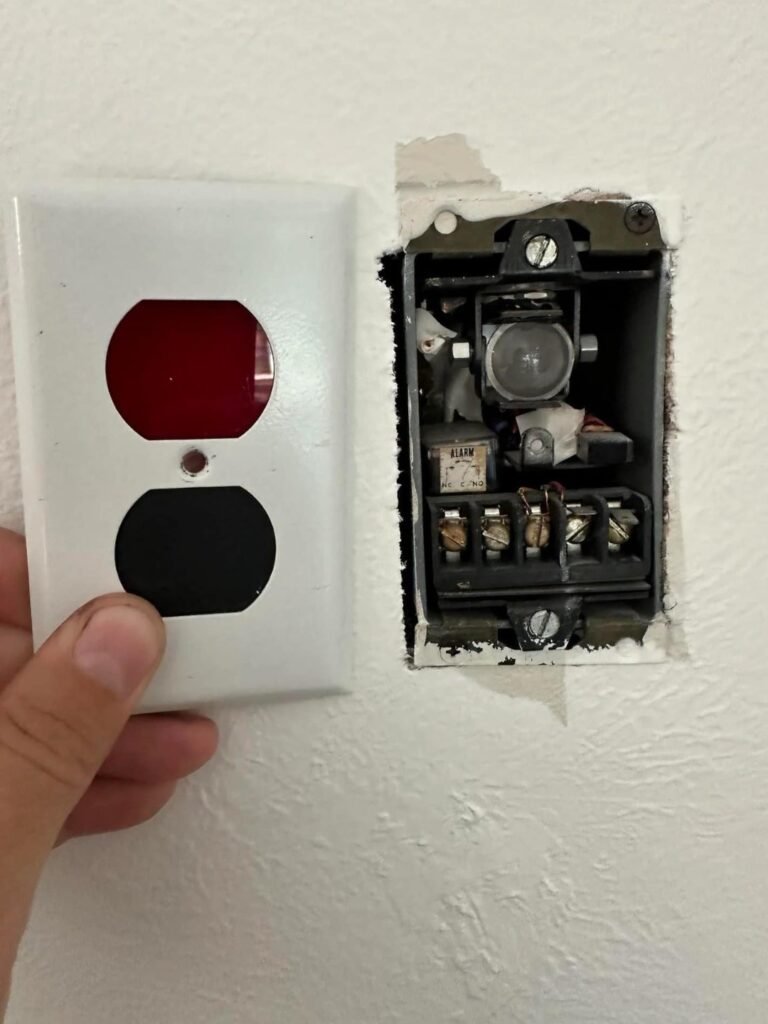
It sat quietly in shoe stores, airports, and public buildings.
A tall metal cabinet. A narrow opening. A place where people were asked to stand still for a few seconds while invisible rays passed through their bodies.
Most didn’t question it.
They were told it was safe. They were told it was modern. They were told it was progress.
For decades, the Detect-O-Ray was treated as a symbol of scientific confidence — until it slowly disappeared.
When Technology Felt Like Magic
In the mid-20th century, X-rays represented the future.
They could see through skin.
Reveal bones.
Expose hidden problems.
To the public, this seemed miraculous.
If doctors used X-rays in hospitals, why not use them in everyday spaces?
That logic opened the door.
How the Detect-O-Ray Was Used
The Detect-O-Ray was an early X-ray screening machine.
It was most commonly used in shoe stores to check foot fit inside new shoes. Customers — often children — would stand on a platform while clerks viewed their bones and shoe alignment through a fluorescent screen.
Some models were also used in security and inspection settings.
The goal was simple: precision.
The cost was invisible.
Why No One Questioned It at First
During its rise, radiation risks weren’t well understood.
Exposure limits were vague.
Long-term studies were limited.
Public trust in technology was high.
People assumed safety because authority figures endorsed it.
Few imagined cumulative harm.
The Culture of Convenience
The machines were popular because they saved time.
No guessing.
No discomfort.
Instant visual confirmation.
In a growing consumer society, speed mattered.
Health concerns were secondary.
Early Warnings That Were Ignored
By the 1950s, researchers began noticing problems.
Frequent operators showed skin damage.
Some users reported irritation.
Medical professionals raised concerns.
But adoption was already widespread.
Removing the machines meant admitting error.
How Regulation Finally Caught Up
As radiation science advanced, standards became stricter.
Studies showed that even low doses, repeated often, increased long-term risk.
Governments responded slowly, then firmly.
By the 1960s and 70s, most countries restricted or banned these machines.
They vanished quietly.
No public apology.
No major scandal.
Just disappearance.
Why the Story Still Matters Today
The Detect-O-Ray wasn’t malicious.
It was optimistic.
It represented faith in innovation without sufficient caution.
That pattern hasn’t disappeared.
We still adopt technologies before fully understanding consequences.
Modern Parallels
Today’s equivalents may include:
- Excessive screen exposure
- Data surveillance systems
- AI decision tools
- Wearable health trackers
All promise convenience.
All raise questions later.
The Psychology of “If It’s Allowed, It’s Safe”
People assume approval equals safety.
If it’s in a store, it must be fine.
If it’s legal, it must be tested.
If it’s popular, it must be harmless.
History shows that’s not always true.
Why These Devices Faded From Memory
There was no dramatic failure.
No explosion.
No scandal.
No headline crisis.
Just gradual recognition and replacement.
Quiet endings rarely become lessons.
The Role of Scientific Humility
Science advances by correction.
The problem isn’t being wrong.
It’s staying wrong too long.
The Detect-O-Ray reminds us that confidence without evidence is fragile.
The Calm Takeaway
The machine once promised certainty.
It delivered risk.
Its story isn’t about fear of technology.
It’s about respect for complexity.
Progress works best when curiosity is paired with caution.
And sometimes, what disappears from public view teaches us the most.