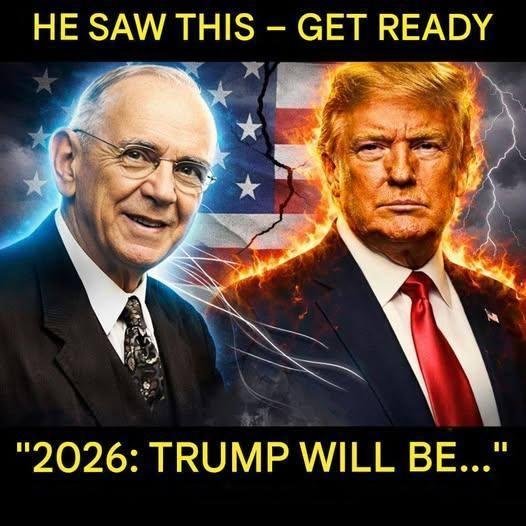
Throughout history, moments of political uncertainty have often been accompanied by renewed interest in predictions and prophetic interpretations. When major world events unfold, some people begin searching the past for clues—looking for statements or writings that might seem to anticipate what is happening today.
One name that frequently appears in these discussions is Edgar Cayce, an American figure from the early twentieth century who became widely known for delivering thousands of recorded readings on topics ranging from health to spirituality.
In recent years, some interpretations circulating online have suggested that Cayce’s writings might offer insights related to modern political developments. These claims have drawn attention across social media and discussion forums, where people continue to debate how—or whether—his statements relate to current events.
Understanding the fascination surrounding these interpretations requires a closer look at Cayce’s legacy and the way predictions are often interpreted over time.
Who Was Edgar Cayce?
Edgar Cayce (1877–1945) was sometimes referred to as the “Sleeping Prophet,” a nickname that came from the way he reportedly delivered readings while in a trance-like state.
During his lifetime, Cayce gave more than 14,000 documented readings. Many of them focused on health advice or spiritual philosophy, while others addressed broader topics such as ancient civilizations, personal development, and global trends.
His followers believed these readings contained insights about humanity’s past and future. Critics, however, often viewed them as vague or open to interpretation.
Regardless of perspective, Cayce became one of the most widely discussed figures in the history of modern mysticism.
Why Predictions Are Often Reinterpreted
Predictions—especially those written decades earlier—can be interpreted in many different ways.
Language used in prophetic or spiritual texts is often symbolic rather than literal. As a result, people may revisit those statements and connect them to contemporary events even when the original wording was general or ambiguous.
This process of reinterpretation is common across many cultures and traditions.
Throughout history, people have applied old prophecies to new situations, sometimes believing that certain passages appear to describe present-day events.
Scholars often point out that this tendency reflects human psychology as much as it does historical interpretation.
The Role of Modern Media
The internet has amplified interest in historical predictions.
Today, excerpts from old writings can spread quickly through blogs, social media posts, and video platforms. When global news events dominate headlines, these interpretations often resurface and gain traction online.
However, these discussions sometimes rely on shortened quotations or interpretations that differ from the original context.
As a result, historians and researchers often encourage readers to examine primary sources before drawing conclusions about what historical figures may have intended.
Cayce’s Broader Legacy
While predictions attract the most attention in online discussions, Edgar Cayce’s legacy extends beyond forecasts about world events.
Many of his readings focused on holistic health practices and spiritual development. Organizations dedicated to preserving his work continue to study and archive the transcripts of his readings today.
The Association for Research and Enlightenment (ARE), founded in 1931, maintains a large collection of these documents and promotes research into Cayce’s teachings.
For followers, Cayce’s work represents a spiritual philosophy centered on personal growth and compassion.
For historians, it remains an intriguing part of twentieth-century American religious culture.
Why Predictions Resurface During Global Events
Interest in prophetic interpretations often increases during periods of uncertainty.
When political tensions rise or unexpected developments occur, people naturally search for explanations and patterns that might help them understand the future.
Historical predictions sometimes appear to provide that sense of perspective—even if their interpretations remain subjective.
This phenomenon is not unique to Cayce. Figures such as Nostradamus and other historical writers have experienced similar surges in attention whenever global events dominate public discussion.
The Challenge of Interpreting Prophetic Texts
One of the main challenges in evaluating predictions is the flexibility of language used in many prophetic writings.
Statements that refer broadly to changes in society or global upheaval can potentially apply to multiple events across different periods.
Because of this, interpretations often vary widely depending on the reader’s perspective.
Historians and scholars generally caution against viewing such predictions as precise forecasts of specific modern events.
Instead, they encourage examining these writings within the historical context in which they were originally produced.
Cultural Fascination With the Future
Human curiosity about the future is a universal theme.
From ancient oracles to modern forecasts about technology and politics, people have always sought ways to anticipate what might happen next.
Predictions—whether scientific, spiritual, or speculative—reflect that enduring curiosity.
Even when the accuracy of those predictions is debated, the conversation surrounding them reveals how strongly people desire insight into the unknown.
A Legacy That Continues to Spark Debate
More than seventy years after Edgar Cayce’s death, his writings continue to inspire discussion.
Some readers interpret certain passages as meaningful insights into modern events. Others view them as historical artifacts shaped by the cultural context of their time.
Either way, the ongoing debate highlights how historical figures and their ideas can remain relevant long after their era has passed.
Understanding Predictions With Perspective
While it can be intriguing to compare historical predictions with modern developments, interpreting such writings requires careful consideration.
Context, translation, and personal interpretation all influence how people understand prophetic texts.
By approaching these writings thoughtfully, readers can appreciate their historical and cultural significance without assuming they offer precise forecasts of today’s events.
In the end, the enduring interest in Edgar Cayce reflects something larger than any individual prediction—it reflects humanity’s ongoing curiosity about the future and the desire to find meaning within the unfolding story of the world.