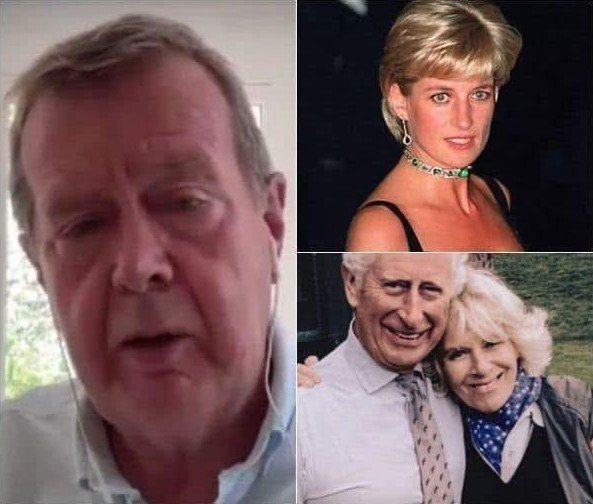
More than two decades after Princess Diana’s death, the questions haven’t disappeared.
What happened that night in Paris has been analyzed countless times. But one perspective continues to stand out—that of Ken Wharfe, her former bodyguard, who believes the tragedy wasn’t inevitable. In his view, it came down to three critical decisions.
Not one moment. Not one mistake.
But a combination of choices that, together, shaped the outcome.
The First Factor: Who Was Behind the Wheel
According to Wharfe, the most immediate issue was the driver.
On the night of the crash, Henri Paul—who was later found to be over the legal alcohol limit—was driving the car at high speed through Paris.
Wharfe has been clear about this point: he believes the situation could have ended differently if a trained bodyguard had taken control of the vehicle instead.
The argument isn’t just about speed or alcohol. It’s about decision-making in a high-pressure moment. A professional protection officer, he suggests, may have prioritized safety over urgency.
The Second Factor: The Plan to Avoid the Paparazzi
The second issue lies in what happened before the car even moved.
Diana and Dodi Fayed’s team attempted to avoid photographers by using decoy vehicles and leaving through a different exit of the Ritz Hotel.
On the surface, it may have seemed like a reasonable strategy.
But Wharfe argues it created unnecessary risk. Instead of coordinating with local authorities, the plan relied on speed and secrecy—two things that can quickly become dangerous in a city environment.
The result was a high-speed attempt to outrun paparazzi, which escalated the situation rather than controlling it.
The Third Factor: The Absence of Official Security
The third point goes further back—years before the crash.
After separating from Prince Charles, Diana chose to step away from her official Scotland Yard protection team.
At the time, it was part of her effort to live a more independent life.
But Wharfe believes this decision had long-term consequences. Without that level of trained, structured protection, the security arrangements on the night of the crash were less coordinated and less controlled.
In his view, a professional royal security team would have:
- Prevented an unsafe driver from taking control
- Coordinated with local police
- Avoided high-risk movement strategies
Why These Three Decisions Matter Together
Each of these factors is significant on its own.
But what makes them important is how they connect.
- A risky plan created pressure
- A compromised driver handled that pressure
- A lack of structured security removed safeguards
Individually, they might not have led to disaster.
Together, they created a situation with very little margin for error.
The Difference Between Hindsight and Reality
It’s important to understand the context.
None of these decisions were made with the expectation of danger. At the time, they were part of a normal effort to manage privacy, movement, and independence.
That’s what makes the analysis more complex.
What seems obvious afterward rarely feels obvious in the moment.
A Perspective, Not a Final Answer
Wharfe’s view is one of many, but it stands out because of his experience.
He worked closely with Diana for years and understood the balance between freedom and security she was trying to maintain. His argument doesn’t rely on conspiracy—it focuses on human decisions.
Three choices. Three turning points.
Why This Story Still Resonates
The reason this perspective continues to circulate is simple.
It doesn’t frame the tragedy as mysterious. It frames it as preventable.
And that idea—that things could have been different—is what keeps people revisiting the story.
A Quiet Conclusion
In the end, the events of that night cannot be changed.
But the discussion around them continues because it reflects something universal: how small decisions, made in ordinary moments, can carry consequences far beyond what anyone expects.
And sometimes, it’s not one mistake that matters most—but how several come together at the same time.