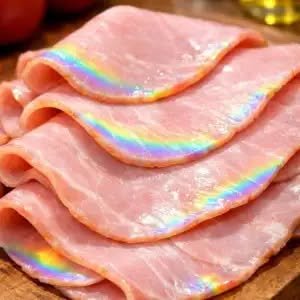
At first glance, it looks almost beautiful: a soft rainbow shimmer gliding across the surface of sliced deli ham. Pink fades into green, silver catches the light, and suddenly your lunch meat looks iridescent. For many people, that moment triggers an immediate question — is this normal, or is something wrong?
The answer is more nuanced than a simple yes or no. That shimmering effect can be harmless, but in some cases, it can also signal problems with storage, freshness, or bacterial growth. Knowing the difference matters, especially when food safety and health are involved.
Below is a clear breakdown of why this phenomenon happens, when it’s safe, and when it’s time to throw the ham away.
Why Deli Ham Can Look Rainbow-Colored
The rainbow sheen on deli meat is a well-documented occurrence, and it often has nothing to do with spoilage.
Light Refraction, Not Dye or Mold
Most commonly, the shimmer is caused by light refraction. Ham is made of tightly packed muscle fibers. When the meat is sliced very thin — as deli meat usually is — light hits those fibers at different angles. The result is a prismatic effect, similar to how light reflects off a CD or an oil slick on water.
In this case, the color shift changes depending on how you tilt the slice under the light. That movement is a key clue that the effect is optical, not biological.
Processing and Curing Play a Role
Cured meats are treated with salts and other compounds that preserve color and texture. These processes can enhance the reflective qualities of the meat’s surface, making the rainbow effect more noticeable, especially under bright kitchen lighting or refrigerator LEDs.
In other words, the shimmer can be a byproduct of modern food processing rather than a warning sign.
When the Shimmer Is Likely Harmless
Not all visual oddities are dangerous. The rainbow effect is generally considered safe if it appears alone, without other red flags.
You’re likely dealing with a harmless phenomenon if:
- The ham smells normal and mild
- The texture feels firm, not slimy
- The color underneath the shimmer is still pink
- The surface is dry or only slightly moist
- The package is within its expiration date
In these cases, food safety experts generally agree that the meat is safe to eat.
When the Shine Becomes a Warning
While light refraction is common, it’s not the only reason deli meat can look strange. Sometimes, visual changes coincide with more serious issues.
Bacterial Growth and Surface Changes
Spoilage bacteria don’t always produce dramatic mold or obvious discoloration right away. Early bacterial activity can alter the surface proteins of meat, causing unusual reflections or an oily-looking sheen.
If the rainbow effect is paired with cloudiness, greying, or greenish patches that do not shift with light, that’s a warning sign.
Storage Mistakes Matter
Improper storage dramatically increases risk. Leaving deli meat out too long, exposing it repeatedly to warm air, or storing it in a poorly sealed container can accelerate bacterial growth.
Once bacteria begin multiplying, visual cues often appear alongside changes in smell and texture.
The Four-Test Rule: How to Decide Safely
Instead of relying on appearance alone, food safety professionals recommend using multiple senses. Think of it as a quick checklist.
1. Sight
Ask yourself whether the color change moves with light or stays fixed. Fixed discoloration, especially green, grey, or brown tones, is a red flag. Shimmer that shifts as you tilt the meat is usually less concerning.
2. Smell
Fresh deli ham has a mild, slightly salty scent. If you notice sourness, sulfur, or anything resembling ammonia, discard it immediately. Odor is often the most reliable indicator of spoilage.
3. Touch
Sliminess is not the same as moisture. Fresh ham may feel slightly damp, but it should not feel sticky or slippery. A slimy film suggests bacterial activity.
4. Time
Even perfectly stored deli meat has a short shelf life once opened. Most opened packages should be consumed within three to five days. If you’re unsure how long it’s been in the fridge, that uncertainty alone is reason to toss it.
Why This Confusion Is So Common
Part of the problem is expectation. We’re conditioned to think food should look uniform and predictable. When something appears unusual, our instinct is to assume danger.
But modern food production creates visual effects that weren’t common decades ago. Thin slicing, bright lighting, vacuum sealing, and curing methods all contribute to appearances that can feel unfamiliar, even when they’re harmless.
At the same time, people have become more aware — and rightly so — of foodborne illness risks. That awareness can sometimes blur the line between caution and unnecessary fear.
What Not to Do
There are a few common mistakes people make when they notice the rainbow sheen.
Do not rinse the meat to “test” it. Water won’t remove bacteria and can actually spread contamination.
Do not taste a questionable piece “just to check.” A small bite is enough to cause illness.
Do not rely on expiration dates alone. Dates assume proper storage, which isn’t always guaranteed.
When in doubt, safety should outweigh waste.
The Practical Bottom Line
A rainbow shimmer on deli ham is often just light playing tricks on muscle fibers. By itself, it doesn’t automatically mean the meat is spoiled or unsafe.
But food safety is about patterns, not single signs. When visual changes combine with off smells, slimy texture, or extended storage time, the risk increases significantly.
Trust your senses together, not in isolation. If multiple warning signs appear, throwing the meat away isn’t overreacting — it’s responsible.
A Calm Conclusion
Not everything strange-looking in your refrigerator is dangerous, and not everything dangerous looks dramatic. The rainbow sheen on deli ham sits right in that gray area where context matters.
Understanding why it happens allows you to make better decisions — not out of fear, but out of awareness. When the meat smells right, feels right, and hasn’t overstayed its welcome, that shimmer is likely harmless.
And when it doesn’t pass those tests, the safest choice is simple: let it go.