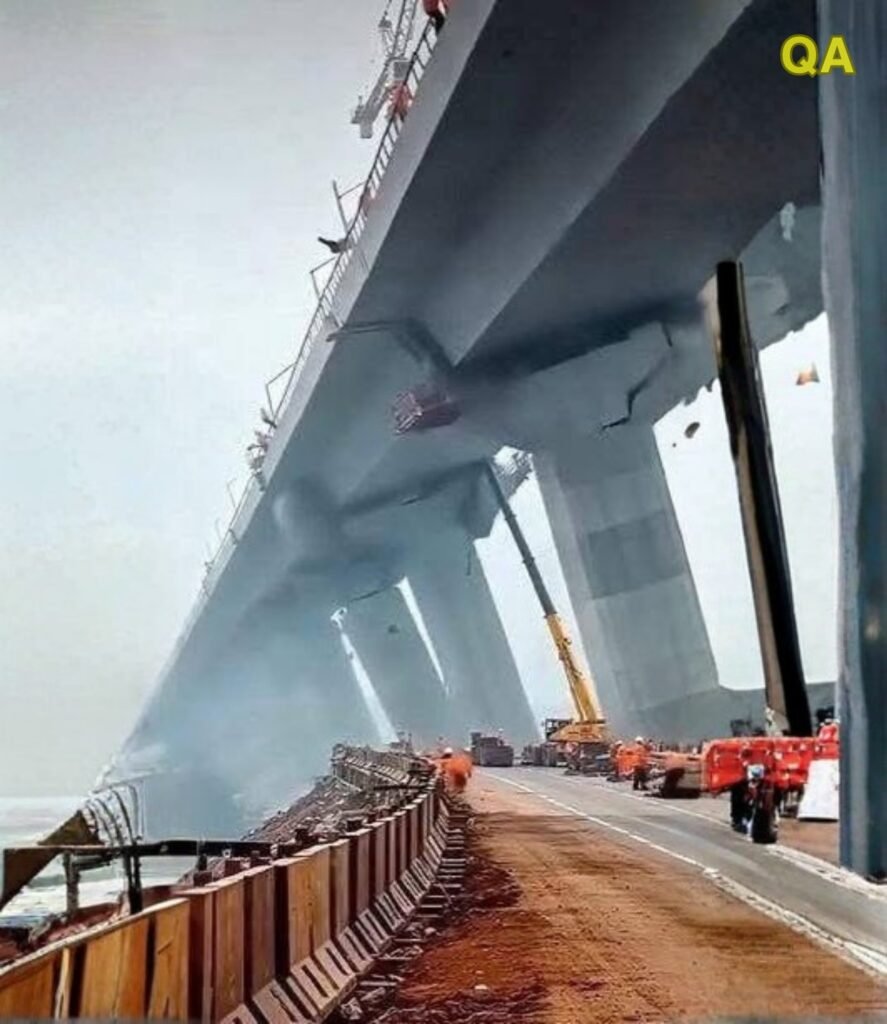
A “breaking news” alert about a powerful 7.7 magnitude earthquake can immediately trigger concern.
These kinds of headlines move fast across social media—often faster than verified information can catch up. But when it comes to earthquakes, details matter: location, depth, and official confirmation all shape the real level of risk.
So what do we actually know about recent reports?
What Has Been Confirmed So Far
As of the latest verified updates, a strong earthquake—measuring around 7.6 magnitude—was recorded near Tonga in the South Pacific on March 24, 2026.
The quake struck deep below the Earth’s surface, at roughly 237 kilometers, which significantly reduced the likelihood of major surface damage.
Importantly, authorities confirmed there was no tsunami threat, despite the strength of the tremor.
Initial reports also indicated no major damage or casualties.
Why Magnitude Alone Doesn’t Tell the Whole Story
A number like “7.7 magnitude” sounds alarming—and it is powerful.
But earthquakes are more complex than just a single number.
Three key factors determine real-world impact:
- Depth – Deeper quakes usually cause less damage at the surface
- Location – Remote ocean areas reduce risk to populations
- Infrastructure – Prepared regions experience less destruction
In this case, the depth of the earthquake played a major role in limiting its impact.
How Social Media Can Amplify Fear
When a headline says “breaking” and includes a high magnitude, it often spreads quickly without full context.
That’s where confusion can begin.
Sometimes:
- Older events are reshared
- Magnitudes are slightly exaggerated
- Missing details create uncertainty
For example, a devastating 7.7 magnitude earthquake in Myanmar in 2025 caused thousands of casualties—but that was a completely different event, in a populated region and at a much shallower depth.
Without context, similar numbers can create misleading comparisons.
What Happens After a Major Quake
Even when immediate damage is limited, authorities still monitor the situation closely.
They look for:
- Aftershocks
- Structural impacts
- Changes in sea levels (for tsunami risk)
Precautionary measures—like advising people to move to higher ground—are often issued even when the overall threat is low.
This is standard safety protocol, not necessarily a sign of escalating danger.
Why These Events Still Matter
Even when damage is minimal, earthquakes of this magnitude are significant.
They highlight:
- Ongoing tectonic activity
- The unpredictability of seismic zones
- The importance of early warning systems
Regions like the Pacific “Ring of Fire” experience frequent seismic activity due to shifting tectonic plates, making monitoring essential.
A Clearer Perspective
A 7.7 (or 7.6) magnitude earthquake is powerful—but power doesn’t always equal devastation.
In this case:
- The quake occurred in a remote ocean region
- It was deep beneath the surface
- No tsunami threat was confirmed
- No major damage was immediately reported
That combination significantly reduced the risk.
A Final Thought
Moments like this show how quickly information can spread—and how important it is to separate initial headlines from verified facts.
The number may grab attention.
But the details are what define the reality.