Circulation is something most people never think about.
Your heart beats.
Blood moves.
Life continues.
It all happens quietly, automatically, in the background.
Until it doesn’t.
When blood flow slows or becomes restricted, the body starts sending signals. They’re rarely dramatic. More often, they show up as small inconveniences — cold hands, tingling feet, slow healing — things that feel easy to ignore.
But taken together, they tell an important story.
Why Circulation Matters So Much
Every cell depends on blood.
It delivers:
- Oxygen
- Nutrients
- Hormones
- Immune cells
It also removes waste.
When circulation weakens, tissues are slowly deprived.
Damage doesn’t happen overnight.
It builds quietly.
1 — Cold Hands and Feet
One of the earliest signs is persistent coldness in extremities.
When circulation is poor, the body prioritizes vital organs. Blood is redirected away from fingers and toes.
As a result, they feel cold even in warm environments.
2 — Numbness and Tingling
Reduced blood flow affects nerve function.
People often describe:
- Pins and needles
- Mild burning
- Loss of sensation
These sensations may appear after sitting or lying in one position — and linger longer than normal.
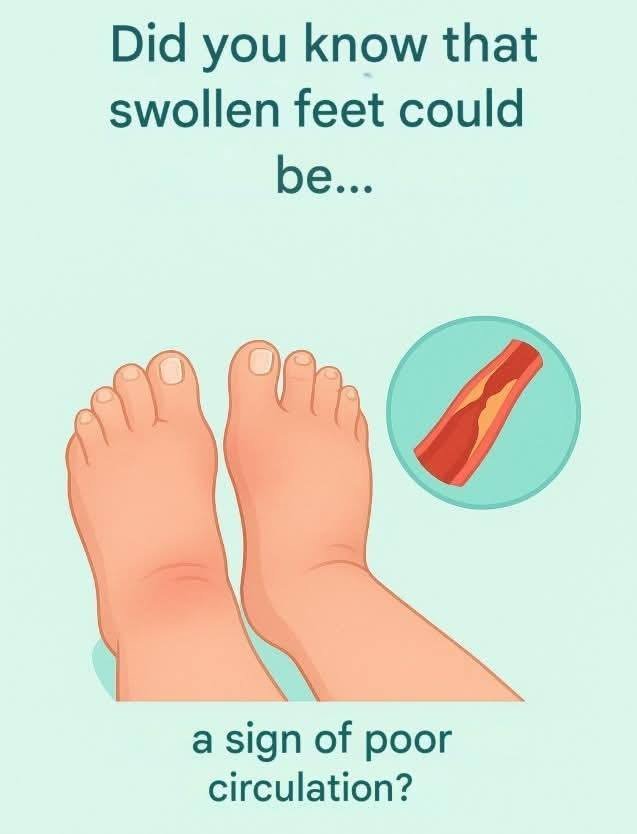
3 — Swelling in Legs or Ankles
When circulation slows, fluid can pool in lower limbs.
This leads to visible swelling, especially after standing or sitting for long periods.
It’s a common sign of venous insufficiency.
4 — Skin Color Changes
Poor circulation affects skin appearance.
You may notice:
- Pale patches
- Bluish tones
- Purplish areas
- Shiny skin
These changes reflect reduced oxygen delivery.
5 — Slow Wound Healing
Cuts and sores rely on blood supply to repair tissue.
When circulation is weak, healing slows.
Minor injuries linger.
Infections develop more easily.
This is especially important for people with diabetes.
6 — Fatigue and Weakness
Low circulation reduces oxygen availability.
Muscles tire faster.
Energy drops.
Stamina declines.
People often mistake this for “getting older.”
It isn’t always.
7 — Varicose Veins
Visible, twisted veins often signal weakened valves.
Blood struggles to move upward against gravity.
Pooling increases pressure.
Over time, veins become enlarged and painful.
8 — Hair Loss on Legs or Feet
Hair follicles need nutrients.
When blood supply decreases, hair growth slows.
Shin and foot hair thinning can be an overlooked clue.
9 — Erectile Dysfunction in Men
Blood flow is central to sexual function.
Circulatory problems often appear here early.
It can be an early warning of cardiovascular disease.
10 — Chest Pain or Shortness of Breath
In severe cases, circulation issues affect the heart and lungs.
These symptoms require immediate medical attention.
They’re not minor.
Who Is Most at Risk
Poor circulation is more common in people with:
- Smoking history
- Diabetes
- High blood pressure
- High cholesterol
- Obesity
- Sedentary lifestyle
Multiple risk factors compound the problem.
Why Circulation Declines With Age
Aging affects:
- Vessel elasticity
- Heart efficiency
- Muscle mass
- Activity levels
These changes reduce flow gradually.
Staying active slows the process.
How Daily Habits Influence Blood Flow
Circulation responds quickly to lifestyle.
Helpful habits include:
- Walking regularly
- Stretching
- Staying hydrated
- Avoiding prolonged sitting
- Managing stress
Small actions improve vessel function.
Nutrition’s Role in Circulation
Balanced diets support blood vessels.
Key elements include:
- Omega-3 fats
- Antioxidants
- Fiber
- Low sodium
Food shapes vascular health over time.
When to Seek Medical Evaluation
Consult a professional if you notice:
- Persistent numbness
- Unhealed wounds
- Increasing swelling
- Color changes
- Pain when walking
Early diagnosis prevents complications.
Why Symptoms Are Often Minimized
Many signs develop slowly.
People adapt.
Cold feet become “normal.”
Fatigue becomes “age.”
Swelling becomes “just tired.”
Normalization delays treatment.
The Calm Takeaway
Poor circulation rarely announces itself loudly.
It speaks in patterns.
Through temperature.
Through sensation.
Through healing time.
Through energy levels.
Listening early gives you options.
Ignoring it removes them.
Blood flow is life flow.
Protecting it protects everything else.