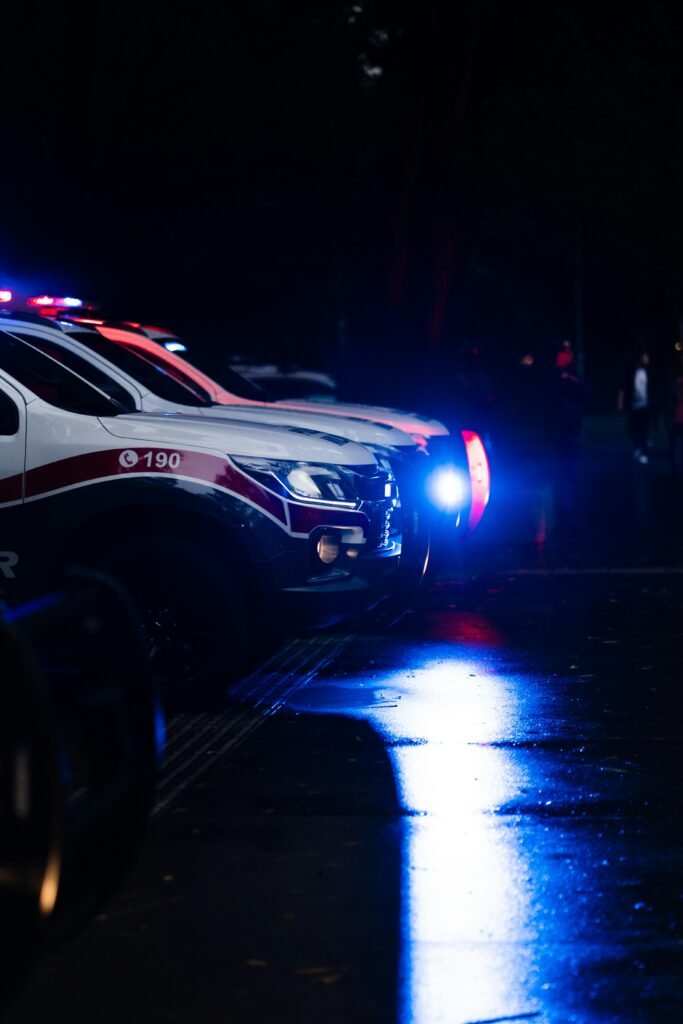
Residents in quiet neighborhoods rarely expect to wake up to flashing police lights and blocked streets. Yet incidents involving police standoffs can unfold quickly and transform otherwise peaceful communities into scenes of intense law-enforcement activity.
Across the United States, police departments respond to thousands of high-risk calls every year. Some involve armed suspects, others involve domestic disputes or situations where officers believe someone inside a home may pose a serious threat. When these situations escalate, authorities may establish what is known as a police standoff.
What Is a Police Standoff?
A police standoff occurs when law-enforcement officers surround a location where a suspect is believed to be inside and refuses to cooperate or surrender.
Instead of immediately forcing entry, officers usually attempt to resolve the situation peacefully. Negotiators may communicate with the individual inside while tactical teams secure the surrounding area to ensure the safety of neighbors and responding officers.
These incidents often draw attention from nearby residents who notice large numbers of patrol cars, specialized units, and sometimes armored vehicles arriving at the scene.
Why Police Use Negotiation First
Law-enforcement agencies prioritize negotiation in high-risk situations because it significantly increases the chances of a peaceful resolution.
Specially trained crisis negotiators are often brought in to speak with the individual involved. Their goal is to reduce tension, gather information, and convince the person to surrender without violence.
Negotiators use calm communication, patience, and psychological strategies to build trust. In many cases, standoffs end without anyone being injured.
How Authorities Secure the Area
When a standoff begins, police immediately focus on securing the surrounding neighborhood.
Officers may close nearby streets and ask residents to remain inside their homes for safety. In some cases, nearby houses may even be temporarily evacuated if authorities believe there is a potential risk.
This process can make the situation appear dramatic to bystanders, especially when large police units and emergency vehicles gather outside the home.
However, these precautions are standard procedure in high-risk situations.
The Role of SWAT Teams
In situations where there is a significant threat, police departments may deploy Special Weapons and Tactics (SWAT) teams.
SWAT officers are trained to handle dangerous scenarios that regular patrol officers may not be equipped to manage. They use specialized equipment, protective gear, and strategic planning to respond to high-risk incidents.
Despite the intense appearance of these operations, the goal is always to resolve the situation safely.
How Long Standoffs Can Last
Police standoffs can last anywhere from a few minutes to several hours. In rare cases, they may even continue overnight.
Authorities often prefer to take time rather than rush into a dangerous confrontation. The longer negotiators can communicate with the person involved, the greater the chance that the situation will end peacefully.
Why These Incidents Often Go Viral Online
In today’s digital world, scenes involving police standoffs frequently spread across social media.
Videos showing flashing lights, blocked roads, and tactical teams quickly attract attention online. However, these clips often lack full context and may cause viewers to assume the situation is more dangerous than it actually is.
In many cases, the incident ends with the suspect surrendering and authorities resolving the situation without injuries.
Understanding the Bigger Picture
Although police standoffs can look alarming, they represent a small portion of the millions of law-enforcement calls handled every year.
Most incidents end peacefully due to careful planning, negotiation, and coordination between police units.
For residents who suddenly find their neighborhood at the center of such an event, the experience can be unsettling. But the procedures used by law-enforcement agencies are designed to ensure safety for everyone involved.