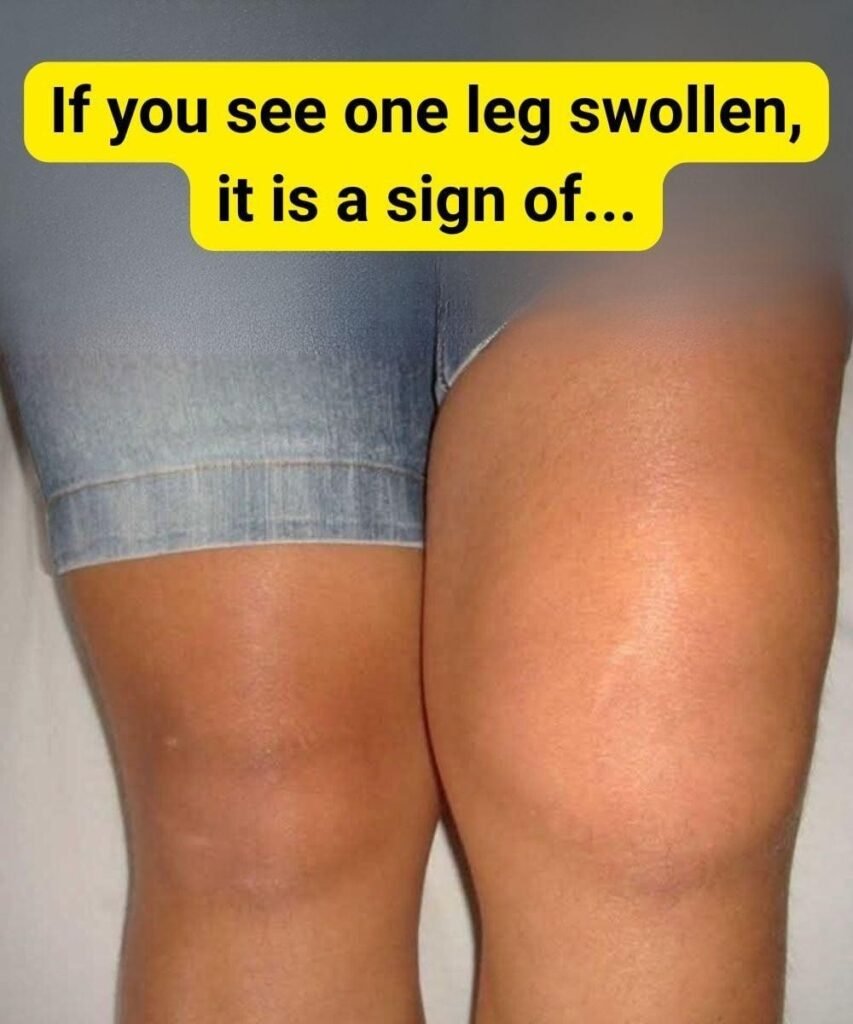
It usually starts small.
A shoe feels tighter than usual. One leg looks slightly bigger than the other. At first, it’s easy to ignore—maybe you stood too long, maybe it’s nothing.
But when swelling appears in only one leg, it’s not always something minor. In many cases, it’s your body signaling that something deeper may be happening.
Why One-Leg Swelling Matters More
Swelling in both legs can often be linked to simple causes like fluid retention or long periods of standing.
But swelling in just one leg is different.
Doctors treat it as a more specific signal—often pointing to a localized issue rather than a general one.
That’s why this symptom gets more attention.
The Most Serious Cause: Blood Clots (DVT)
One of the most important conditions linked to one swollen leg is deep vein thrombosis (DVT).
This happens when a blood clot forms in a deep vein, usually in the leg.
Typical signs include:
- Swelling in one leg
- Pain or tenderness
- Warm or red skin
The danger isn’t just the clot itself.
If it breaks loose, it can travel to the lungs and cause a pulmonary embolism, which can be life-threatening.
That’s why sudden swelling in one leg should never be ignored.
Other Common Causes
Not every case is life-threatening, but several conditions can still be serious:
1. Poor Blood Flow (Venous Insufficiency)
When veins don’t push blood back to the heart properly, fluid builds up in one leg.
2. Injury or Trauma
A sprain, fracture, or even a minor injury can cause swelling in one area.
3. Infection
Skin infections like cellulitis can lead to swelling, redness, and warmth.
4. Lymphatic Blockage (Lymphedema)
If the lymph system is blocked, fluid can accumulate in one leg over time.
Each of these has different implications—but all require attention if symptoms persist.
When It’s Not Just the Leg
Sometimes, swelling is not only about the leg itself.
It can reflect problems elsewhere in the body, such as:
- Heart conditions
- Kidney disease
- Liver problems
These conditions can cause fluid buildup, often starting in the legs.
In those cases, swelling is a symptom—not the root problem.
Warning Signs You Shouldn’t Ignore
Certain symptoms alongside swelling increase the urgency:
- Sudden swelling in one leg
- Pain or tenderness
- Redness or warmth
- Shortness of breath
- Chest pain
These signs may indicate a blood clot or cardiovascular issue and require immediate medical attention.
Why Timing Matters
Swelling doesn’t always develop slowly.
In some cases—especially with blood clots—it can appear quickly and worsen within hours. Early detection can prevent serious complications.
That’s why doctors emphasize acting early rather than waiting.
The Pattern Behind the Symptom
If you break it down, one-leg swelling usually follows one of these paths:
- Blood flow is blocked → swelling appears
- Fluid builds up → pressure increases
- The body reacts → visible swelling
What you see on the outside is the final step of a deeper process.
A Symptom, Not a Diagnosis
The most important thing to understand is this:
Swelling in one leg is not a condition—it’s a sign.
It doesn’t tell you exactly what’s wrong, but it tells you something needs attention.
A Simple but Serious Signal
In many cases, the cause may turn out to be minor.
But the possibility of something more serious—especially a blood clot—is what makes this symptom important.
Ignoring it can delay diagnosis. Acting on it can prevent complications.
The Bottom Line
A swollen leg, especially just one, is your body asking for attention.
Sometimes it’s nothing.
Sometimes it’s not.
And the difference often comes down to how quickly it’s taken seriously.