Air defense systems are designed to respond quickly when potential threats appear in the sky. Radar operators track objects moving at high speed, command centers analyze the trajectory, and defensive systems may be activated within seconds.
According to recent reports, such a sequence unfolded over the Mediterranean region when a missile believed to have been launched from Iran was intercepted by defensive systems associated with NATO forces near Türkiye.
Although details remain limited, the reported interception has drawn attention from analysts monitoring security developments in the region. Incidents involving missile defense systems are closely watched because they reveal how modern defense networks function in real-world situations.
Understanding the significance of such events requires looking at how missile defense systems operate and why certain regions maintain extensive air defense capabilities.
How Missile Defense Systems Work
Modern missile defense systems rely on a combination of radar technology, satellite tracking, and interceptor missiles.
When a potential threat is detected, radar systems analyze the object’s speed, direction, and trajectory. Command centers then determine whether the object poses a danger to populated areas or military assets.
If interception becomes necessary, defensive missiles are launched to neutralize the incoming projectile before it reaches its target.
This process often occurs within minutes—or even seconds—depending on the distance and speed of the incoming missile.
Because of the rapid timelines involved, these systems are designed to operate with a high degree of automation supported by trained operators.
Why the Mediterranean Region Is Strategically Important
The Mediterranean Sea has long served as a crossroads between Europe, the Middle East, and North Africa.
Its surrounding countries include NATO members as well as nations with complex political relationships. Because of this geography, military activity in the region often draws international attention.
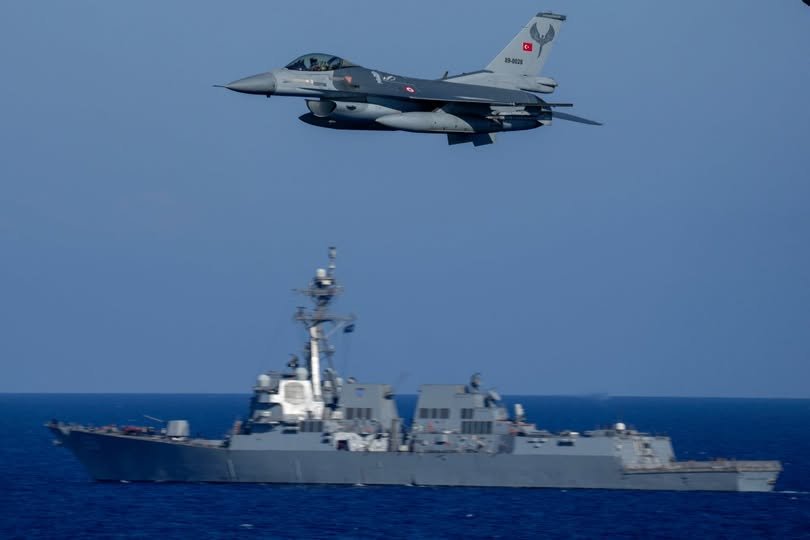
Naval forces from multiple countries regularly operate in the Mediterranean, conducting patrols, exercises, and security missions.
Air defense systems stationed in nearby countries help monitor the airspace and respond to potential threats.
These defensive networks are designed to protect both civilian populations and strategic infrastructure.
The Role of Türkiye in Regional Defense
Türkiye occupies a unique strategic position between Europe and the Middle East.
As a NATO member, the country participates in the alliance’s collective defense framework while also maintaining its own national security systems.
Air defense capabilities stationed in Türkiye help monitor a wide area that includes parts of the eastern Mediterranean and nearby regions.
Because of this geographic location, developments involving missile activity near the country are often closely observed by international defense analysts.
Why Missile Interceptions Are Significant
Interceptions involving air defense systems provide real-world insight into how these technologies perform outside controlled tests.
Defense systems are typically evaluated through simulations and training exercises, but actual interceptions demonstrate their ability to respond to unexpected events.
When such incidents occur, military authorities often analyze several factors, including:
- Detection time and radar accuracy
- Response speed of defensive systems
- Communication between command centers
- The effectiveness of the interceptor missile
These evaluations help improve future defensive capabilities.
Challenges in Verifying Early Reports
As with many security-related developments, early reports about missile incidents can sometimes be incomplete or difficult to verify immediately.
Governments and military organizations may release only limited information while investigations are underway.
In some cases, analysts rely on satellite imagery, radar data, or official statements from multiple countries to piece together a clearer understanding of what occurred.
Because of these complexities, details surrounding such incidents often become clearer over time rather than immediately.
The Broader Context of Regional Tensions
The eastern Mediterranean and surrounding regions have experienced periods of geopolitical tension in recent years.
Military exercises, naval patrols, and air defense deployments are common as countries seek to maintain security and stability.
Incidents involving missiles or other advanced weapon systems often occur within this broader context.
Observers therefore analyze each event not only for its immediate impact but also for what it may signal about regional security dynamics.
Defensive Systems as a Deterrence Tool
Missile defense networks serve two main purposes: protection and deterrence.
The ability to intercept incoming threats helps safeguard populations and infrastructure. At the same time, the presence of effective defense systems may discourage potential attacks by reducing the likelihood that such actions would succeed.
For this reason, many countries invest heavily in air defense technology as part of their national security strategies.
These systems are often integrated into broader defense networks that include radar monitoring, intelligence gathering, and international cooperation.
Monitoring Future Developments
As authorities continue assessing the reported interception over the Mediterranean, analysts will likely look for additional information from official sources.
Updates may clarify the circumstances of the missile launch, the defensive response, and any potential implications for regional security.
In complex geopolitical environments, events like these are rarely viewed in isolation.
Instead, they become part of a larger pattern of activity that governments and observers monitor carefully.
A Reminder of Modern Defense Capabilities
The reported interception highlights the advanced technology and coordination involved in modern missile defense systems.
From radar detection to rapid-response interceptors, these networks operate continuously to monitor potential threats.
While such incidents can attract global attention, they also illustrate the defensive mechanisms many countries maintain to protect their airspace.
In regions where strategic interests intersect, these systems serve as both shields and signals—demonstrating the capabilities nations rely on to maintain security in an uncertain world.