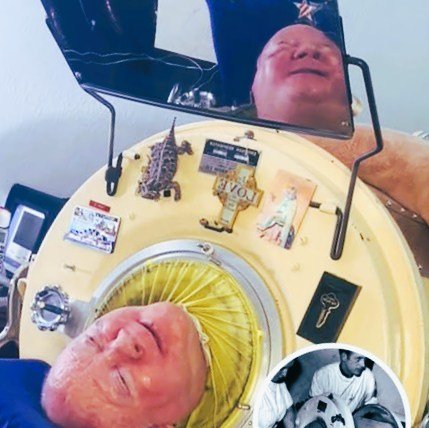
At six years old, most children are learning independence in small steps—tying shoes, riding bikes, staying out a little longer than before. For one child, independence took on a different meaning. Polio left his body paralyzed, and survival required a machine that would surround him for decades: an iron lung.
Now 76, he is among the last living people to have relied on the device long-term. His story isn’t remembered for tragedy alone, but for how life adapted around extreme limitation—and how perspective reshaped what “incredible” came to mean.
What an Iron Lung Actually Represented
The iron lung was not treatment in the modern sense. It was life support. The machine used pressure to help the lungs expand and contract when muscles could no longer do so.
For many polio patients in the mid-20th century, the iron lung was temporary. For a small number, it became permanent. Living inside one meant structuring daily life around immobility—sleeping, breathing, and existing within a fixed space.
The machine sustained life, but it also defined it.
Childhood Interrupted, Not Ended
Polio didn’t erase childhood, but it redirected it. Schoolwork came to him. Social interaction required planning. Play looked different.
What remained constant was awareness. From an early age, he understood dependence in a way most children never have to. That awareness shaped resilience—not the motivational kind, but the practical kind built from repetition and adaptation.
Life didn’t pause. It reconfigured.
The Emotional Reality of Long-Term Dependence
Dependence is often discussed clinically. Living it is different. The iron lung demanded trust—in caregivers, in technology, in routine.
Fear existed, especially early on. But over time, fear gave way to familiarity. The machine became environment rather than enemy.
That shift mattered. It allowed attention to move from survival to living.
How Technology Gave—and Took—Freedom
The iron lung limited movement, but it also extended life long enough for medical progress to arrive. Portable ventilators eventually reduced reliance on the massive machine.
Transitioning away wasn’t simple. The iron lung had been both constraint and safety. Leaving it meant risk as well as possibility.
Freedom, in this context, wasn’t absence of limitation. It was choice within it.
Why This Story Feels Distant—and Urgent
Polio is often spoken of historically, as something conquered by vaccines. Stories like this remind us that “conquered” doesn’t mean erased.
Survivors carried the consequences forward for decades. Their lives became bridges between eras—before prevention, after crisis.
That perspective gives weight to public health conversations that otherwise feel abstract.
Redefining an “Incredible” Life
When asked to describe his life, the word he used wasn’t bitter or resigned. It was “incredible.”
Not because circumstances were easy, but because meaning was found anyway. Relationships formed. Work was done. Interests developed.
Incredibility came from continuity, not comfort.
The Difference Between Pity and Respect
One of the most important distinctions in stories like this is tone. Pity flattens experience. Respect acknowledges complexity.
This life wasn’t defined solely by struggle. It included humor, frustration, satisfaction, and routine—like any other.
Disability didn’t replace identity. It shaped it.
What Remains After the Machines Fade
As iron lungs disappear from hospitals and museums replace wards, stories become the primary record. They carry lessons machines cannot.
They show how adaptation is human, not mechanical. How dignity persists even when bodies fail. How life expands around constraint rather than waiting for its removal.
A Living Reminder
This man’s experience isn’t a relic of medical history. It’s a reminder of what survival looked like before prevention—and what perseverance looks like afterward.
His life challenges easy narratives. It asks not for admiration, but understanding.
And it leaves behind a quiet truth: freedom is not always movement. Sometimes, it’s the ability to keep living fully, even when the world becomes very small.