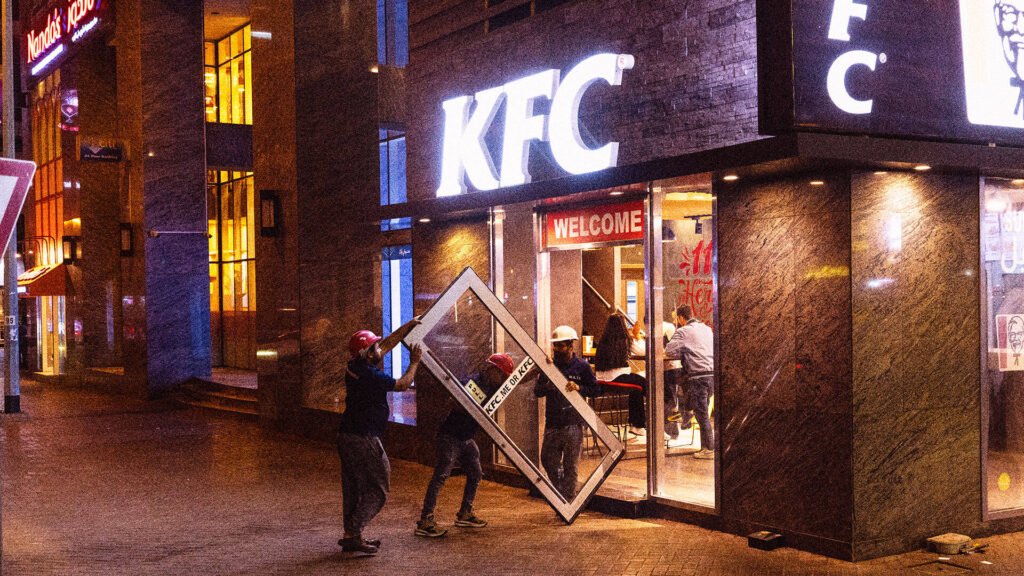
At first, it sounds unrealistic.
A global fast-food chain removing the doors from its restaurants? It feels like the kind of claim designed purely to grab attention. But behind the headline, there’s actually a concept—one that says more about modern marketing than it does about architecture.
What the Idea Is About
The story centers on a bold concept: certain 24/7 KFC locations reportedly removing their entrance doors to reinforce a simple message—they are always open.
Instead of relying on signs or hours displayed on windows, the absence of doors becomes the message itself.
No doors. No closing signal. No barrier.
It’s a visual statement rather than a verbal one.
Why Removing Doors Feels So Powerful
Doors aren’t just functional—they carry meaning.
They tell us when a place is open or closed. They separate inside from outside. They signal limits.
By removing them, the concept flips that logic completely.
- No doors = no clear closing point
- No barrier = constant accessibility
- No signal of “end of day”
It turns a physical feature into a branding tool.
The “Out-Door” Concept Explained
What makes this idea more interesting is how the removed doors are used afterward.
Instead of discarding them, they’re reportedly placed outside as part of the campaign—essentially becoming advertisements themselves.
This creates a layered effect:
- The building shows openness
- The removed doors tell the story
- The setup sparks curiosity
It’s not just about being open—it’s about making people notice it.
Blending Physical and Digital Behavior
Another layer of the concept connects real-world design with digital habits.
QR codes placed on these installations guide people to nearby open locations instantly.
That detail matters.
It turns a visual stunt into something functional:
- You see something unusual
- You scan it
- You act on it immediately
This reflects how people behave today—quick decisions, mobile-first, always connected.
Why It Works in Today’s Attention Economy
Modern marketing often tries to add more—more ads, more visuals, more noise.
This approach does the opposite.
It removes something familiar, and that absence becomes the focus.
That’s why it works:
- It’s unexpected
- It’s simple
- It’s easy to share
People don’t just see it—they react to it. They take photos. They post. They talk about it.
The Bigger Idea Behind It
Beyond the stunt itself, there’s a deeper message.
The idea of “always open” reflects how services operate today:
- Streaming platforms never close
- Online stores run 24/7
- Delivery apps operate all night
By removing doors, the physical store tries to mirror that same logic.
It’s less about the building—and more about aligning with modern expectations.
Reality vs. Concept
It’s also important to separate the concept from practicality.
Doors serve real purposes:
- Security
- Temperature control
- Safety
So whether this is implemented widely or remains a limited campaign concept, the idea itself is what matters most—not necessarily the execution at scale.
Why People Are Talking About It
The reaction to this idea has been largely curiosity-driven rather than negative.
Unlike controversial campaigns that rely on shock, this one relies on:
- Cleverness
- Simplicity
- Visual storytelling
It doesn’t force attention—it invites it.
A Different Kind of Branding
What makes this story stand out is how quietly it delivers its message.
There’s no loud slogan, no aggressive push. Just a small change that makes people stop and think.
And in a space where attention is hard to capture, that kind of subtlety can be surprisingly effective.
A Measured Conclusion
Whether fully implemented or primarily conceptual, the idea reflects a shift in how brands communicate.
Instead of adding more noise, they sometimes gain more by removing something familiar.
In this case, the absence of a door becomes the message itself—simple, unexpected, and hard to ignore.