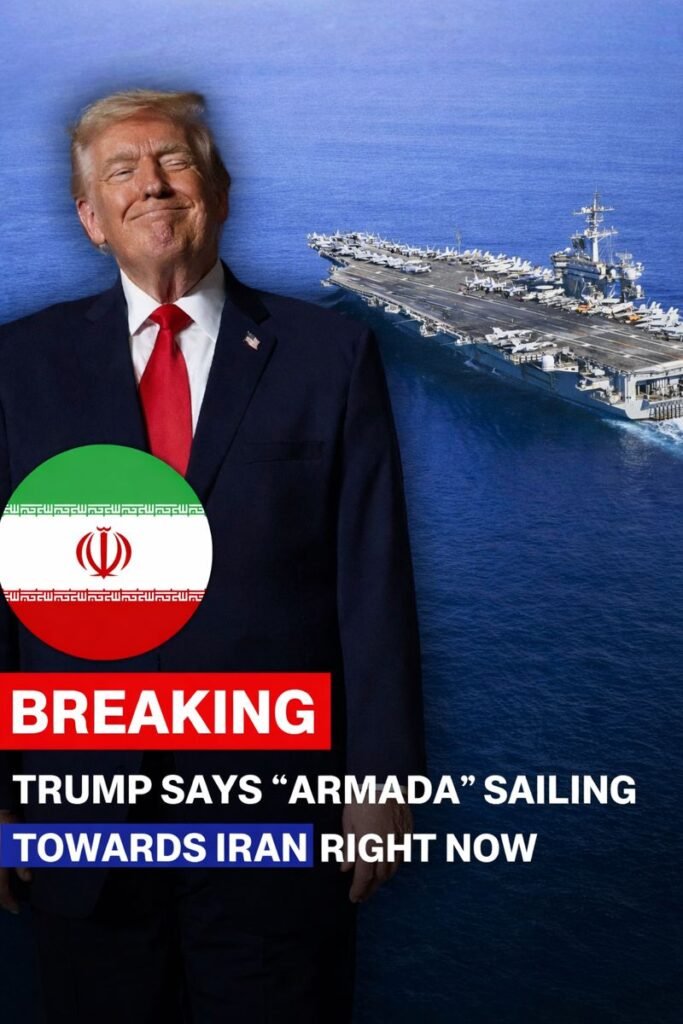
In Washington and across the Middle East, a high-stakes strategic debate is unfolding that could reshape global politics.
At the heart of it: whether the United States should carry out targeted military strikes against Iran—not as a conventional war plan, but as a way to pressure Tehran and potentially reignite mass protests inside the country.
It’s not a decision that has been made yet. What’s clear, however, is that policymakers and military planners are weighing options more diverse and complex than simple “strike or don’t strike.”
What Officials Are Considering
U.S. sources familiar with internal discussions say that President Donald Trump and his advisers are exploring military options aimed at Iranian security forces and leaders tied to the brutal repression of nationwide protests earlier this month. The idea would be to weaken Iran’s power structure and send a signal to domestic dissidents—potentially inspiring renewed public uprisings against the regime.
That reflects a shift from traditional deterrence logic toward something closer to strategic pressure: using selective force to influence political momentum on the ground in Iran.
Officials have also discussed the possibility of targeting elements of Iran’s nuclear and missile programs—assets that hold strategic value but also carry significant risk if attacked.
Why This Matters
For the U.S., this matters on multiple fronts:
1. Domestic Politics and Foreign Policy Identity
The idea of strikes to influence internal dynamics in Iran marks a notable stance in American foreign policy—where diplomacy, sanctions, and military posturing intersect rather than remain separate.
2. Regional Dynamics
U.S. allies such as Saudi Arabia and Israel have reportedly been part of broader discussions in Washington, signaling regional interest in how the U.S. might act. But even they caution that airstrikes alone are unlikely to topple Iran’s government or end its influence.
3. Iranian Preparedness
Iran’s leadership has publicly stated that it would treat any attack as a major confrontation and responded by bolstering defenses. Officials in Tehran also profess openness to negotiation—yet make clear they would defend their country forcefully if attacked.
What We Know — and Don’t Know
There are a few constants in this discussion:
No final decision has been made yet.
Officials emphasize that military action remains one option among many under consideration.
The presence of U.S. naval forces and additional warships in the Middle East has increased U.S. leverage and readiness—whether that translates into actual strikes or serves primarily as a deterrent remains uncertain.
Experts warn that strikes alone cannot ensure regime change or sustained protest movements. Iran’s power structure is resilient and deeply rooted, meaning external pressure is unlikely to be decisive by itself.
The Global Ripples
The broader global impact is already visible. Oil markets have reacted to the rising tensions, with prices surging as traders price in the risk of conflict involving a major oil-producing country.
At the same time, European and global leaders are navigating their own responses. The European Union has recently taken steps—such as potential designations of Iran’s Revolutionary Guard—separate from U.S. military discussions, signaling multilateral concern over Iran’s crackdown on protests.
Meanwhile, Russia and other powers have urged restraint and talks instead of force, highlighting the risk of broader regional escalation.
Why It’s Not a Clear-Cut Choice
There are no perfect options:
- A military strike could weaken Iranian security forces and embolden opposition groups — yet it could also provoke retaliation, deepen instability, and draw the U.S. deeper into conflict.
- A purely diplomatic approach might reduce immediate tensions but risk appearing weak if Iran ignores calls for reform or negotiation.
- Economic pressure and sanctions are already in place, but their effectiveness in shifting the regime’s behavior is limited without complementary political or strategic moves.
The Bottom Line
What the U.S. ultimately decides is more than a tactical choice in a regional dispute. It will reflect how Washington views its role in world affairs, how it balances military power with diplomacy, and how it hopes to influence change in neighboring countries without sparking a wider war.
With protests and repression in Iran still echoing internationally—and Iranian officials warning of strong retaliation—any action will be measured not just for its tactical impact, but for its long-term strategic consequences.