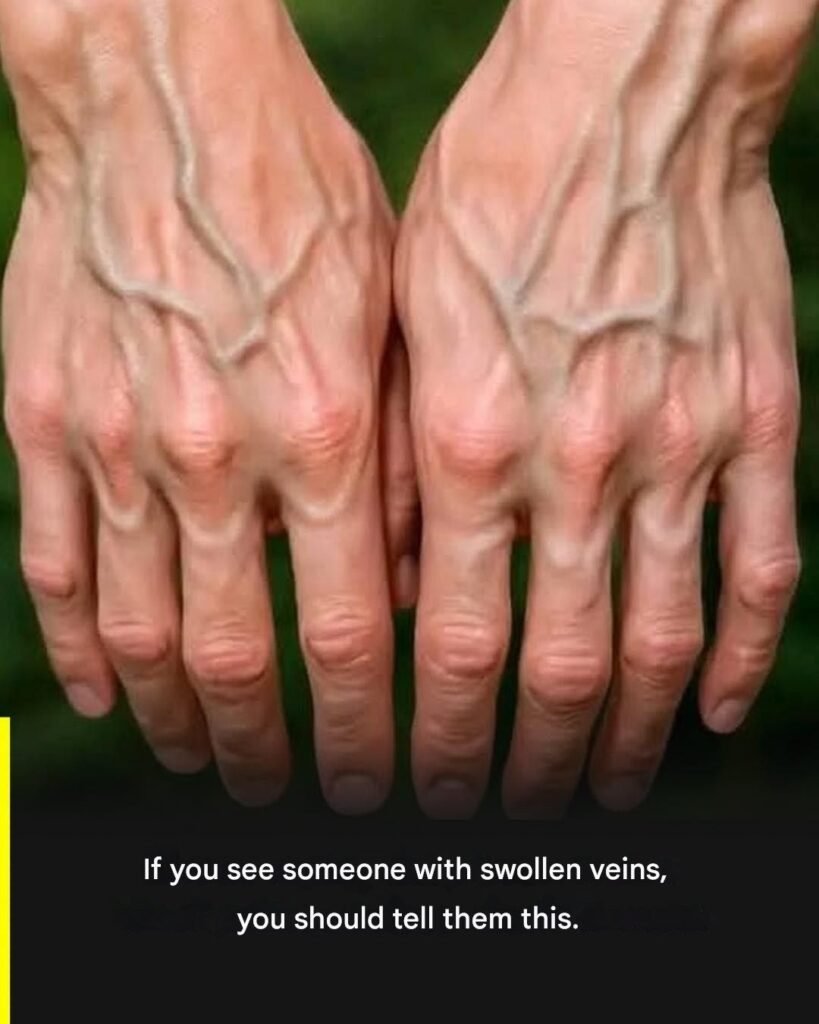
At some point, many people notice it: veins on the hands, arms, or legs that seem more pronounced than before. They weren’t always that visible. Now they stand out, especially in certain light or after activity.
The immediate reaction is often concern. People wonder if it signals a health problem, poor circulation, or something “going wrong” beneath the skin.
In most cases, the explanation is far more ordinary—and far less alarming—than people expect.
Visible Veins Are Often About Contrast, Not Condition
Veins don’t usually move closer to the surface suddenly. What changes is everything around them.
Visibility increases when the contrast between veins and surrounding tissue becomes more noticeable. That contrast can shift for several reasons, many of them completely normal.
The veins were always there. You’re just seeing them more clearly now.
Lower Body Fat Is One of the Most Common Reasons
One of the biggest factors is body fat percentage.
Subcutaneous fat—the layer just beneath the skin—acts like insulation. When that layer becomes thinner, veins become easier to see. This is why:
- Athletes often have prominent veins
- Veins show more after weight loss
- Leaner individuals tend to notice them earlier
This doesn’t indicate poor health. In fact, it often reflects the opposite: reduced fat between skin and muscle.
Age Changes Skin Transparency
As people age, skin naturally becomes thinner and loses some elasticity. Collagen levels decline, and the skin’s ability to mask underlying structures decreases.
The result:
- Veins appear darker or more defined
- Hands and forearms show changes first
- Visibility increases even without weight loss
This is a normal biological process, not a sign of damage or disease.
Heat and Activity Make Veins Stand Out Temporarily
Veins respond quickly to temperature and movement.
When you’re warm or physically active:
- Blood vessels dilate
- Blood flow increases
- Veins expand slightly
That’s why veins often look more prominent after exercise, hot showers, or time in the sun. Once the body cools down, visibility usually decreases again.
This response is a sign of healthy vascular regulation, not a problem.
Genetics Play a Bigger Role Than Most People Realize
Some people simply inherit more visible veins.
Skin tone, thickness, and connective tissue structure vary widely. Two people with identical health profiles can have very different vein visibility purely due to genetics.
If visible veins run in families, it’s usually structural—not medical.
Hydration Can Affect Appearance
Mild dehydration can reduce blood volume slightly, making veins appear sharper against the skin. This effect is subtle, but noticeable for some people.
Once hydration improves, veins often look less defined again.
This doesn’t mean visible veins equal dehydration—it just means fluid balance influences appearance.
When Visibility Is Usually Not a Warning Sign
In the absence of symptoms, visible veins alone rarely indicate a medical issue.
They are generally not a concern if there is:
- No pain
- No swelling
- No skin discoloration
- No sudden, dramatic change
In these cases, vein visibility is almost always cosmetic or physiological rather than pathological.
Situations That Do Deserve Attention
While visible veins are usually harmless, certain changes shouldn’t be ignored.
It’s worth checking with a professional if veins are accompanied by:
- Persistent swelling
- Warmth or redness
- Tenderness or pain
- Sudden appearance with no clear explanation
These combinations matter more than visibility alone.
Why Social Media Has Changed How We Perceive Veins
Modern imagery plays a role too.
Fitness content, filters, lighting, and editing exaggerate vein visibility, making it seem unusual or extreme. In reality, visible veins are common across ages, body types, and lifestyles.
What’s changed isn’t human anatomy—it’s how closely we examine it.
The Calm Takeaway
Visible veins usually mean one of three things:
- Less tissue between skin and vein
- Thinner or more transparent skin
- Temporary changes from heat or activity
They’re a reflection of structure, not a diagnosis.
In most cases, visible veins are simply a sign that your body is doing what it’s always done—circulating blood efficiently beneath skin that’s changed with time, movement, or body composition.
Not everything that becomes more noticeable is a problem.
Sometimes, it’s just visibility catching up with reality.