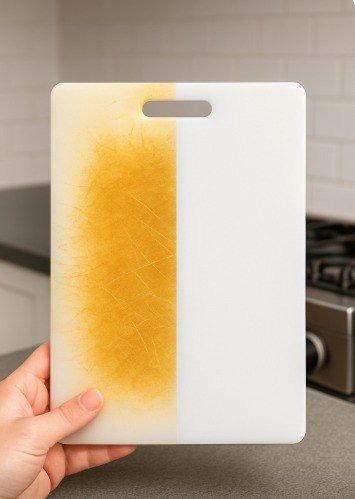
It usually happens slowly.
At first, the cutting board looks fine. A few light scratches. A faint stain from tomatoes or onions. Nothing serious.
Then, over time, the surface darkens. Knife marks deepen. Odors linger even after washing. No matter how much soap is used, the board never feels completely clean.
Eventually, many people consider throwing it away.
But professional butchers rarely do.
They know that a good cutting board doesn’t need replacing. It needs care.
Why Cutting Boards Age So Quickly
Wooden cutting boards work hard.
They absorb moisture.
They collect tiny food particles.
They trap oils and smells.
Every slice leaves a mark. Every rinse pushes water deeper into the grain.
Without proper maintenance, the surface becomes dull, dry, and uneven.
This isn’t damage.
It’s neglect.
The Secret Hidden in Most Kitchens
In butcher shops and traditional kitchens, boards are treated regularly.
Not with expensive products.
With simple ingredients.
Most often:
Coarse salt
Fresh lemon
Or sometimes:
Baking soda
Vinegar
These combinations clean, deodorize, and restore the wood naturally.
No chemicals.
No artificial coatings.
No harsh abrasives.
Just careful attention.
Why Salt and Lemon Work Together
Salt acts as a gentle scrub.
Its rough texture reaches into grooves without damaging the wood.
Lemon provides natural acidity that breaks down grease and neutralizes odor.
Together, they lift residue that soap alone cannot remove.
They refresh the board instead of stripping it.
How Butchers Use This Method
After heavy use, many professionals follow a simple routine.
They sprinkle salt generously over the board.
Then they cut a lemon in half and rub it firmly across the surface, squeezing gently to release juice.
As the lemon moves, it creates a natural cleaning paste.
The board is left to rest for several minutes.
Then it is rinsed and dried thoroughly.
The difference is immediate.
Removing Deep Odors and Stains
Some stains go beyond the surface.
Garlic.
Fish.
Raw meat.
Strong spices.
These can sink deep into wood.
Repeated treatments slowly draw these odors out.
Patience matters.
One session may improve things.
Several restore them.
The Importance of Proper Drying
After cleaning, moisture must be removed.
Boards should be:
Dried upright
Placed in open air
Kept away from heat
Trapped moisture causes warping and cracking.
Drying protects the structure.
Sealing the Board After Cleaning
Once clean, many butchers apply food-safe oil.
Mineral oil or natural board oil is rubbed into the surface.
This seals pores and prevents future absorption.
It also restores color and smoothness.
The board looks almost new.
Why This Method Outperforms Store Products
Commercial cleaners often rely on strong chemicals.
They remove smell—but also dry out wood.
Over time, this weakens boards.
Natural methods clean without damaging fibers.
They preserve function and appearance.
That’s why professionals trust them.
How Often Maintenance Is Needed
Light-use boards may need treatment monthly.
Heavy-use boards benefit from weekly care.
Regular attention prevents major damage.
Maintenance is easier than replacement.
A Habit That Saves Money and Reduces Waste
Replacing boards is costly.
Restoring them is not.
This simple routine extends lifespan by years.
It reduces waste.
It honors craftsmanship.
And it keeps kitchens safer.
Calm Conclusion: Care Preserves What We Value
A cutting board reflects how it is treated.
Neglected boards deteriorate.
Maintained boards endure.
With two simple ingredients and a few quiet minutes, worn surfaces regain their strength and cleanliness.
Sometimes, preservation is not about buying new things.
It’s about learning how to care for what we already have.