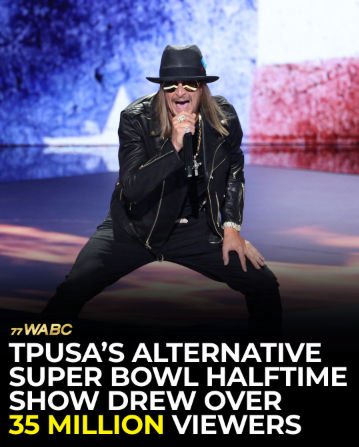
On Super Bowl Sunday, attention usually flows in one direction. The game. The commercials. The halftime spectacle engineered to capture nearly everyone watching at once. And yet, alongside the official broadcast, another event unfolded in parallel—one that drew millions of viewers without appearing on the NFL’s stage.
TPUSA’s alternative Super Bowl halftime show didn’t compete by imitation. It succeeded by contrast.
A Different Kind of Halftime Moment
Rather than aiming for universal appeal, the alternative show leaned into specificity. It positioned itself not as a replacement for the NFL’s production, but as an option for viewers who felt disconnected from the tone, messaging, or cultural posture of recent mainstream halftime performances.
That framing mattered. Viewers weren’t invited to abandon the Super Bowl—they were offered a parallel experience, one that aligned more closely with their tastes and values.
In an era of fragmented media, that distinction is powerful.
The Numbers That Sparked Conversation
Reports that the alternative broadcast drew more than 35 million viewers quickly circulated online, prompting debate about what those figures represent. While measurement methods for digital and multi-platform events differ from traditional TV ratings, the size of the reported audience signaled something larger than a one-off curiosity.
It suggested a substantial appetite for content that exists outside legacy entertainment pipelines—especially when it’s timed to coincide with major cultural moments.
Why Parallel Events Are Gaining Ground
Large live events no longer belong to a single screen. Viewers increasingly move between platforms, devices, and streams, choosing content that fits their preferences rather than defaulting to the biggest production.
The Super Bowl remains a unifying event, but unity no longer means uniformity. Parallel programming thrives because audiences feel empowered to curate their own experience—even during moments once considered shared rituals.
Culture, Identity, and Choice
Alternative programming often succeeds not because it reaches everyone, but because it reaches someone very clearly. In this case, the show resonated with viewers who felt underrepresented or disengaged by mainstream entertainment narratives.
That sense of recognition creates loyalty. When people feel a piece of content is “for them,” they’re more likely to seek it out, share it, and return the next time.
The Role of Digital Distribution
Unlike traditional halftime shows bound by broadcast schedules and network contracts, alternative events rely heavily on digital distribution. Livestreams, social platforms, and on-demand access allow audiences to tune in from anywhere, often with fewer barriers.
This flexibility expands reach quickly, especially when combined with existing online communities ready to mobilize attention.
Measuring Impact Beyond Ratings
While debates over viewership counts are inevitable, the broader impact may be cultural rather than numerical. The success of an alternative halftime show challenges the assumption that attention must funnel through a single, centralized broadcast.
It also signals to creators and organizations that there is room to build large audiences without conforming to traditional entertainment models.
What This Signals for Future Events
As major cultural moments continue to splinter across platforms, parallel programming is likely to become more common—not just as commentary, but as fully realized alternatives.
Whether tied to sports, politics, or entertainment, these events thrive on timing, identity, and digital reach. The Super Bowl provided the backdrop, but the audience made the choice.
A Quiet Shift in How Attention Works
The story here isn’t about replacing the halftime show. It’s about redefining how attention is earned.
When millions of viewers actively choose an alternative, it reflects a media environment where participation is intentional rather than automatic. Big stages still matter—but they no longer monopolize the spotlight.
And that shift, more than any single number, may be the most lasting takeaway.