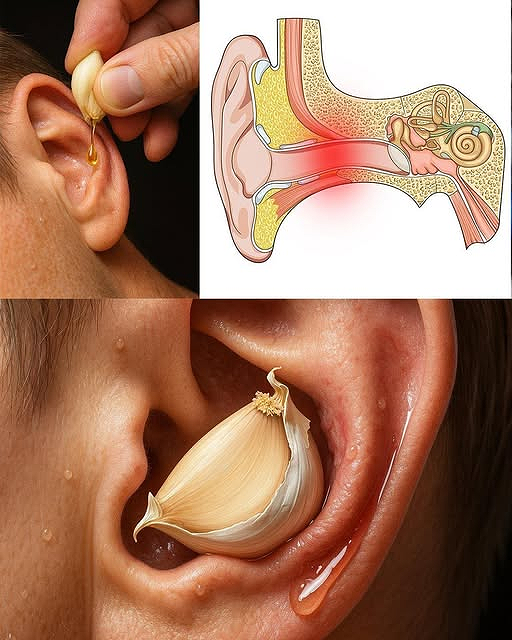
Ear pain, pressure, or discomfort can feel sudden and urgent — especially when it interrupts your day or your sleep. That’s why people often turn to traditional remedies, and garlic consistently appears on that list. It’s been used for centuries in folk medicine for all sorts of ailments, including earaches and infections.
But what actually happens when you use garlic for ear health — and what should you be careful about? Let’s break it down clearly.
The Active Chemistry Behind Garlic
Garlic contains compounds like allicin and other sulfur-rich molecules that laboratory research suggests can inhibit the growth of certain bacteria and fungi in vitro (in test-tube studies). These substances are part of what gives garlic its characteristic smell and its antimicrobial reputation.
When eaten as part of your diet, garlic also supports overall immune health, which in turn may help your body respond to infections more effectively.
Can Garlic Treat an Ear Infection?
Here’s the important nuance:
- Many people use garlic — especially garlic-infused oil drops — to try to relieve ear pain or discomfort. These drops are often marketed for earache, wax softening, or swimmer’s ear.
- When it comes to actual ear infections, especially middle ear infections (otitis media), the evidence is limited and inconclusive. Garlic compounds simply can’t penetrate past the eardrum to reach the site of infection deep inside the ear.
- Some lab studies suggest garlic derivatives can inhibit microbes in controlled conditions, but there’s no strong clinical evidence showing garlic cures ear infections in humans.
In other words: garlic isn’t a replacement for proper medical treatment — particularly for infections that involve the inner structures of the ear.
Where Garlic Might Help
Garlic-based remedies may provide symptom relief in some situations:
1. Earache and Outer Ear Discomfort
Topical garlic oil — very gently applied — can sometimes soothe irritation and pain in the external ear canal (not beyond the eardrum).
2. Mild Antimicrobial Support
The antibacterial and antiviral properties of garlic compounds mean they could help limit microbial presence on the skin or in oil drops — though this is far from proven as an effective treatment on its own.
3. Routine Eating for Immune Health
Eating garlic as part of your regular diet supports immune function overall. That systemic benefit can indirectly reduce susceptibility to infections more broadly — though it’s not ear-specific.
What Garlic Cannot Do
- It can’t reach the middle ear to fix infections there. That’s behind the eardrum, where antibiotics or medical treatments are needed.
- It shouldn’t be pushed deep into the ear canal. Applying raw garlic cloves directly can cause irritation or even injury if done incorrectly.
In fact, medical experts warn against inserting any objects or liquids into the ear canal without professional guidance, because it could worsen symptoms or cause harm.
Safety and Best Practices
If you’re considering garlic oil for mild discomfort:
- Use commercially prepared drops designed for ears rather than DIY remedies, to reduce contamination risk.
- Test any topical garlic preparation on your skin first to make sure you’re not allergic or sensitive.
- Never use garlic oil if you suspect a ruptured eardrum — that can make the situation worse.
And importantly: if pain persists, hearing changes, fever develops, or symptoms last more than a couple of days, it’s essential to see a healthcare professional for proper evaluation.
Natural Isn’t Always Harmless
Natural remedies can feel comforting, but they’re not without risk. Garlic’s antimicrobial promise in the lab doesn’t always translate to real-world effectiveness, especially in delicate areas like the ear.
The safest approach combines:
- Good ear hygiene habits
- Professional diagnosis when needed
- Appropriate medical treatment for serious symptoms
The Bottom Line
Garlic has long been admired for its antimicrobial and pain-soothing properties, and certain ear-targeted garlic oil products may provide temporary relief for irritation or mild discomfort.
But it’s not a cure-all, and it can’t replace proper medical care — especially for infections deep inside the ear. When in doubt, professional evaluation is the safest choice.