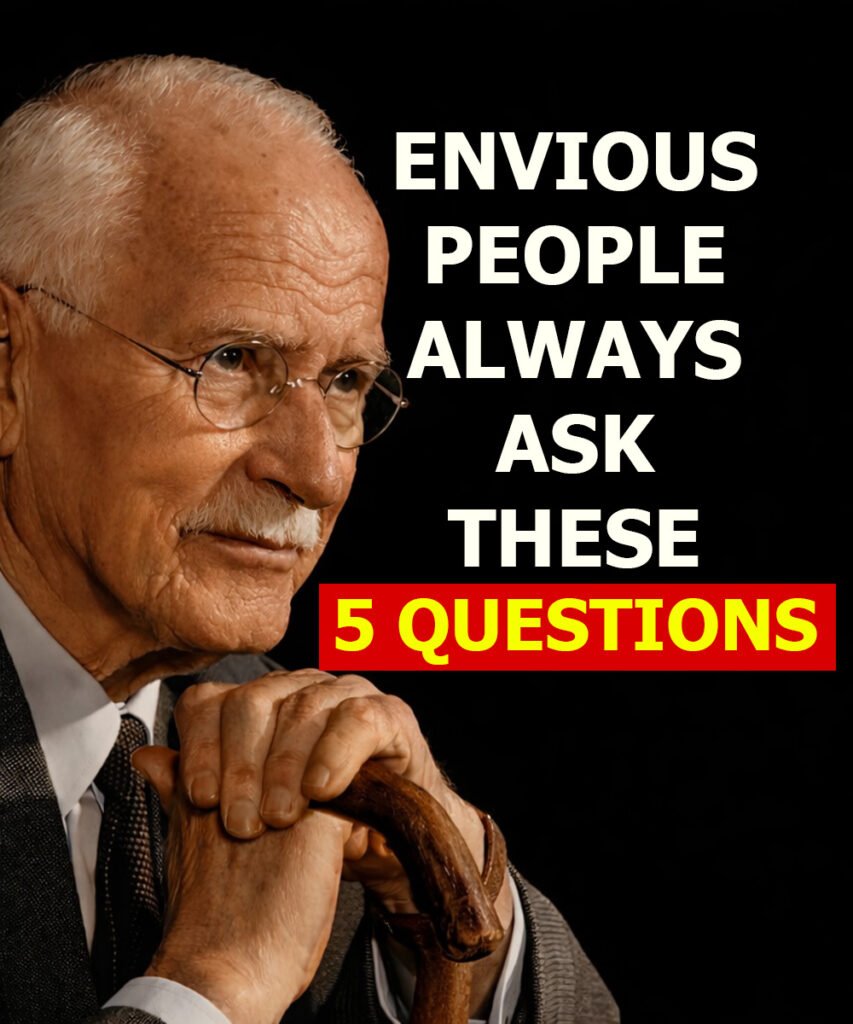
It usually doesn’t sound like jealousy.
There’s no raised voice. No obvious resentment. No direct criticism. Instead, it comes disguised as curiosity—polite, casual, even friendly.
A simple question.
“Must be nice to have that kind of life, right?”
On the surface, it feels harmless. But beneath it, something else may be happening.
Psychologists and social researchers have long observed that envy rarely announces itself openly. More often, it slips into everyday conversations through carefully framed questions that reveal more than the speaker intends.
Why Envy Rarely Shows Up Directly
Open jealousy is socially uncomfortable. Most people avoid admitting they feel inferior, overlooked, or insecure.
Instead, these emotions are softened.
They’re filtered through humor. Curiosity. “Just wondering.”
Questions become a safe channel for comparison.
Rather than saying, “I feel behind,” someone asks, “How do you manage all that?”
Rather than saying, “I’m unhappy with my situation,” they ask, “Don’t you ever get tired of this?”
These subtle shifts protect pride while allowing frustration to surface.
Question One: “How Can You Afford That?”
At first glance, this sounds practical.
But context matters.
When asked repeatedly—or with a certain tone—it can signal quiet discomfort with financial differences.
What It Often Reflects
This question may point to:
- Financial insecurity
- Comparison anxiety
- Fear of falling behind
- Doubt about personal progress
Instead of celebrating someone’s success, the focus turns to its legitimacy.
The underlying message becomes: “How did you get what I don’t have?”
Question Two: “Do You Ever Fail at Anything?”
This question appears complimentary.
It suggests admiration.
But it also creates distance.
The Hidden Meaning
By portraying someone as “always successful,” the speaker removes responsibility from themselves.
If others succeed effortlessly, personal struggles feel justified.
It reframes inequality as fate rather than effort.
This protects self-image while quietly reinforcing resentment.
Question Three: “Are You Sure You’re Really Happy?”
This is one of the most revealing questions.
It questions not achievements, but emotional reality.
Why This One Stings
When someone doubts another person’s happiness, they’re often trying to restore emotional balance.
If you’re not truly happy, then our lives are more equal.
If your success is hollow, mine feels less painful.
It’s an attempt—often unconscious—to shrink the emotional gap.
Question Four: “Did Someone Help You Get There?”
Support networks matter. Mentorship matters. Opportunity matters.
But this question isn’t always about understanding context.
What It Suggests
When framed skeptically, it implies:
- Your success isn’t fully earned
- You were “lucky”
- You had advantages others didn’t
This shifts credit away from effort and toward circumstance.
It eases internal frustration by reframing outcomes.
Question Five: “Why Are You So Confident All the Time?”
Confidence can trigger discomfort.
Especially in people who struggle with self-doubt.
The Emotional Subtext
Rather than building confidence themselves, some individuals question its legitimacy in others.
Is it real? Is it fake? Is it justified?
These doubts reflect inner conflict more than external concern.
The Pattern Behind These Questions
Individually, none of these questions are harmful.
In isolation, they may be genuine.
But when they appear together, repeatedly, in similar contexts, they form a pattern.
A pattern of comparison.
Of quiet measuring.
Of unspoken competition.
Envy doesn’t want to destroy relationships. It wants reassurance.
It wants proof that differences aren’t permanent.
Why People Struggle With Envy
Envy isn’t cruelty. It’s vulnerability.
It emerges when people feel:
- Left behind
- Unrecognized
- Underappreciated
- Uncertain about their direction
- Disconnected from personal goals
In fast-moving social environments—especially online—constant exposure to others’ achievements intensifies these feelings.
Social media highlights outcomes, not effort.
It amplifies contrast.
It accelerates self-doubt.
How These Questions Affect Relationships
When envy goes unrecognized, it quietly erodes trust.
Conversations become strained.
Achievements feel awkward to share.
Success becomes something to downplay.
Over time, relationships lose emotional safety.
People begin editing themselves.
Not to brag.
But to avoid discomfort.
Responding Without Escalation
Not every subtle question deserves confrontation.
Often, the healthiest response is calm clarity.
Examples include:
- Sharing effort, not just outcomes
- Acknowledging struggles alongside wins
- Avoiding defensive explanations
- Maintaining emotional boundaries
This keeps conversations balanced without fueling tension.
When Envy Turns Toxic
Occasional comparison is human.
Chronic resentment is harmful.
Warning signs include:
- Repeated minimization of achievements
- Passive-aggressive remarks
- Constant skepticism
- Withholding support
- Quiet competitiveness
When patterns persist, emotional distance may be necessary.
Reframing Envy as Information
Envy, when recognized, offers insight.
It highlights unmet needs.
It reveals unaddressed goals.
It signals areas for growth.
For the person feeling it—and for those observing it.
Handled with awareness, it can lead to reflection rather than resentment.
A Calm Conclusion
Hidden envy rarely arrives as hostility.
It arrives as questions.
Polite ones. Curious ones. Thoughtful-sounding ones.
But behind them often lies uncertainty, comparison, and emotional imbalance.
Recognizing these patterns doesn’t mean judging others. It means understanding human complexity.
When people feel secure in their own path, they don’t need to measure it against anyone else’s.
And when conversations are rooted in confidence rather than comparison, relationships grow stronger, not smaller.