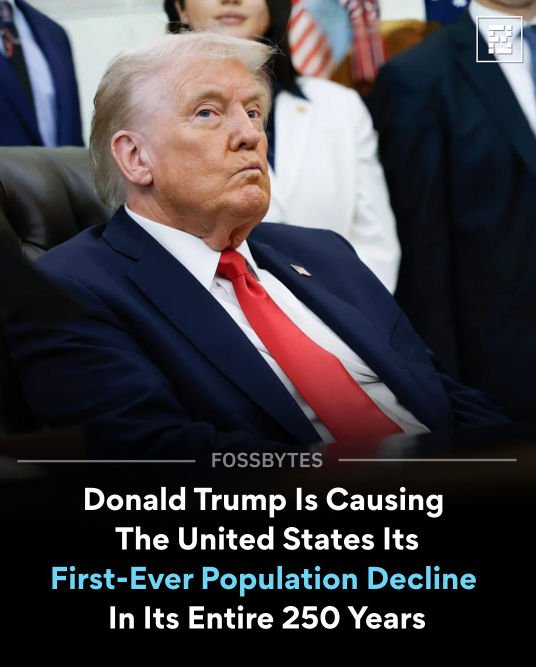
The idea that the United States experienced its first-ever population decline because of one political figure is a powerful claim. It’s also an oversimplification. Population change is shaped by long-running forces—birth rates, death rates, immigration patterns, and economic conditions—that move slowly and rarely respond to a single administration alone.
Understanding what actually happened requires unpacking the data and the context around it.
What the Numbers Show—And What They Don’t
U.S. population growth has been slowing for decades. Long before recent administrations, fertility rates were falling as Americans delayed having children, had fewer of them, or opted out of parenthood altogether. At the same time, the population has been aging, increasing the number of deaths each year.
During the COVID-19 pandemic, these trends converged sharply. Excess mortality rose, births dipped, and international migration slowed dramatically due to border closures and travel restrictions. In some years, growth fell to near zero—and in limited periods, estimates suggested slight declines.
Those outcomes coincided with the Trump presidency, but coincidence is not causation.
Immigration: A Key Driver With Complex Causes
Immigration is a major contributor to U.S. population growth. Policy choices can influence flows at the margin, but global conditions matter just as much. During the pandemic era, migration dropped worldwide—not only in the United States—because travel halted and visa processing slowed across countries.
Attributing changes solely to domestic policy ignores these global constraints and the lag between policy changes and demographic effects.
Birth Rates and the Long Arc of Demography
Birth rates respond to economic confidence, healthcare access, cultural norms, and generational preferences. The decline in U.S. fertility predates any single administration by many years and mirrors trends in other developed countries.
Reversing or accelerating these patterns typically takes decades, not election cycles.
Why Political Framing Persists
Demographic statistics are often used to support political narratives because they sound definitive. Phrases like “first-ever decline” imply a historic break driven by leadership. In reality, population estimates are revised, debated, and influenced by methodology, timing, and extraordinary events—like a global pandemic.
Simplified framing spreads faster than nuanced explanation, especially online.
What Experts Generally Agree On
Demographers broadly agree on several points:
- U.S. population growth has been slowing for a long time.
- COVID-19 temporarily amplified negative trends.
- Immigration, births, and deaths all matter—and none move instantly.
- No single leader can fully explain short-term demographic shifts.
These conclusions hold regardless of political affiliation.
The Risk of Oversimplification
Reducing complex demographic outcomes to one person or policy obscures the real challenges ahead: supporting an aging population, stabilizing immigration systems, and addressing economic pressures that influence family formation.
When the diagnosis is wrong, the solutions usually are too.
A Clearer Way to Read the Claim
Rather than asking who “caused” a population dip, a more useful question is what structural factors are shaping America’s demographic future—and how policy across many years might respond.
Population change is cumulative. It reflects choices made by millions of people and shocks that affect entire societies.
A Measured Conclusion
Claims that pin America’s population trajectory on a single presidency overstate political control and understate demographic reality. The slowdown is real; the causes are broad; and the timeline is long.
Understanding that complexity is the first step toward meaningful discussion—one grounded in evidence rather than attribution.