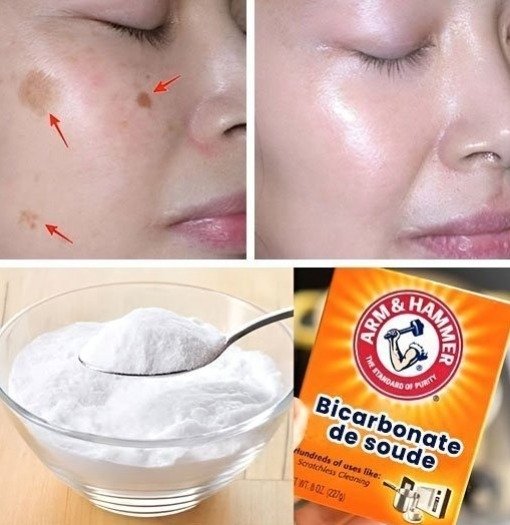
Age spots tend to appear quietly.
One day, your skin looks the same as always. Then, in certain light, you notice darker patches on the hands, face, or arms. They aren’t painful. They don’t itch. But once you see them, it’s hard to ignore them.
This often leads people to search for simple, at-home solutions. Baking soda is one of the most common suggestions.
But what does it actually do?
What Age Spots Really Are
Age spots — also called liver spots or sun spots — are areas of increased pigmentation.
They form when:
- Sun exposure stimulates melanin production
- Skin cell turnover slows with age
- Pigment becomes unevenly distributed
They are not dirt. They are not surface stains. They exist within the skin’s layers.
That distinction matters.
Why Baking Soda Is Often Recommended
Baking soda is mildly abrasive and alkaline.
When applied to skin, it can:
- Remove surface dead cells
- Create temporary brightness
- Increase smoothness
- Reduce dullness
This makes spots appear lighter — at first.
But it doesn’t change pigment production.
The Exfoliation Effect
Most of baking soda’s “results” come from exfoliation.
By removing dead skin cells, it reveals newer cells underneath. This creates short-term brightness and smoother texture.
It’s similar to using a scrub.
Once exfoliation stops, pigmentation usually returns.
The pH Problem
Healthy skin is slightly acidic.
Baking soda is strongly alkaline.
Applying it regularly disrupts the skin’s natural barrier, which can lead to:
- Dryness
- Sensitivity
- Redness
- Increased sun damage
Ironically, this can worsen pigmentation over time.
Method 1: Baking Soda and Water Paste
This is the most common approach.
It involves mixing baking soda with water into a paste and gently rubbing it on dark spots.
Effect:
- Mild exfoliation
- Temporary brightness
- No deep pigment change
Safe only if used rarely and gently.
Method 2: Baking Soda and Lemon
This combination is popular — and risky.
Lemon is acidic and photosensitizing. Combined with baking soda, it can irritate skin and increase UV sensitivity.
This raises the risk of further darkening.
Dermatologists generally advise against this mix.
Method 3: Baking Soda and Honey
Honey reduces some irritation.
It adds moisture and antibacterial benefits. This makes the mixture gentler than water alone.
Still, the core effect remains exfoliation — not treatment.
Why Results Vary So Widely
Some people see “improvement.”
Others see irritation.
This depends on:
- Skin sensitivity
- Frequency of use
- Sun exposure
- Existing damage
There is no consistent outcome.
What Actually Helps Reduce Age Spots
Evidence-based approaches include:
- Daily sunscreen
- Vitamin C serums
- Retinoids
- Chemical exfoliants
- Professional treatments
These target pigment production and turnover — not just surface cells.
The Importance of Sun Protection
No topical method works without sun protection.
UV exposure is the primary driver of age spots. Without sunscreen, new spots will continue forming.
Treatment without protection is temporary.
When to Be Cautious
Avoid baking soda if you have:
- Sensitive skin
- Rosacea
- Eczema
- Active breakouts
- Broken skin
In these cases, irritation can cause long-term damage.
Why DIY Remedies Stay Popular
Home remedies offer control.
They’re inexpensive.
They feel empowering.
They promise simplicity.
But simplicity doesn’t always equal effectiveness.
The Calm Takeaway
Baking soda doesn’t erase age spots.
It exfoliates.
That can make skin look brighter for a short time, but it doesn’t address the cause of pigmentation.
Used occasionally and gently, it’s usually harmless.
Used frequently, it can do more harm than good.
Healthy skin improves through protection, consistency, and patience — not harsh shortcuts.