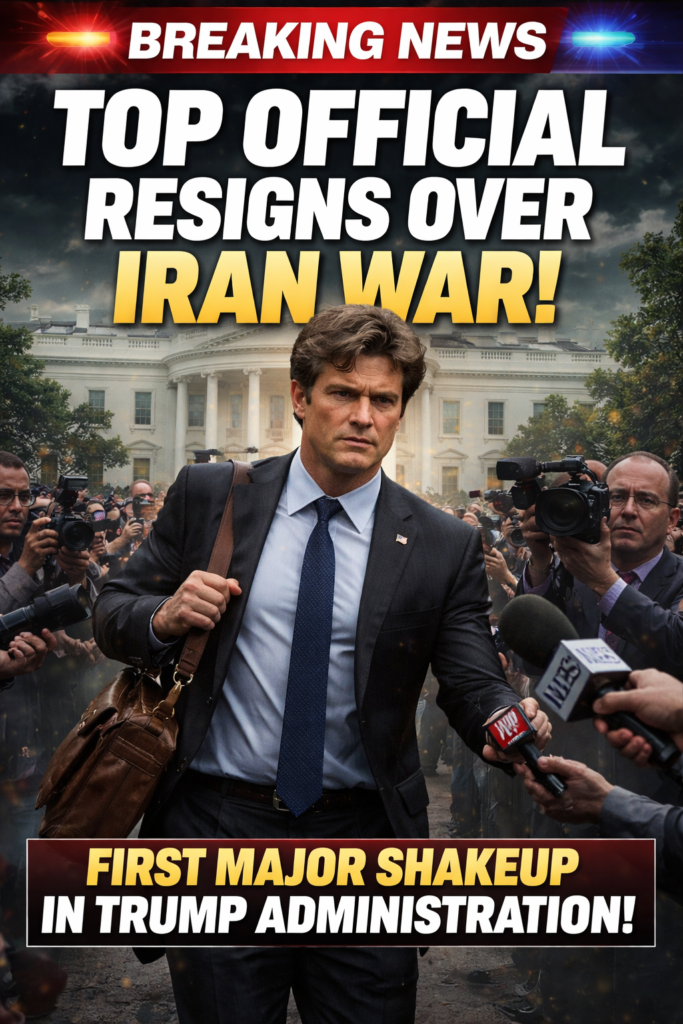
The escalating war between the United States and Iran has taken a dramatic political turn, as the first high-level resignation within President Donald Trump’s administration has now been confirmed. In a move that is sending shockwaves across Washington and beyond, Joe Kent, Director of the National Counterterrorism Center (NCTC), has stepped down in protest over the ongoing conflict.
This resignation is not just another bureaucratic change — it represents a serious internal fracture within the U.S. government at a time of global instability.
Why Did Joe Kent Resign?
According to multiple reports, Kent made it clear that he could no longer support the administration’s decision to go to war with Iran. In a public statement, he emphasized that the conflict lacked a fundamental justification.
He stated that Iran posed “no imminent threat” to the United States, directly challenging the core argument used to initiate military action.
Even more controversially, Kent suggested that the war may have been influenced by external political pressure, particularly from Israel and its allies in the U.S.
This level of criticism from a top intelligence official is extremely rare — and signals deep concerns inside the national security establishment.
A Critical Role Left Vacant
As Director of the National Counterterrorism Center, Kent was responsible for analyzing and preventing terrorist threats against the United States. His position placed him at the very center of U.S. intelligence operations.
His resignation now raises urgent questions:
Who will replace him during an active war? Will intelligence coordination be affected? Are more officials considering stepping down?
Kent had only been confirmed to the role in mid-2025 after a contentious Senate vote, making his exit even more significant.
The Bigger Picture: A Growing War
The resignation comes amid a rapidly intensifying conflict in the Middle East. The war, which escalated in late February 2026, has already led to major geopolitical consequences:
High-profile Iranian leaders have reportedly been targeted or killed Missile and drone attacks have spread across the region U.S. embassies and strategic locations have come under threat Oil markets and global stability are being heavily impacted
At the same time, President Trump has doubled down on the military campaign, insisting that the U.S. must “finish the job” in Iran.
This contrast between political leadership and internal dissent highlights a dangerous divide.
Internal Division Inside the U.S. Government
Kent’s resignation is widely seen as the first visible crack in the administration’s unified front. However, analysts warn it may not be the last.
Reports indicate that some officials are increasingly uncomfortable with:
The legal justification for the war The lack of clear evidence of an immediate threat The long-term consequences of deeper involvement in the Middle East
Under U.S. law, military action typically requires a clear and imminent threat. Critics argue that this standard may not have been met in this case.
Political and Global Implications
The implications of this resignation are massive — both domestically and internationally.
1. Political Fallout in Washington
Kent’s departure could embolden critics of the war in Congress and within the intelligence community. It may also trigger investigations into how the decision to engage Iran was made.
2. Damage to Public Trust
When a top counterterrorism official openly rejects the rationale for war, it raises serious concerns among the public about transparency and truth.
3. International Reactions
Allies and adversaries alike are closely watching the situation. Internal instability within the U.S. government could influence diplomatic relations and military strategies.
4. Risk of More Resignations
Experts warn that this could be just the beginning. If more officials follow Kent’s lead, the administration could face a major internal crisis during wartime.
Who Is Joe Kent?
Joe Kent is not a typical government official. He is a former Green Beret with over a decade of combat experience and has also worked with the CIA. His military and intelligence background made him a key figure in Trump’s national security team.
Because of this, his resignation carries even more weight — it is not coming from a political outsider, but from someone deeply embedded in the system.
What Happens Next?
As of now, the White House has not issued a detailed response to Kent’s resignation.
However, the situation remains highly fluid.
Key questions moving forward include:
Will the administration address Kent’s claims directly? Could Congress push for more oversight? Will the war escalate further or move toward diplomacy?
Conclusion
Joe Kent’s resignation marks a turning point in the unfolding Iran war. It exposes internal disagreements at the highest levels of power and raises serious doubts about the justification behind one of the most significant military actions in recent years.
As the conflict continues, one thing is clear: this is no longer just a war abroad — it is becoming a political battle at home.