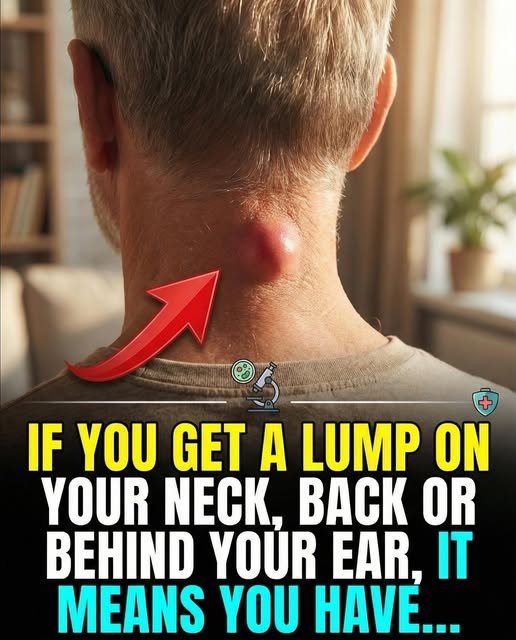
It often begins with accident.
You are washing your face, adjusting your collar, or resting your hand on your neck when your fingers pause. There is something there—a small bump, slightly firm, maybe tender, maybe not. It wasn’t there before. Or maybe it was, and you simply hadn’t noticed.
In that moment, uncertainty sets in.
Is it nothing? Is it temporary? Or is it something that deserves attention?
Most people will experience some form of swelling in the neck or behind the ear at least once in their lives. In most cases, it is harmless. In some, it is a signal that should not be ignored.
Understanding the difference matters.
What Causes Lumps in These Areas
The neck and area behind the ears contain clusters of lymph nodes, glands, blood vessels, and connective tissue. These structures respond quickly to changes in the body.
When something disrupts normal balance, swelling can appear.
Common causes include:
- Viral or bacterial infections
- Ear, throat, or sinus inflammation
- Dental problems
- Skin irritation
- Minor injuries
Lymph nodes, in particular, enlarge when the immune system is active. This is often the body’s natural response to infection.
How Lymph Nodes Normally Function
Lymph nodes act as filters.
They trap bacteria, viruses, and abnormal cells before these substances spread. When they are working harder than usual, they may swell temporarily.
Typical characteristics of reactive lymph nodes include:
- Soft or rubbery texture
- Mild tenderness
- Ability to move slightly under the skin
- Gradual reduction in size over days or weeks
These features usually indicate a normal immune response.
When a Lump May Signal Something More
Not all swelling is benign.
Certain features suggest the need for medical evaluation:
- Hard or fixed lumps
- Rapid growth
- Persistence longer than three weeks
- Unexplained weight loss
- Night sweats or fever
- Difficulty swallowing or breathing
These signs do not automatically mean serious illness, but they warrant professional assessment.
Early evaluation improves outcomes if treatment is needed.
Other Possible Sources of Swelling
Besides lymph nodes, other structures can produce lumps.
Salivary Gland Issues
Blocked or infected salivary glands may swell, especially near the jawline or ear.
Cysts
Sebaceous or epidermoid cysts form under the skin and are usually slow-growing and painless.
Lipomas
These are soft fatty growths that are typically harmless.
Thyroid Changes
Enlargement of the thyroid gland can cause visible swelling in the lower neck.
Each requires different evaluation and management.
Why Self-Diagnosis Is Risky
Online searches often amplify fear.
A simple swollen node can quickly be linked to worst-case scenarios. Without medical training, it is difficult to distinguish normal variation from abnormal findings.
Touch alone is unreliable.
Medical professionals use imaging, blood tests, and clinical history to form accurate conclusions.
What Doctors Look for During Evaluation
When assessing a lump, clinicians consider:
- Size and shape
- Consistency
- Mobility
- Location
- Duration
- Associated symptoms
They may also ask about recent infections, travel, dental issues, or medication use.
If needed, ultrasound or biopsy may follow.
When to Monitor and When to Act
Some swelling can be safely observed.
Monitoring is reasonable when:
- The lump is small and soft
- You recently had an infection
- Symptoms are improving
- No systemic signs are present
Immediate evaluation is recommended when warning signs appear or changes accelerate.
Prevention and General Health
While not all causes are preventable, maintaining overall health reduces risk.
Helpful practices include:
- Managing infections promptly
- Maintaining oral hygiene
- Avoiding tobacco
- Staying up to date with vaccinations
- Supporting immune health
Routine medical checkups also help detect issues early.
The Emotional Impact of Uncertainty
Discovering an unexplained lump is stressful.
It triggers worry, speculation, and sometimes avoidance. Many people delay evaluation out of fear.
Ironically, early consultation often provides reassurance.
Most findings turn out to be manageable or temporary.
Why Awareness Matters
Paying attention to bodily changes is not paranoia.
It is responsible self-care.
Noticing patterns, tracking duration, and seeking guidance when needed empowers individuals to protect long-term health.
A Balanced Perspective
A lump behind your ear or on your neck is usually not an emergency.
But it is a message.
Sometimes it says, “Your immune system is working.”
Sometimes it says, “Check this more closely.”
Listening early prevents regret later.
Understanding Without Panic
Health awareness should not be driven by fear.
It should be guided by information, observation, and appropriate action.
If you notice something new, persistent, or changing, speak with a healthcare professional.
In most cases, you will walk away reassured.
And in the rare cases when treatment is needed, early attention makes all the difference.