Motorcycles often symbolize freedom, speed, and independence. But behind that image lies a reality that experienced riders understand well: riding a motorcycle demands skill, focus, and careful practice.
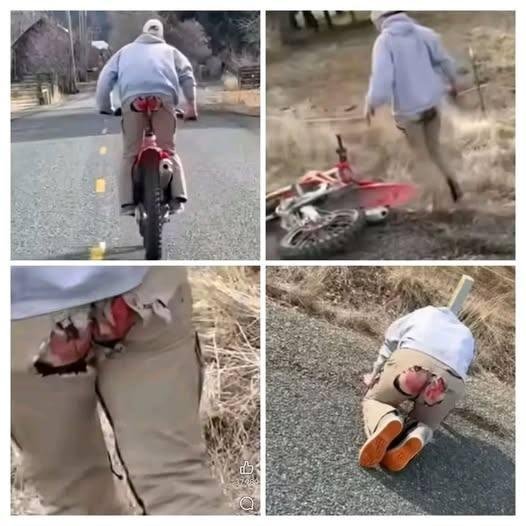
A recent incident involving a young man learning to ride serves as a reminder of how quickly things can go wrong during the early stages of training. According to initial reports, the rider was practicing basic motorcycle techniques in an open area when he suddenly lost control of the bike and crashed, leaving him with injuries that required immediate medical attention.
Witnesses quickly contacted emergency services, and paramedics arrived to provide assistance before transporting the injured rider to a nearby hospital. Authorities later confirmed that the circumstances surrounding the crash were still being reviewed.
While incidents like this are unfortunate, they also reveal something important about motorcycling: learning to ride is far more complex than it appears.
Why Beginner Motorcycle Accidents Are More Common Than Many Realize
Unlike cars, motorcycles do not naturally stabilize themselves. Riders must constantly balance the machine, manage speed, and respond to road conditions.
For beginners, this can be surprisingly difficult.
Motorcycles react instantly to small inputs. A slight twist of the throttle can produce sudden acceleration. A sharp brake squeeze can cause the front wheel to lock. Even body positioning plays a role in how the motorcycle behaves.
When a rider is still learning these relationships, mistakes are more likely to happen.
In the reported case, investigators are still determining exactly what caused the crash. However, experts say that several common factors frequently contribute to beginner accidents.
Throttle Control: A Common Early Challenge
One of the most difficult skills for new riders to master is throttle control.
Motorcycle engines respond quickly to input. Even a small increase in throttle can dramatically change the bike’s speed.
For someone unfamiliar with this responsiveness, the sudden acceleration can be overwhelming. In many beginner accidents, riders unintentionally apply more throttle while trying to regain balance, which causes the motorcycle to surge forward unexpectedly.
This is one reason riding instructors often recommend starting on smaller motorcycles with moderate power.
Lower-powered bikes give beginners more time to react and develop proper control.
Braking Technique Requires Practice
Another skill that many beginners struggle with is braking.
Motorcycles typically use separate controls for the front and rear brakes. Proper stopping requires both brakes to be applied smoothly and in coordination.
Applying the front brake too abruptly can cause the front wheel to lose traction, especially if the rider panics. When that happens, the bike may fall almost instantly.
Because of this, professional training programs spend significant time teaching riders how to brake progressively and maintain balance during emergency stops.
The Challenge of Low-Speed Balance
Ironically, motorcycles are often harder to control at low speeds than at higher ones.
When a motorcycle is moving quickly, gyroscopic forces help stabilize the wheels, making balance easier. At slow speeds—such as during practice sessions—those stabilizing forces are weaker.
This means the rider must actively manage balance through body position and steering inputs.
Many beginner accidents happen not on highways, but in parking lots or empty practice areas where riders are working on slow-speed maneuvers.
Panic Reactions Can Make Situations Worse
Perhaps the most dangerous factor during a riding mistake is panic.
When something unexpected happens, inexperienced riders may instinctively react in ways that worsen the situation.
Examples include:
- Grabbing the brakes too hard
- Freezing on the throttle
- Looking down instead of ahead
- Failing to steer out of a developing problem
Experienced riders learn to respond calmly and automatically. But developing those reflexes takes time and repetition.
Without that training, even small mistakes can escalate quickly.
Safety Measures Every Beginner Should Follow
Motorcycle safety experts consistently highlight several practices that greatly reduce the risk of accidents.
The first and most important is protective gear.
A certified helmet dramatically reduces the risk of serious head injury. Protective jackets, gloves, riding pants, and sturdy boots also help protect the body during a fall.
Even during low-speed practice sessions, injuries can occur if a rider is unprotected.
Formal training courses are another critical step.
Professional instructors teach techniques in a structured way, allowing riders to build confidence and skill gradually. They also correct mistakes early before dangerous habits develop.
Choosing the right motorcycle is equally important. Beginners who start on powerful machines may find the bike difficult to control, increasing the risk of accidents.
A smaller, lighter motorcycle with predictable handling allows new riders to focus on learning fundamental skills.
Practice Environments Matter
The location where a rider practices can also influence safety.
Large, empty areas—such as closed parking lots or training facilities—are ideal environments for beginners. These spaces provide room to make mistakes without dealing with traffic or obstacles.
Equally important is practicing with supervision.
Having an experienced rider or instructor nearby ensures that help is available if something goes wrong. It also allows beginners to receive feedback and improve their technique more quickly.
The Long-Term Reality of Motorcycle Riding
Despite the risks during the learning phase, millions of people around the world ride motorcycles safely every day.
Experienced riders often describe motorcycling as both a practical form of transportation and an enjoyable skill that can last a lifetime.
The difference between safe riding and dangerous riding usually comes down to preparation.
Proper training, the right equipment, gradual skill development, and respect for the machine are all essential.
A Reminder for New Riders
The crash involving the young rider is a sobering reminder that enthusiasm alone is not enough when learning to ride a motorcycle.
Motorcycles are powerful machines that demand patience and discipline from those who operate them.
For beginners considering taking up riding, the message is clear: learn slowly, train properly, wear protective gear, and give yourself time to develop the skills that experienced riders rely on every day.
With the right approach, motorcycling can remain what it was always meant to be—an activity that offers freedom, challenge, and enjoyment without unnecessary risk.