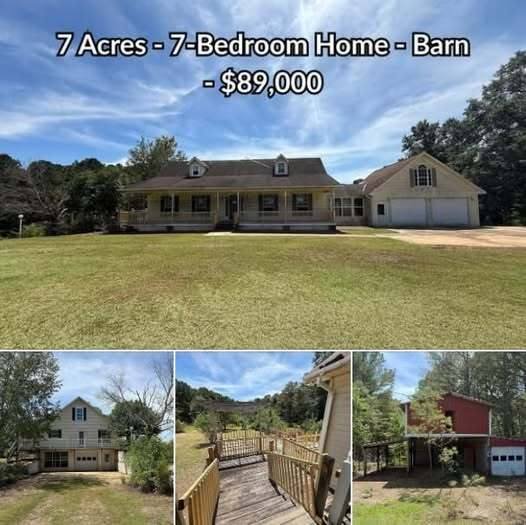
At first glance, a seven-bedroom home set on seven acres sounds like a simple equation: more space, more rooms, more land. But properties like this are attracting interest for reasons that go far beyond square footage or bedroom counts. They reflect a broader shift in how people think about living, working, and investing in a home.
What once felt excessive or niche now aligns closely with changing priorities — privacy, flexibility, and long-term value.
The Appeal of Scale Without Density
Large-acre properties offer something increasingly rare: physical separation without isolation.
Seven acres provides breathing room — space between neighbors, room for trees and open land, and a sense of calm that’s difficult to replicate in suburban developments. At the same time, these homes are often close enough to towns or secondary cities to remain practical for daily life.
This balance is a key reason demand has grown. People want space, but not remoteness.
Why Seven Bedrooms Matter More Than They Used To
In the past, homes with seven bedrooms were often seen as impractical for average households. That perception has shifted.
Extra bedrooms now serve multiple purposes:
- Dedicated home offices
- Guest accommodations
- Multi-generational living
- Short-term rental or hosting potential
Rather than unused rooms, these spaces offer adaptability. A large bedroom count future-proofs the home as needs evolve over time.
The Role of Outbuildings and Barns
The presence of a barn or auxiliary structure changes how the property functions.
Barns are no longer limited to agricultural use. They’re being repurposed as workshops, studios, storage for equipment, or even converted living spaces where zoning allows. This adds functional value without altering the main home’s footprint.
For buyers seeking versatility, outbuildings often matter as much as interior features.
Privacy as a Modern Luxury
Privacy has become a defining luxury of contemporary housing.
Acreage reduces noise, visual intrusion, and traffic — factors that strongly influence quality of life. For families, this means safer outdoor play. For professionals, it means fewer distractions. For many, it simply means peace.
As urban density increases, properties offering natural buffers gain disproportionate appeal.
Maintenance: The Trade-Off Few Discuss Honestly
Large properties do come with responsibilities.
Land requires upkeep — mowing, fencing, drainage, and seasonal maintenance. Utilities may rely on private systems like wells or septic tanks, which demand awareness and occasional investment.
Buyers drawn to acreage often succeed when they approach ownership with realistic expectations rather than romantic assumptions.
Long-Term Value and Market Stability
Homes with significant land holdings tend to behave differently in the market.
While price appreciation may be slower in hot urban cycles, these properties often hold value more steadily during downturns. Land scarcity plays a role, as does the limited supply of large, flexible properties.
For buyers thinking long-term rather than transactionally, this stability matters.
Lifestyle Over Layout
What ultimately defines a seven-bedroom, seven-acre property isn’t the number of rooms — it’s the lifestyle it supports.
Room to host, to work, to retreat, and to adapt over time makes these homes resilient to changing circumstances. They’re less about fitting into a category and more about accommodating change.
That flexibility is increasingly what buyers are willing to invest in.
A Shift Worth Noticing
Properties of this scale were once considered exceptions. Today, they reflect a growing desire for control over space, environment, and future use.
In that sense, a seven-bedroom home on seven acres isn’t just a listing — it’s a response to how living priorities are quietly evolving.